Two things separate a good night on the ground from a bad one, and only one of them appears reliably on a product page.
The first is how far the mat holds you off the ground, and that is published everywhere: thickness in centimetres, length and width in centimetres, packed size in centimetres. The second is how much heat the mat stops leaving you, and that needs an R-value. On this shelf, one listing publishes one.
R-value describes resistance to heat moving through the mat. It is why a thin closed-cell foam mat can outperform a thick uninsulated air mat on frozen ground, and why two mats of the same thickness are not interchangeable in October.
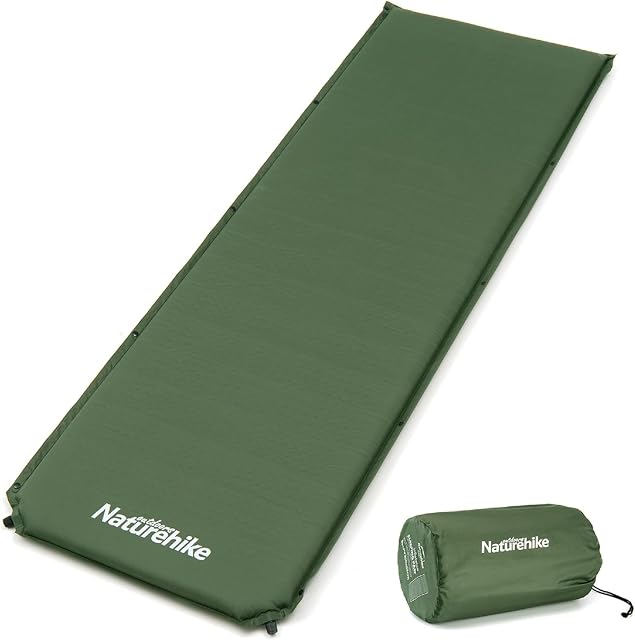
The Naturehike self-inflating mat states 4.8, in its title and again in its bullets. That is the only R-value published across the mats here, and it is published bare: no ASTM F3340 reference, no other test named beside it. Take it as the maker’s figure rather than as a standardised one, and note that it is the only listing that even attempts the number.
Every other mat on this page — and every other mat in the family — publishes nothing under that heading. That is not a reason to reject them. It is a reason to buy them for the job they do describe, which is thickness under the hip, and to plan warmth from the sleeping bag and from what goes under the mat.
Thickness, and what it is for
Thickness is the figure this shelf publishes best, and it does a real job: it keeps a hip off a root, and it lets a side sleeper turn over without touching the ground.
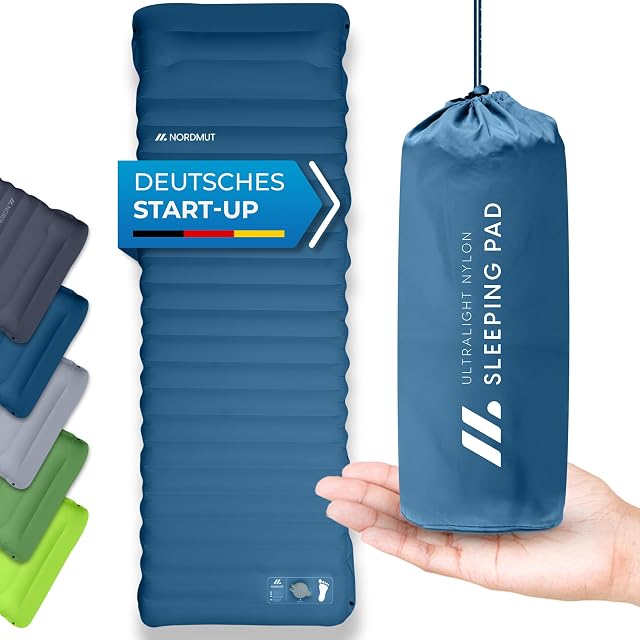
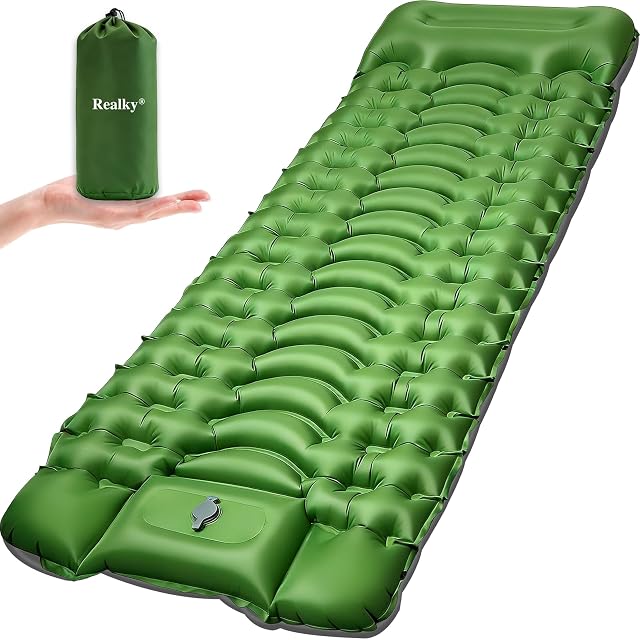
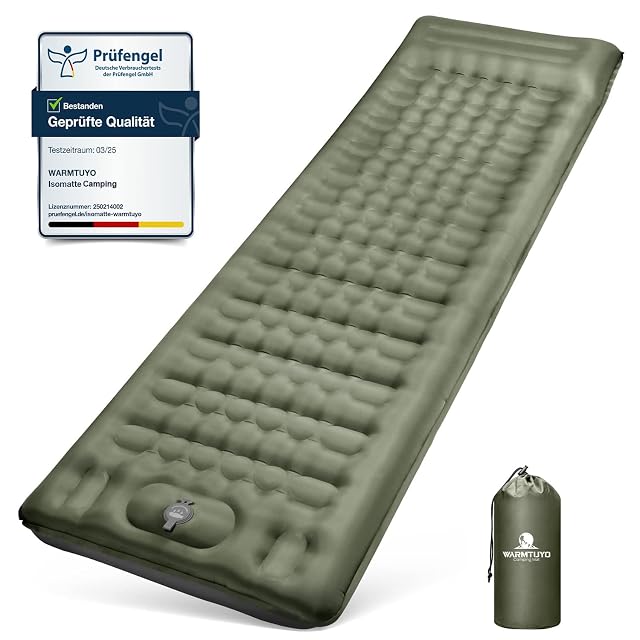
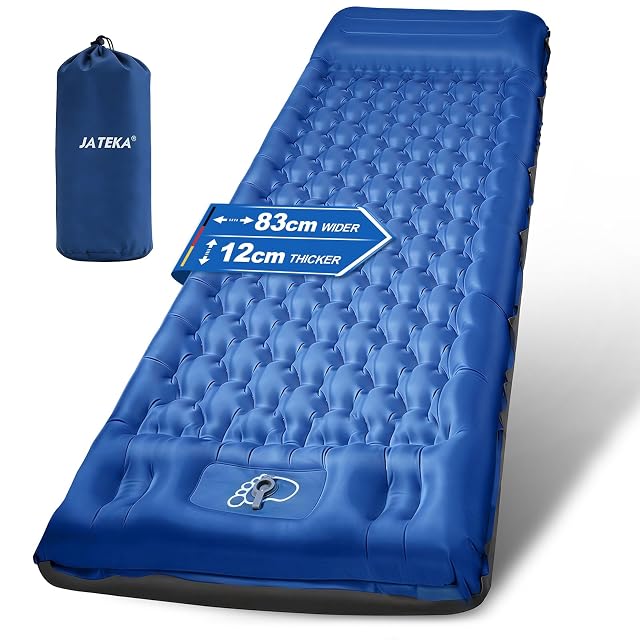
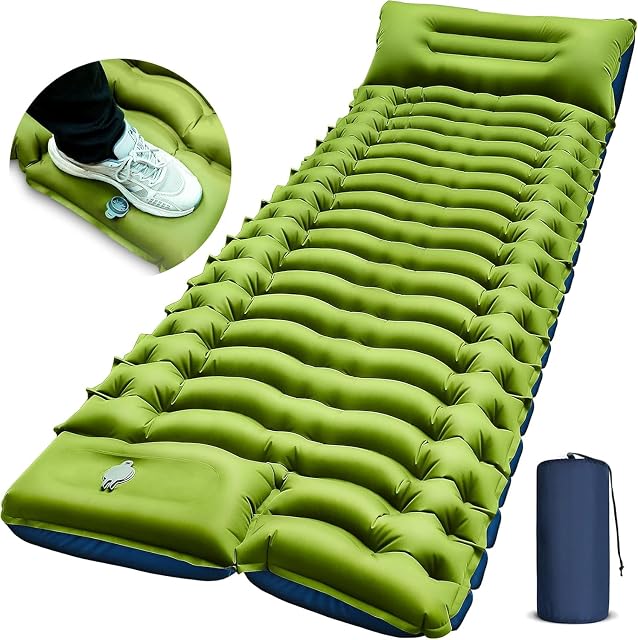
The NORDMUT states 10 cm in its title, at 925 g, packing to 10 x 28 cm. The WARMTUYO states 12 cm as an average thickness when fully inflated across ergonomic air chambers, in a 200 x 68 cm mat that folds to 26 x 15 x 15 cm. The JATEKA also states 12 cm, in a 200 x 83 x 12 cm inflated size with a 16.5 cm pillow given separately. The Realky states 9 cm with a 14.5 cm pillow, and the Yuzonc states 10 cm inside a 195 x 68 cm mat.
Set against those, the Naturehike is about 5 cm inflated, and no other mat on this page states less — yet it is the only one with a warmth figure. That trade is the whole argument of this page.
Width, and the number people forget
Width decides whether an elbow ends up on the tent floor. Most of these publish it as part of a three-figure inflated size.
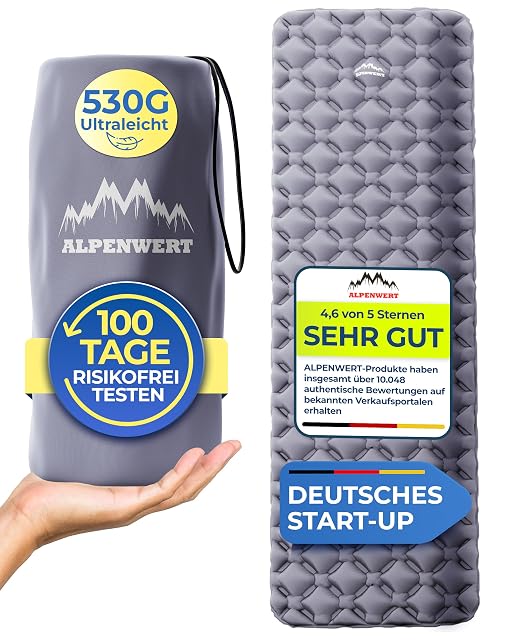
The JATEKA states 83 cm, and no other mat on this page states more; it is aimed squarely at restless and broad-shouldered sleepers who have the tent floor to spare. The Realky is 70 cm, the WARMTUYO 68 cm, the Yuzonc 68 cm, the Naturehike 63 cm and the Alpenwert 60 cm inflated from a 70 cm flat width.
The NORDMUT is the gap in this list: it publishes 10 cm of thickness, 925 g, a 10 x 28 cm packed size and a 40D ripstop nylon face with a TPU coating, and it publishes no length and no width at all. That is a real omission on the specification that decides whether you fit, and it is why the listing suits someone who will confirm the sleeping dimensions before ordering rather than after.
Weight, and what each maker counted
Mass is published on most of these and labelled on almost none.
The Alpenwert states 531 g. The Yuzonc states 690 g. The NORDMUT states 925 g and the Realky 950 g. The Naturehike states 1.85 kg, which is the price of a self-inflating core and the R-value that comes with it.
The WARMTUYO is the one to read carefully: it states 1 kg as the weight of the package, not of the mat on its own. That is a more honest label than most of this shelf manages, and it is also not the number you would compare with the Yuzonc’s 690 g. The JATEKA publishes no weight at all, which on a mat sold for its 83 cm of width is a fair trade only if you are not carrying it far.
Packed size, and where it goes missing
Packed size is the figure that decides whether the mat rides inside the pack or strapped to the outside of it.
The NORDMUT rolls to 10 x 28 cm, a folded figure no other mat on this page undercuts, and the reason it heads the list for anyone packing tight. The Realky gives 33 x 14 cm, the JATEKA 32 x 14 x 10 cm, the WARMTUYO 26 x 15 x 15 cm and the Naturehike 19 x 19 x 33 cm.
The Yuzonc and the Alpenwert publish no packed size. On a mat sold at 690 g and 531 g respectively, that is the one number a buyer would still want.
How each one is inflated
The split is straightforward and it changes how the mat ages.
An integrated foot pump keeps your breath out of the mat: the Realky states 60 seconds to inflate and one second to deflate through a double-layer valve, the WARMTUYO 60 seconds with a separate deflate valve that empties it in about 10 seconds, the Yuzonc 30 to 60 seconds of pedalling, the JATEKA about 80 seconds with a double-walled valve at the head end.
Mouth inflation is lighter and wetter. The Alpenwert states a few puffs and includes a repair kit. The Naturehike self-inflates to about 80 per cent through two valves in a few minutes and is topped up by mouth, with the first inflation stated to take longer.
Fabric, and the denier that is actually published
Denier is the one material figure this shelf gives consistently. The Realky states 75D nylon with an inner TPU sealing coating — no other mat on this page states a higher denier, and it is the one to look at if you camp on stony ground. The JATEKA states 50D spring nylon with a waterproof TPU coating. The NORDMUT, the WARMTUYO, the Yuzonc and the Alpenwert all state 40D.
The Naturehike does not state a denier: its fabric is given as 190T polyester, which is a thread count and a different quantity.
Putting the two halves together
If the ground is the cold part of your night, the Naturehike is the only mat here that publishes a number for it, and 1.85 kg is what that costs. If the ground is merely hard, buy the thickness, the width and the packed size, and put the warmth in the sleeping bag instead. Then take one further step that no listing can take for you: lie on it at home, on a hard floor, before it goes anywhere.