Skip to content

Gear Doctors Ether air mat, 17.5 oz review

The lightest air mat in this group at 17.5 ounces, and the only mat here with a published variable thickness — three and a third inches at the edges, two and a third in the middle.

On the maker’s own page

An Ether 17.5 oz ultralight camping sleeping pad, backpacking air mattress.

Gear Doctors states a pack of 8.6 inches high by 3.1 inches in diameter at 17.5 oz, inflating to 76 by 25 inches with ErgoCushion contours of 3.35 inches at the edges tapering to 2.36 inches at the center, holding up to 440 lb; a small detachable foot pump sack with an anti-leak valve system, with inflate, adjust, seal and deflate under 90 seconds; heavy-duty 20D nylon coated with water-resistant TPU, a user manual and repair kit, and a hassle-free lifetime replacement with no return needed; a U-shape design that prevents slipping, with 2 R-value insulation stated for spring and summer; and endorsement by outdoor professionals.

No standard named.

Three point three five at the edge, two point three six in the middle

A trough, not a slab.

The listing calls it an ErgoCushion U-shape, and the purpose is containment: the raised edges hold a side sleeper in place instead of letting them roll off.

This shelf’s introduction makes thickness answer one question — whether a side sleeper’s hip reaches the ground through a compressed mat. This design answers it oddly: the hip sits in the thinnest part.

It is the only mat in this group to publish two thickness figures.

Twenty denier

The thinnest skin here, on the lightest mat here.

Denier is the mass of the yarn, and this shelf’s introduction says the base fabric denier is worth reading because that is the face against grit.

This group: 20D here, 40D on one air mat, 75D on two self-inflating ones. And this is the lightest of the four, at 17.5 ounces.

That is the whole trade in one line — and the repair kit is supplied rather than sold.

A foot pump sack

Dry air instead of breath.

Inflating by mouth puts warm damp breath into the chambers every night, where it condenses and cannot dry. That is how an air mat starts to smell, and how it stiffens in freezing weather.

This shelf’s introduction lists the inflation method for this reason. Two mats in this group use a pump sack or a built-in pump, one self-inflates, four are foam.

R two, and the maker says two seasons

Published honestly.

“Perfect for spring and summer camping with its 2-R value insulation.”

The five figures on this shelf are 1.7, 2, 2.1, 4.3 and 4.3. An R of 2 is the second lowest, and the listing does not pretend it is a winter mat.

None of the eight names ASTM F3340, so the 2 ranks here and nowhere else.

Gear Doctors’ instructions carry the inflation and the repair. Nothing here replaces them, and nothing on this page describes any product as safe.

Availability

The American Amazon store was listing it at about $32 at the time of writing.

Every figure here is what Keepa held on the day this page was last revised. Offers and prices shift without warning.

Prices quoted in this text were read on October 8, 2026. The live price is at the top of the page.
What it does well, and where it gives way

Strengths

  • The smallest pack in this group: 8.6 inches tall by 3.1 inches across
  • The only mat here to publish a variable thickness, edge and center
  • A detachable foot pump sack, so the mat is inflated without lungs
  • Publishes a load capacity — up to 440 lb
  • Publishes the whole inflate-adjust-seal-deflate cycle at under 90 seconds
  • A U-shaped contour stated to stop the sleeper slipping off
  • A repair kit and a user manual supplied
  • A lifetime replacement with no return required, stated

Compromises

  • Twenty denier is the thinnest fabric in this group, against 40D and two 75Ds
  • An R-value of 2 is a two-season figure, as the listing itself says
  • No standard named beside the figure
  • The center of the mat is the thinnest part, which is where most of the sleeper is
  • Four of its five bullets end in a stylized slogan
  • An air mat with no foam in it goes flat all at once if the fabric fails

Specifications

R-value2 R-value, published, stated for spring and summer camping
Standard quotedNone
ThicknessVariable and published both ways: 3.35 in at the edges tapering to 2.36 in at the center — the only variable thickness in this group
Packed size8.6 in high by 3.1 in diameter — the smallest pack in this group
Weight17.5 oz — about 496 g (17.5 oz)
Width25 inches — about 64 cm (25.2 in)
Length76 inches — about 193 cm (76 in)
Fabric denier20D nylon with a water-resistant TPU coating — the thinnest fabric in this group
Inflation methodA small detachable foot pump sack with an anti-leak valve system, stated at under 90 seconds to inflate, adjust, seal and deflate
Amazon referenceB0DSW5VSX2
EAN0769061494035

What people ask before buying

Why is the middle thinner than the edges?

To stop the sleeper rolling off. The listing calls it an ErgoCushion U-shape: 3.35 inches at the edges tapering to 2.36 in the center, so the mat forms a shallow trough that holds a side sleeper in place. This shelf's introduction makes thickness answer one question — whether a side sleeper’s hip reaches the ground through a compressed mat — and this design answers it unusually: the hip sits in the thinnest part, two and a third inches, while the raised edges do the containing. It is the only mat in this group to publish two thickness figures at all.

How thin is 20 denier?

Thin enough to be the figure to weigh against the weight. Denier is the mass of the yarn, and this shelf's introduction says the base fabric denier is worth reading because that is the face against grit. This group publishes 20D here, 40D on one air mat and 75D on two self-inflating ones — and this is the lightest mat of the four at 17.5 ounces. That is the trade in one line: the lightest air mat has the thinnest skin, and a repair kit is supplied rather than optional.

What does the foot pump sack change?

Moisture, mostly. Inflating a mat by mouth puts warm damp breath inside it every night, and the water condenses in the chambers where it cannot be dried — which is how an air mat starts to smell and, in freezing weather, how it stiffens. A pump sack moves dry air instead. This shelf's introduction lists the inflation method among the things to note for exactly this reason. Two mats in this group have a pump arrangement, one has a built-in foot pump, one self-inflates and four are foam.

Against the rest of the camping gear

Close prices, same category: comparable camping gear. We keep only the specifications all of them publish, because a column with gaps compares nothing.

Model Price R-valueStandard quotedThicknessPacked size
Gear Doctors Ether air mat, 17.5 oz $32 2 R-value, published, stated for spring and summer campingNoneVariable and published both ways: 3.35 in at the edges tapering to 2.36 in at the center — the only variable thickness in this group8.6 in high by 3.1 in diameter — the smallest pack in this group
FUN PAC 01 mat with pillow $30 Not publishedNonePublished twice and differently in the same bullet: the heading reads 3" thick, and the text gives dimensions of 78 × 27 × 8 inchesNot published. Stated to be weighed and sized "only like a water bottle"
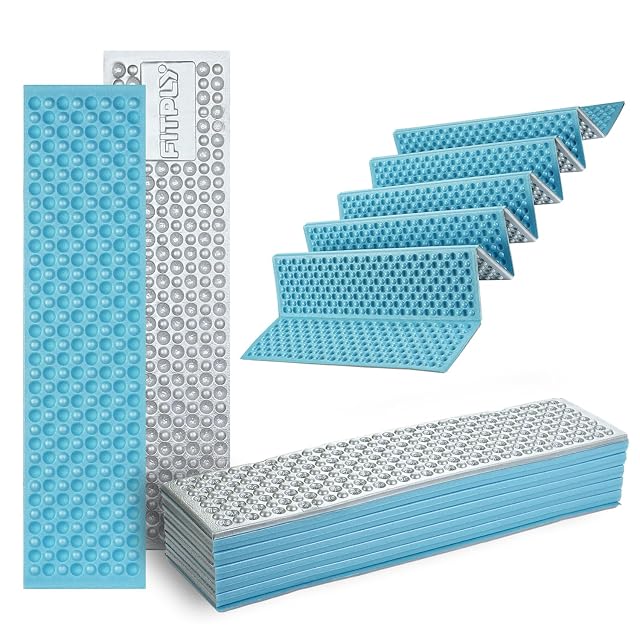
fitply Folding XPE foam pad $25 Published as an insulation rating of 2.1None. The listing states only that the pad "has been tested to standard" — the hedge this shelf's introduction warns about0.36 inch — about 9 mm (0.35 in)Folded to 23.6 × 5.6 × 4.9 in
Stansport 503-B Pack Lite foam pad $22 Not publishedNone — as on all eight mats in this group3/8 inch — about 10 mm (0.39 in), the thinnest in this groupNot published. Straps are supplied to keep the pad rolled

What separates the models, in camping gear

  • If price decides: Stansport 503-B Pack Lite foam pad, at $22.

The buyer this one serves, among camping gear

A side sleeper who wants the lightest air mat and will accept 20-denier fabric

What buyers actually choose

Amazon reports what buyers took in the month before this page was last checked: at least 900.

The figure is a floor, rounded by Amazon, and read through Keepa — it says what buyers picked, not what a maker claims.

Sources

Specifications: the manufacturer sheet for camping and hiking gear and the matching Amazon product page. Prices and availability: Keepa. Every figure on this page names its source.

What we look at on this camping gear