A first kit is six decisions, and they are not equal. Two of them decide whether you sleep, two decide whether you eat and drink, one decides whether you can see, and one is genuinely optional on a first trip.
Taken in order, each purchase narrows the next.
Start here because everything else has to fit inside it.
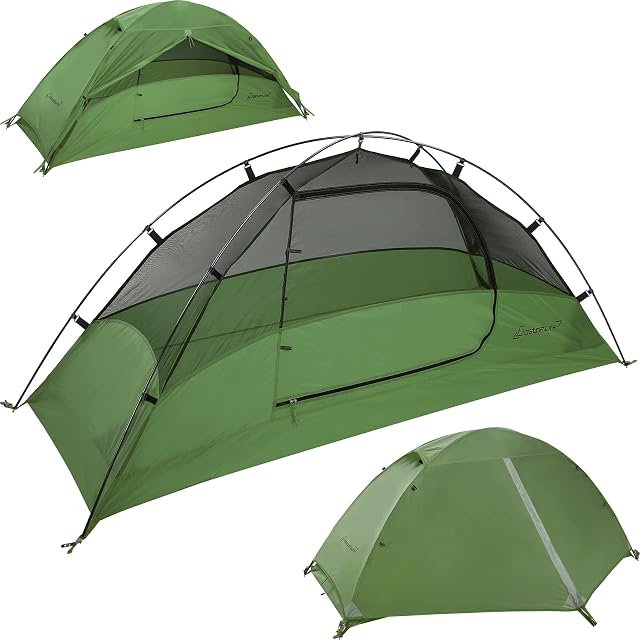
The Clostnature one-person tent publishes what a first buyer needs and skips the marketing. A PU 5000 coating on the bathtub floor — the figure that decides a night on wet ground, and the one most listings replace with a vague fabric claim. A pitched size of 220 x 81 x 91 cm, so you know before ordering whether you fit. Two aluminium poles, freestanding, with fourteen aluminium pegs and four guylines supplied. Stated at 1.9 kg, with no indication whether the pegs and guylines are inside that number — which is the standard omission across this family and worth checking on kitchen scales when it arrives.
The vestibule takes boots and a pack, which is the difference between a tent you can live in for a wet evening and one you only sleep in.
If two of you are going, the same reasoning applies to a two-person tent: find the tent that publishes a floor water column, not just a flysheet figure.
2. Warmth, and reading the temperatures honestly
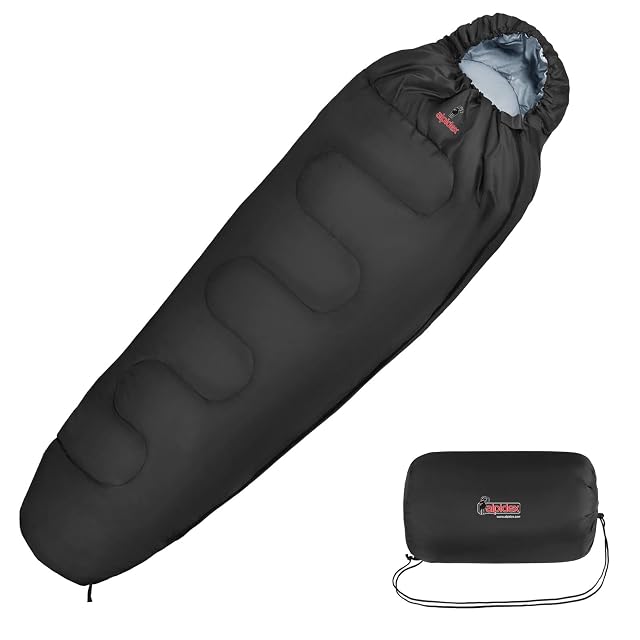
The ALPIDEX mummy bag is here because it labels its numbers. A comfort figure of plus 4 degrees and a limit of minus 2 degrees, stated as comfort and as limit rather than printed as an unexplained pair. A 400 GSM synthetic fill, 1.55 kg as a total weight, and a compression sack supplied.
Two things to hold in mind. First, no sleeping bag listed on this site names EN 13537 or ISO 23537, so these are the maker’s own figures rather than standardised laboratory values, and they cannot be lined up against another brand’s numbers as though they came from the same test. Second, the listing also prints minus 17 degrees as an extreme value; that is not a temperature to plan a night around, and it is not what the bag is for.
Where a comfort figure is the maker’s own, treat it as a description of the season the bag was designed for and follow the instructions supplied with it.
3. Ground insulation, which is where first kits fail
More first nights are ruined by the ground than by the air, and the mat is the piece people economise on.
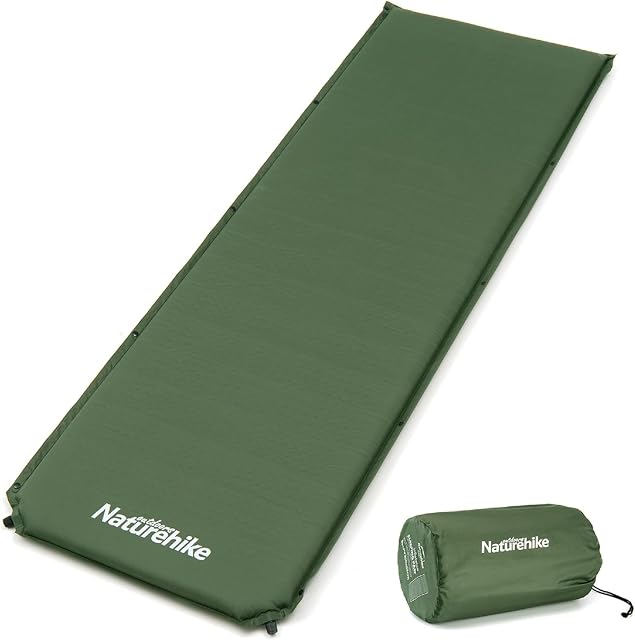
The Naturehike self-inflating mat is the only mat on this site that publishes an R-value: 4.8, stated in its title and again in its bullets, and published without an ASTM F3340 reference or any other test beside it. Every other mat in the catalogue publishes nothing at all under that heading, so this is the one that lets you make the decision on a number rather than on a photograph.
The rest of its specification is straightforward: 200 x 63 cm with about 5 cm of thickness, packing to 19 x 19 x 33 cm, at 1.85 kg, self-inflating to about 80 per cent through two valves and topped up by mouth, with the first inflation stated to take longer.
That 1.85 kg is a lot of mat, and it is the figure to accept rather than trim. A lighter mat with no warmth figure is a different kind of purchase, and this site has a whole guide to that trade.
4. Cooking, once you want hot food
The Green Camp stove is a first stove because its listing answers the question that costs people money later: what fuel does it take, and where can I buy more?
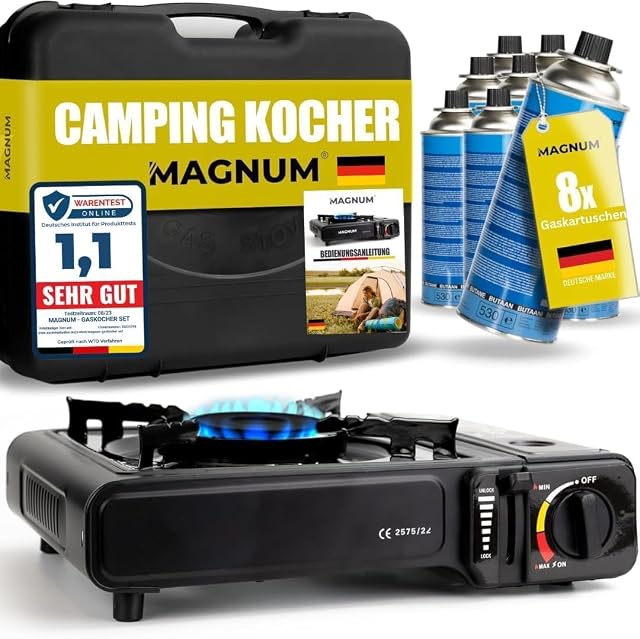
It names an MSF-1a bayonet valve and states that the supplied cartridges meet the EN 417 safety standard — the only listing in this family to name that standard. It states 2.1 kW with a gas consumption of approximately 155 g per hour, which together give you a usable estimate of how long a 227 g cartridge runs at full output. Piezo ignition, a cartridge locking mechanism the maker describes as part of its safety system, and eight 227 g cartridges supplied in the box.
And the rule that overrides everything else here: never light a stove inside a tent, a porch, a vehicle or any other enclosed space. Cook outside, in the open air, following the instructions in the box.
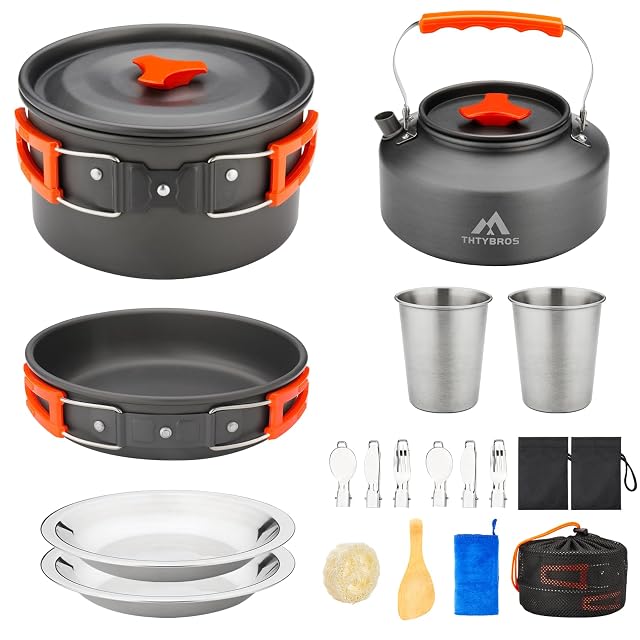
Pair it with the THTYBROS cook set, which publishes what a cook set should and rarely does: a 1.7 litre pot and a 1.15 litre kettle, two stainless cups at 200 ml each, hard-anodised aluminium, 2.75 pounds for the set and a package size of 7.5 x 7.5 x 5 inches with every piece nested and bagged. Litres and a packed box, from one listing.
Check one thing before ordering: the base of the largest pot against the pot support of whatever stove you buy. A wide pan on a narrow support is a spill waiting for a bad moment.
5. Water on the walk
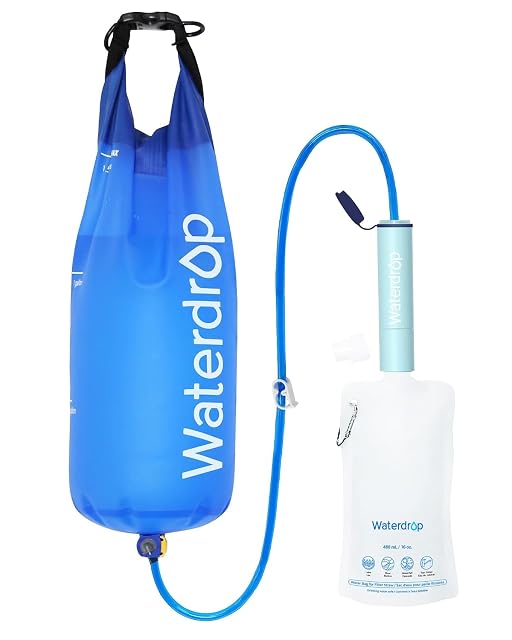
The Waterdrop set is here for its format rather than its headline. A straw supplied with a gravity water bag, with both ends stated to come apart and stated to work with bags or bottles: hang the bag at camp and it runs while you do something else, or drink through the straw at the source.
The maker states a 0.1 µm ultrafiltration membrane with coconut-shell activated carbon, an element rated at up to 5300 litres, and backflushing without a syringe.
What this page will not tell you is whether any particular water can be used. That is a question for the instructions supplied with the filter and for the authorities responsible for the water where you are walking, and it is answered at the source rather than on a product page.
6. Light
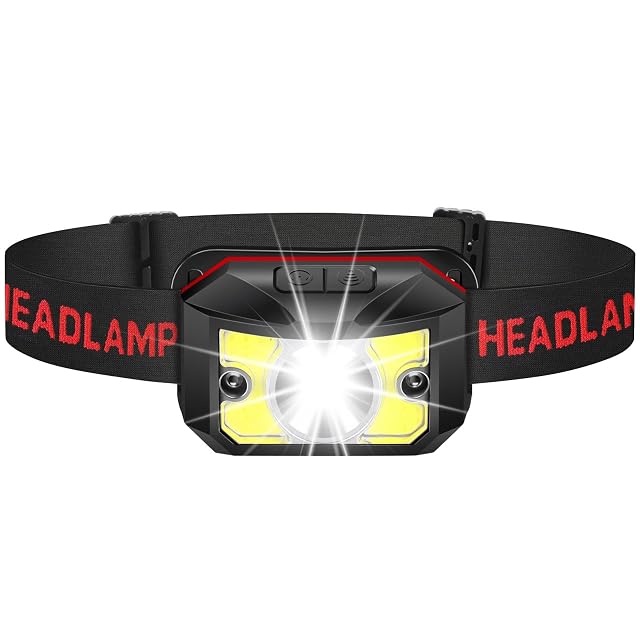
The Winzwon head torch publishes hours attached to modes, which almost nothing in its family does: about 6 hours in the bright mode and about 11 hours in the low mode, with a 3 to 4 hour charge. It states up to 96 metres of beam distance for the bright mode, IPX4, about 68 grams, a red COB light and an SOS red flash, and a rechargeable pack charged over USB-C with the cable supplied.
It publishes no lumen figure at all, and that is the point. A lamp that gives you distance and hours has told you what your evening looks like; a lamp that gives you a five-figure lumen claim and no runtime has told you nothing.
Carry a second light of some kind. A head torch that fails is a whole trip changed.
The four purchases held back on purpose
No hammock, no tarp, no chair, no table, no solar panel. Each is a real purchase and each has its own page on this site, and each of them makes far more sense after one night out than before it. Buy the six above, spend a night in a garden with all of them, and the second list writes itself.