Shape and tie-out count decide how many pitches you actually get
The best tarps and shelters for 2026
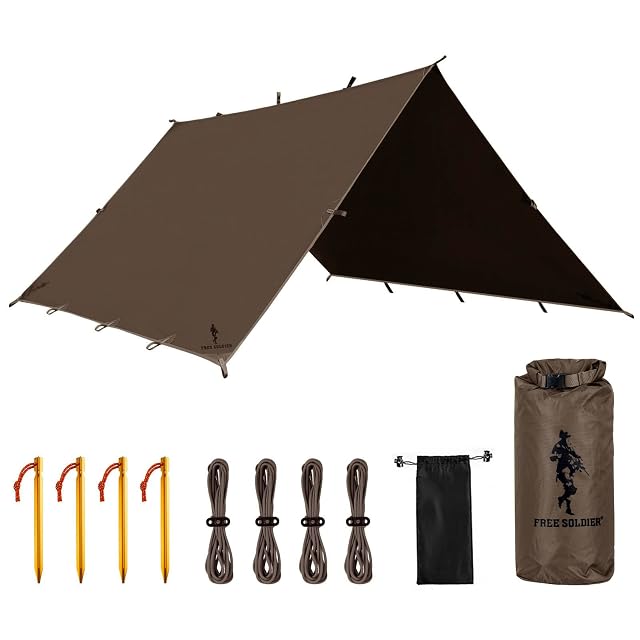
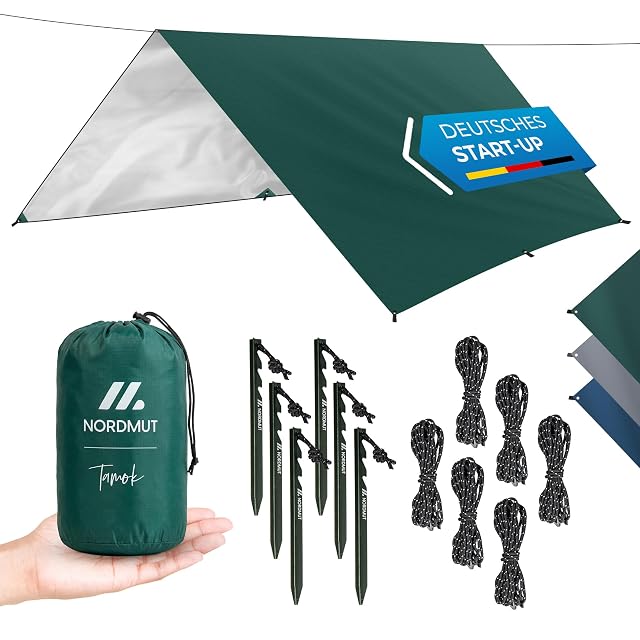
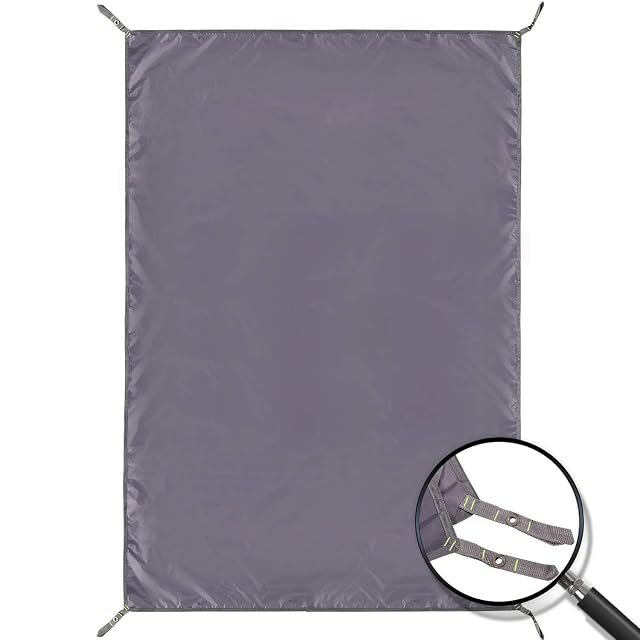
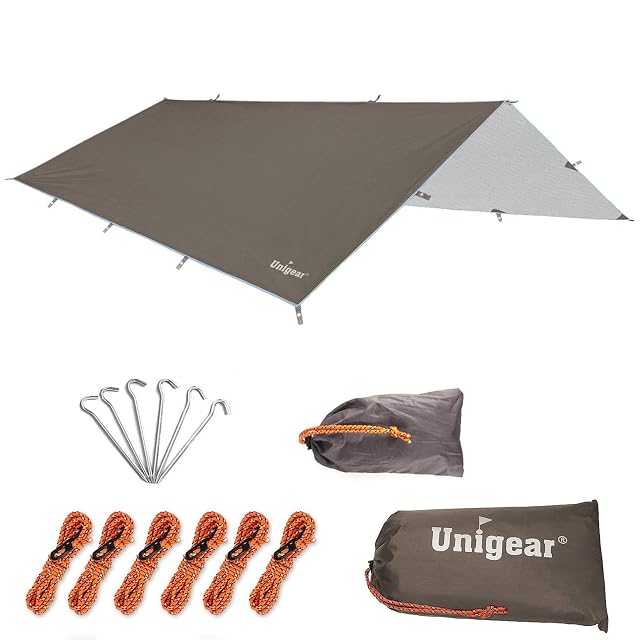
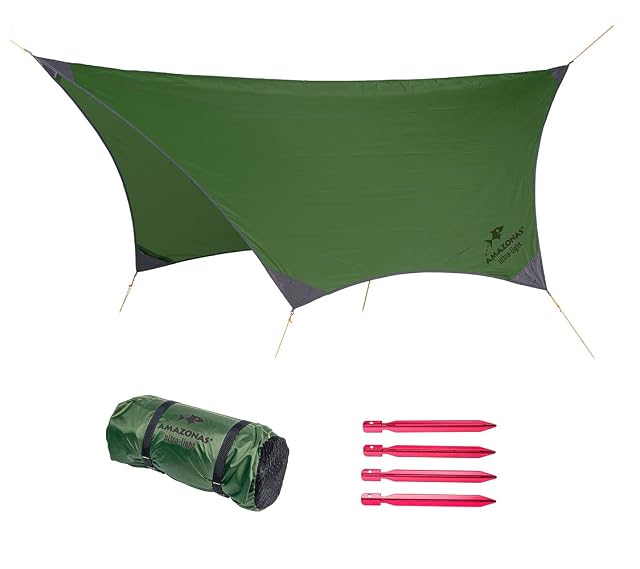
A tarp is the lightest roof there is, and what you are really buying is a shape and a set of anchor points. A rectangle is the most versatile and the noisiest in wind. A hexagonal or catenary cut tarp has curved edges sewn to pitch taut with fewer wrinkles, which is quieter and sheds better, at the cost of the flat-pitch options a rectangle keeps. Count the tie-outs and look at how they are reinforced, because each one is a pitch you can improvise and each one is also a stress point. Fabric divides three ways. Silicone-coated nylon is light and strong and stretches when wet, so a taut pitch needs retensioning after rain. Silicone-coated polyester barely stretches and is heavier for the same denier. Dyneema composite does not stretch or absorb water, weighs least, and costs most. Hydrostatic head in millimetres is published for most coated fabrics and is the comparable waterproofing figure. Finally, read what is in the bag: many tarps are sold without guylines, pegs or poles, and several are designed to be pitched on trekking poles rather than with poles of their own. We compare shape and cut, dimensions, fabric and coating, hydrostatic head, denier, tie-out count and reinforcement, weight and what the pack includes.