Skip to content

The best headlamps for 2026

The number on the box is peak lumens, and it is the least useful figure in the category. Makers who publish to the ANSI/PLATO FL1 convention give three figures together — lumens, beam distance in meters and runtime — and the runtime is defined as the point at which output has fallen to a tenth of its initial value. That definition is the whole subject: an unregulated lamp reaches its stated hours by dimming steadily from the first minute, while a regulated lamp holds a level output and then drops. Two lamps with identical specification sheets can behave completely differently on an hour-long descent for that reason. The peak mode itself is usually held for a couple of minutes before thermal management steps the lamp down, so read what the maker states for the sustained setting rather than the burst. Then the practical fittings: battery type, where a rechargeable pack saves weight and an AAA-compatible lamp can be revived anywhere; the IP rating, quoted for dust and water ingress; a red mode that leaves night vision alone; a lock mode that stops the lamp switching itself on in the pack; and weight on the head. We compare stated lumens, beam distance and runtime with the standard quoted, whether output is regulated, battery type, IP rating, weight and lock and red modes.

The ones worth carrying

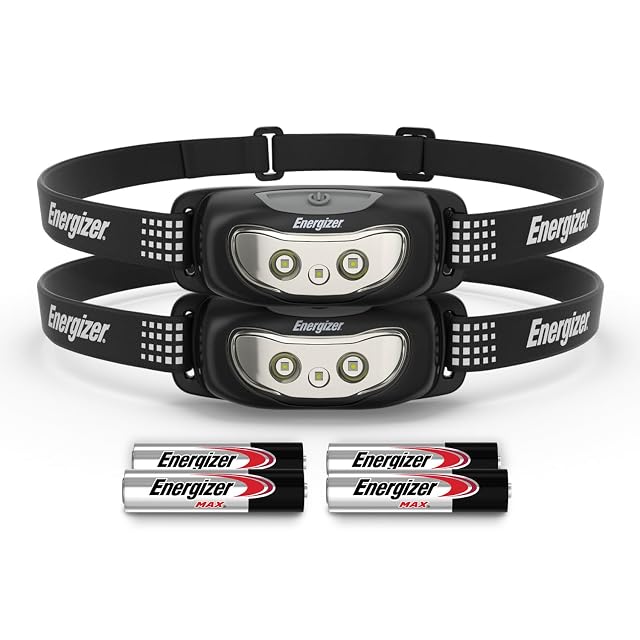
  1. Energizer PRO-360

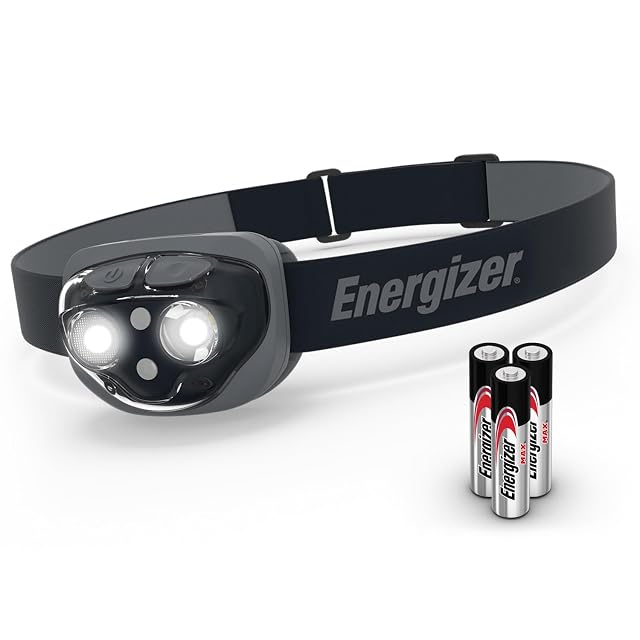
    360 lm and 85 m (279 ft) both stated · 3 × AAA supplied · IPX4 · impact resistant to 1 m (3 ft) with a shatterproof lens · high, low, wide, wide low, green, red and flashing red · no runtime

    One of only two lamps on this shelf to publish a beam distance — 85 meters (279 ft) beside 360 lumens — with a shatterproof lens, an impact rating and seven modes, for thirteen dollars.

    Best for: A car kit or an emergency drawer where AAA cells and a drop rating matter more than hours

    ≈ $13
  2. Blukar USB-C rechargeable, 1200 mAh, stepless dimming, 8 modes

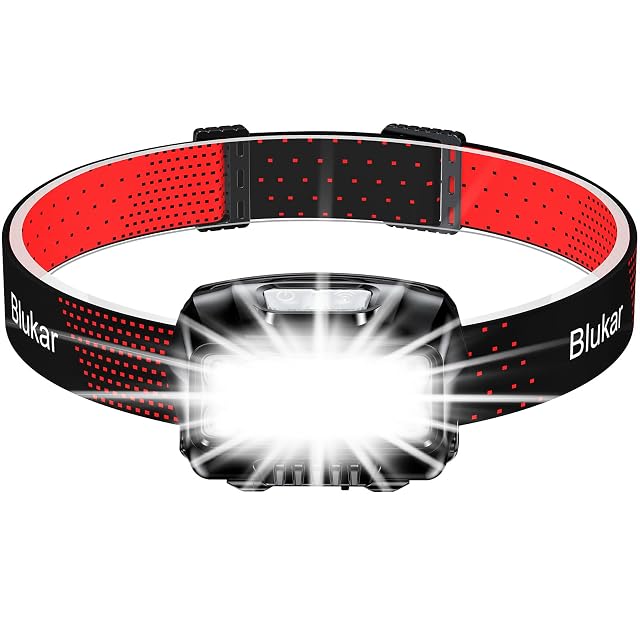
    Rechargeable headlamp · stepless dimming · 8 modes including 3 gesture modes · 1200 mAh over USB-C · no lumens, no distance, no runtime, no weight, no IP code

    A stepless-dimming rechargeable head torch that publishes its battery capacity and its mode count, and none of the four figures the category is compared on.

    Best for: A cheap, comfortable camp and commuting lamp for a buyer who will judge it in the hand rather than on a specification sheet.

    7.8/10

    ≈ $12

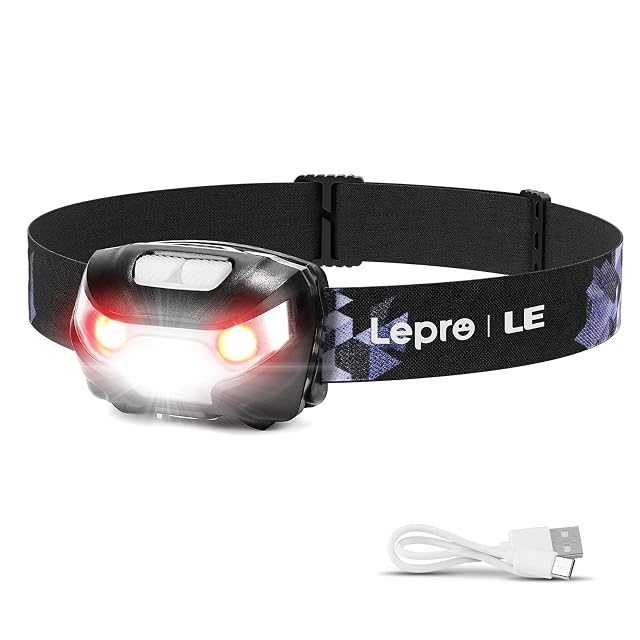
  3. Lepro 3200008 Rechargeable Headlamp

    Rechargeable headlamp · 5 modes, 2 red · up to 500 ft stated · up to 30 h stated · 1200 mAh, USB-C · IPX4 · 81 g (2.9 oz)

    A light USB-C rechargeable head torch with a red mode, IPX4 and a stated 81 g (2.9 oz). Its listings disagree with each other: 300 lumens on Amazon.com, 150 in a European table; up to 30 hours here, 4.5 hours on high in Spain.

    Best for: A light rechargeable lamp for dog walks, camp chores and power cuts, where a red mode and 81 g matter more than an audited lumen figure.

    7.8/10

    ≈ $16

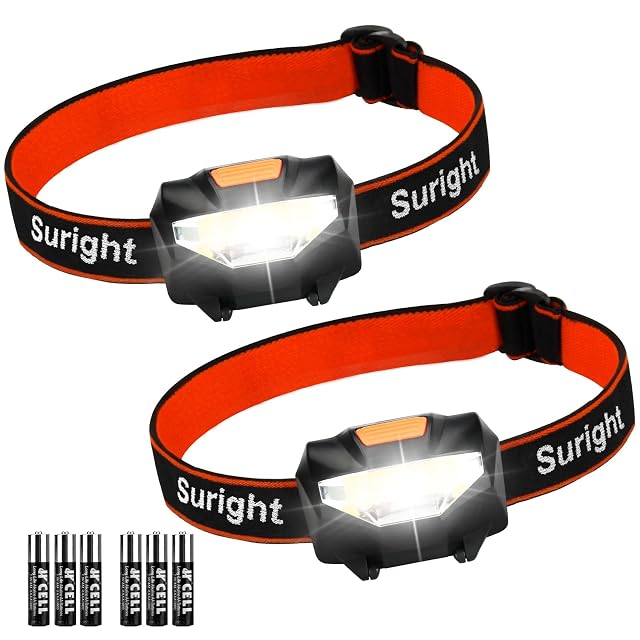
  4. Suright LD072 AAA headlamp, 2-pack

    AAA headlamp, pack of two · 140 lumens stated · 10 m (33 ft) beam stated · IPX4 · 2.8 oz (80 g) per lamp · 3 modes · no runtime

    Two COB headlamps on elastic bands, each running on three AAA cells (six supplied), with high, low and strobe modes, a 60° tilt and IPX4. Suright states 140 lumens and a 10 m (33 ft) beam but no runtime. The listing exists on Amazon.com, but nobody was selling it there on November 6, 2026.

    Best for: Camp chores and a spare in the car, where cells bought in a village shop matter more than reach.

    7.8/10

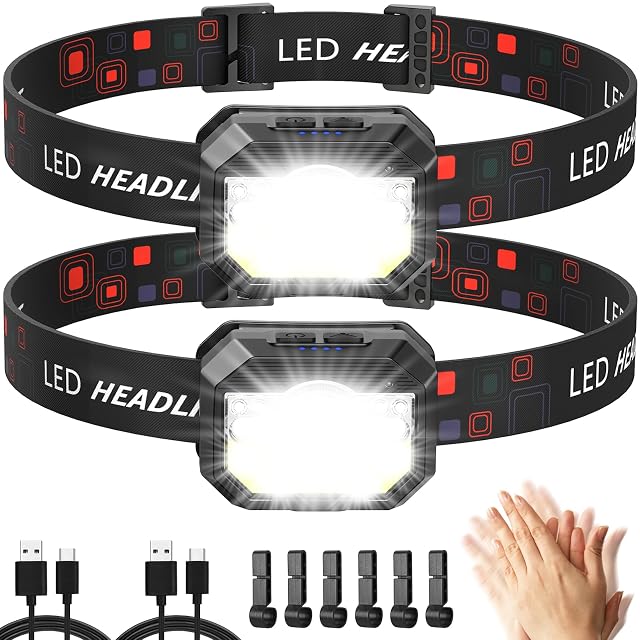
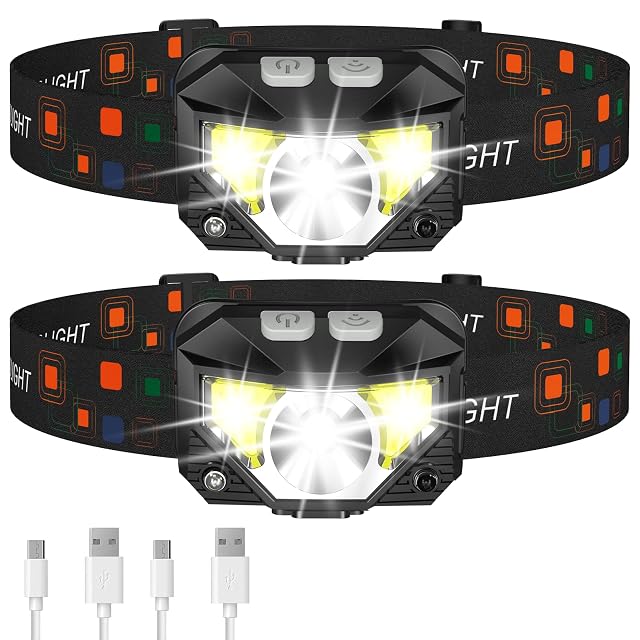
  5. MLIAIMCE GY20 headlamp two-pack

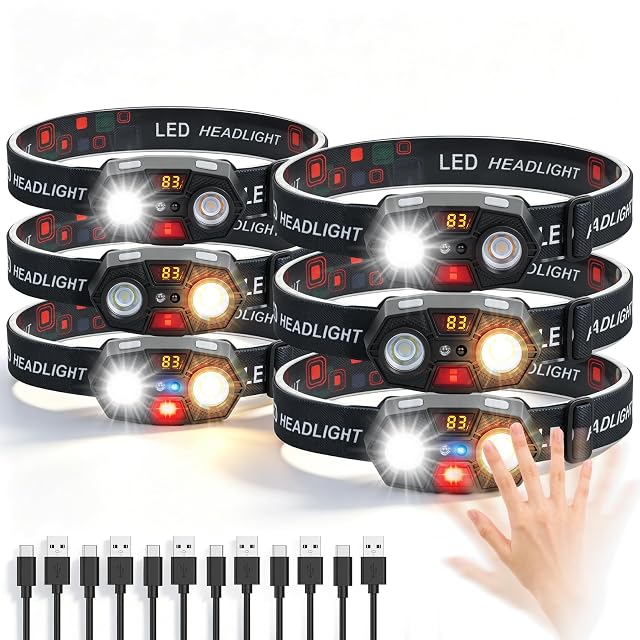
    Rechargeable headlamp, pack of two · 1,500 lumens stated on Amazon.com, 2,000 on Amazon.de · 300 to 500 m (984 to 1,640 ft) illumination range stated · motion sensor · 1,500 mAh · IPX4 · 3.2 oz with batteries

    A two-pack of motion-sensor headlamps with a main LED, a COB bar and red and blue modes, a 1,500 mAh cell and a 3.2 oz stated weight. No runtime, and no Amazon.com offer.

    Best for: Nobody in the US for now, since there is no offer; elsewhere, a cheap pair of lamps for a household or a van, chosen for the mode list rather than for measured hours.

    7.2/10

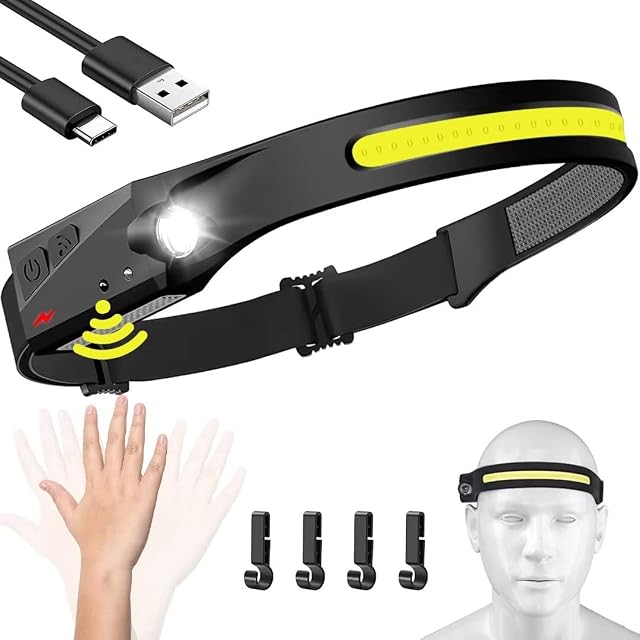
  6. BIAT AWGGYTD01

    230° wide beam with a separate spotlight · COB and XPE emitters, high and low each · motion sensor to 10 cm (3.9 in) · 2.47 oz · folds flat · IPX4 · silicone body · no lumens, no runtime

    A 230-degree wide beam and a separate spotlight from two different emitters, on a silicone lamp that folds into a pocket — with no lumen figure and no runtime behind either beam.

    Best for: Close work and camp tasks where a wide flood beats a throw, and the lamp has to fold into a pocket

    ≈ $14

  7. Energizer E303215400

    100 lm stated · 40 m (131 ft) in the bullets and 4 m (13 ft) in the description · 4 × AAA supplied · IPX4 · impact resistant to 1 m (3 ft) · two light modes with red · no runtime, no weight

    A hundred lumens and two modes for seventeen dollars with batteries in the box — and a beam distance the page publishes as both forty meters and four.

    Best for: A pair of spare lamps for a car and a drawer, where AAA cells and a drop rating are the whole requirement

    ≈ $17

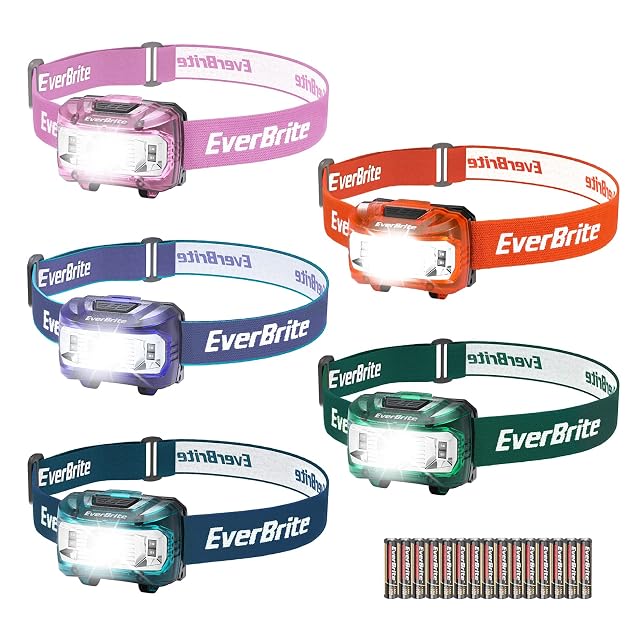
  8. EverBrite E001018

    300 lm high for 4 h and 150 lm medium for 10 h, both stated · the only middle-setting runtime on this shelf · 3 × AAA · 2.12 oz · 5 modes with red, red flash and green · 65° tilt · no IP rating

    The only lamp on this shelf that publishes a runtime for a named middle setting — 150 lumens for ten hours — which is the column this shelf's buying tip asks for, on a five-pack with batteries included.

    Best for: A household or a family that needs five lamps at once, and the one honest middle-setting figure here

    ≈ $22

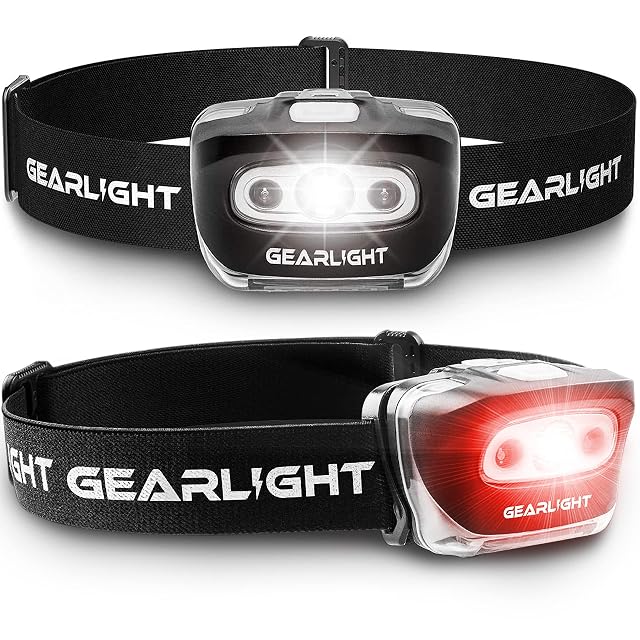
  9. GearLight GL-LHS500-2P

    No lumen figure at all — the only lamp on this shelf to publish none · AAA, batteries not included · 7 modes with red · 45° tilt · about 3 oz with batteries · weather-resistant, no IP code

    The one lamp on this shelf that publishes no lumen figure whatsoever, and says so deliberately — practical brightness for close and medium range, on AAA cells with no USB charging.

    Best for: A cold-weather emergency kit where swapping cells beats charging and the brightness claim is not the point

    ≈ $15

  10. LHKNL TG-T069

    1.87 oz, the lightest on this shelf · 1500 mAh, charges while lit · 4–10 h stated with no mode attached · 8 modes with red and SOS · motion sensor · IPX4 · 60° tilt · no lumens

    One point eight seven ounces — the lightest lamp published on this shelf — with a motion sensor, a battery you can use while charging and no lumen figure anywhere on the page.

    Best for: A head that will not tolerate weight, where the lamp also has to be switched with dirty hands

    ≈ $20

  11. Ruirgo Ruirgo 005

    4000 lm in the title and 3000 lm in the bullets · 6-pack in the title and sets of two in the bullets · 2.97 oz · IPX5, the highest code here · 5 + 5 modes with white, yellow and red · no runtime

    The only lamp on this shelf rated IPX5, with white, yellow and red beams and ten modes — on a page that contradicts itself twice, on its lumen figure and on how many lamps you get.

    Best for: A workshop or a wet night where a yellow beam and IPX5 are worth more than a trustworthy headline figure

    ≈ $33

  12. Black Diamond Storm 500-R

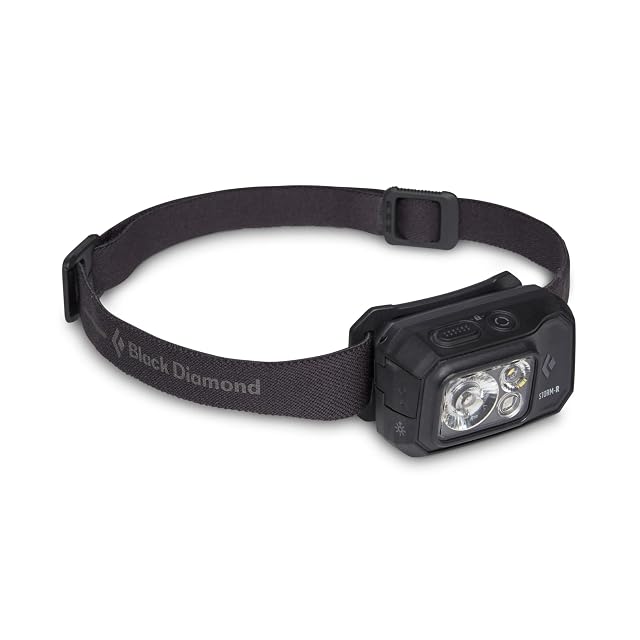
    500 lm stated · 2400 mAh lithium-ion over micro-USB, the largest pack on this shelf · dimming, strobe and red night-vision modes · proximity and distance settings · no runtime, no beam distance, no IP code

    The largest battery published on this shelf at 2400 mAh and the only lamp here with separate proximity and distance settings — with no runtime, no beam distance and no ingress code behind them.

    Best for: A climber or trail runner who wants a dimmable regulated-feel beam and will accept a bare specification sheet

    ≈ $74

This family belongs to the walking and light kit — see everything that has to work with it.

The need before the model, across headlamps

See far

Beam distance is published apart from lumens, and it says how far the beam stays useful.

MLIAIMCE GY20

Get through to daybreak

Runtime is given per level, and it collapses at maximum. That is the figure that counts on a night leg.

Lepro 3200008

Forget the lamp is there

Weight decides how the lamp holds and what it leaves on the forehead after four hours.

EverBrite E001018 LED headlamp, 5-pack

Who buys what, across headlamps

Constant light required
Published regulated output says whether the lamp holds its level to the end or fades gently. Both behaviors exist.
Rain and river crossings
The published IP rating says what the housing claims against water and dust. It is the maker’s figure.
Long outings without charging
The published battery type decides what you carry: cells to recharge, or batteries to swap in the cold.

Nothing is free: the trade-offs of headlamps

Lumens against runtime
Both pull on the same reserve. Stated lumens are a maximum, rarely a figure held for long.
Regulated output against total duration
A regulated output lights the same to the end and then stops dead; an unregulated one fades and leaves a residual glow.
Weight against capacity
Runtime comes from the battery, and the battery weighs. On a forehead, every gram speaks up after an hour.

Buyers’ questions on headlamps

Lumens or beam distance?

Stated lumens measure total output, beam distance measures useful reach. Both are published because they say different things.

Why is the standard quoted given?

Because it fixes how lumens, beam distance and runtime were measured. Without it the figures do not compare.

What is regulated output?

Electronics that hold the level constant until cut-off instead of letting it fade. Its presence is published.

How is runtime read?

Always with the level it is given at. Between the lowest mode and maximum, the gap is enormous.

Rechargeable cells or batteries?

Battery type is published. Cells recharge, batteries get swapped and behave differently in the cold.

What does the IP rating mean?

The stated resistance to dust and water, as the maker publishes it.

Is a brighter lamp better?

Not for walking: a wide, near beam tires you less than a distant one. Beam distance and lumens are chosen by use.

Does cold cut runtime?

It is a known behavior of cells. The limits published by the maker are on the entry.

What to take away from headlamps

Stated lumens are a peak, runtime is a compromise per level, and beam distance is what you actually see. Regulated output decides how the lamp will go out: all at once, or apologetically.

The gist of headlamps, at a glance

    Headlamps, side by side

    There is no table here, and the reason is in the listings. Enough of these 12 products name the same rows — beam distance, IP rating, runtime — for a column to qualify, and too few publish a figure in them: the column would compare blanks rather than models. Each product page says what its own maker published.

    What a budget carries on this shelf

    The guides devoted to headlamps

    Sources, and how we rank it

    Specifications: manufacturer sheets for camping and hiking gear and the matching Amazon product pages. Prices and availability: Keepa.

    Most recent revision in this category: November 6, 2026.

    What we look at on headlamps

    Prices in these summaries were read on the dates each review gives. The live figure sits beside every product.