Sleeping bag listings publish temperatures more freely than any other family on this site, and describe them less. The useful split is not warm against cold; it is between a listing that labels which number is which and a listing that prints a pair and walks away.
The comfort, limit and extreme trio comes from EN 13537 and its successor ISO 23537. Those figures are produced in a laboratory on a heated mannequin, under conditions the standard defines. When a maker cites the standard, the numbers are comparable between makers and they are an indication produced under test — not a guarantee about a night, a person or a pitch. The maker’s own instructions govern how the bag should be used.
Here is the fact that shapes this whole page: not one sleeping bag listed on this site names EN 13537 or ISO 23537. Every temperature below is a figure the maker published on its own authority. They can be read against each other with care, and they cannot be read as standardised values.
The bags that label their numbers
A minority of these listings say which figure is which.
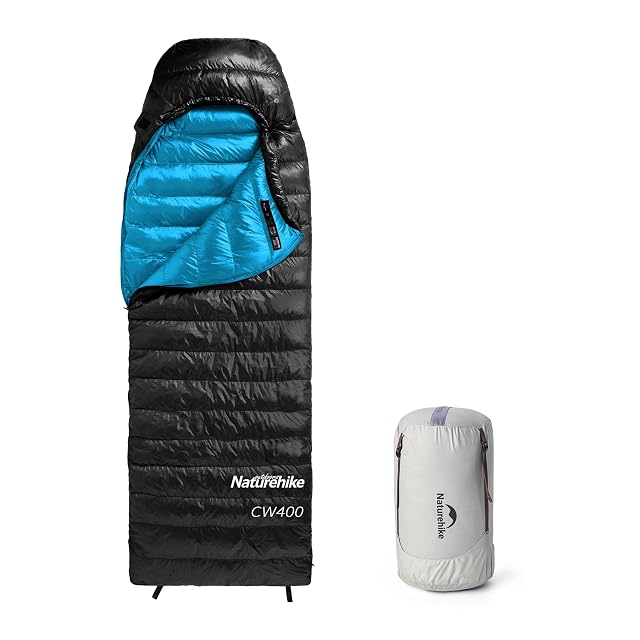
The Naturehike down bag states a comfortable temperature above 5 degrees and a limit temperature of 0 degrees. It also states 650 fill power, an 85 per cent down fill treated to be water-repellent, a 20D nylon shell and lining, and a net weight of 760 g in the medium size and 885 g in the large. That is the fullest specification on the shelf, and the reason it opens this list.
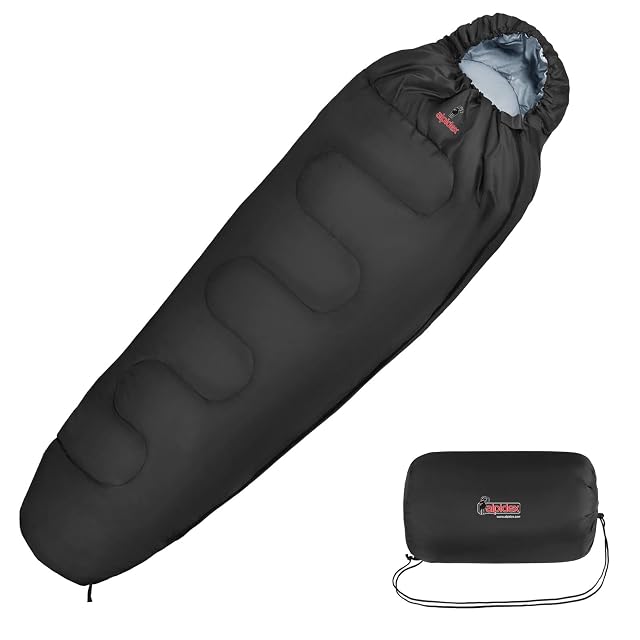
The ALPIDEX states a comfort figure of plus 4 degrees and a limit of minus 2 degrees, with a total weight of 1.55 kg and a 400 GSM synthetic fill. It also prints minus 17 degrees as an extreme value. Read the labelled pair; the extreme value is not a planning figure.
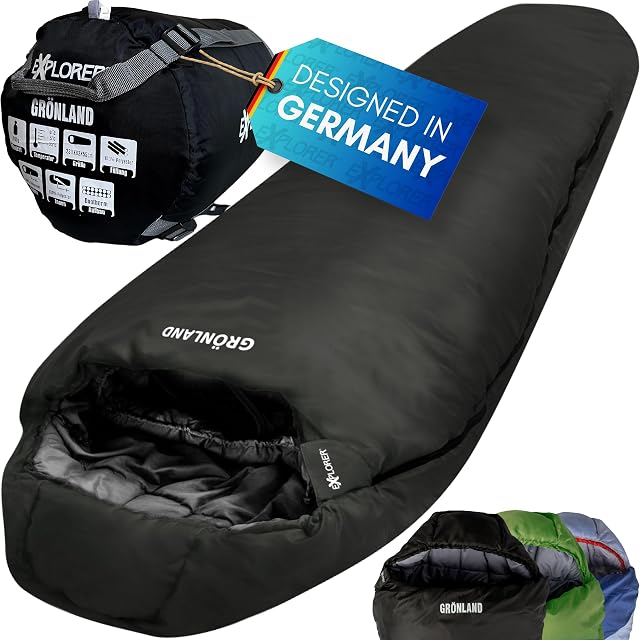
The EXPLORER states a comfort temperature of around 0 degrees. Its title also carries minus 23 and minus 5, neither of them labelled, and the listing does not reconcile the three. The bag itself is 230 x 82 x 55 cm, 1900 g, and packs to 24 x 30 cm in a compression sack — a long cut, and the reason to look at it if you sleep at full stretch.
The bags that publish a range instead
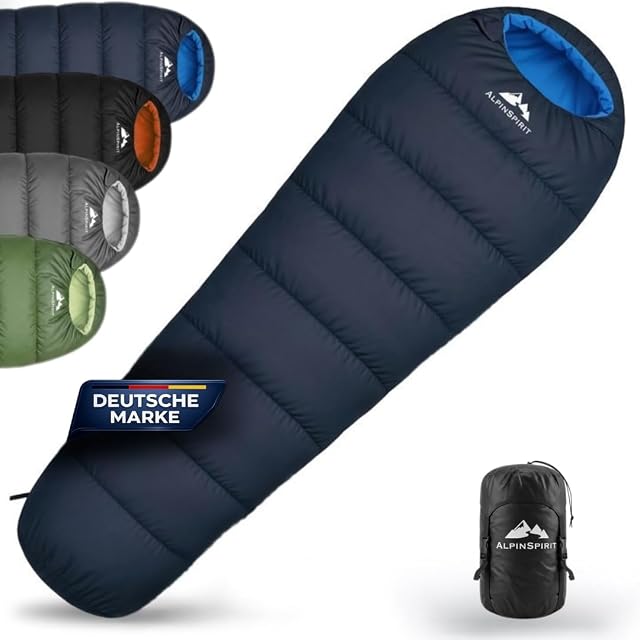
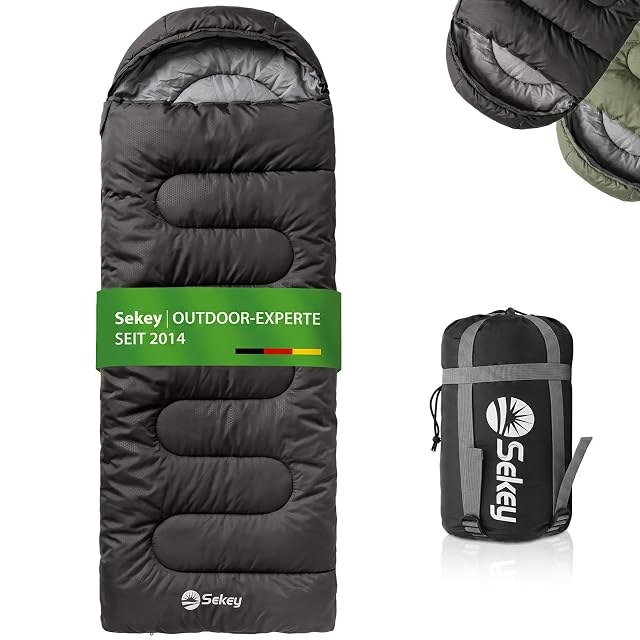
AlpinSpirit gives comfort as a range of 15 to 20 degrees, adds that the bag is also usable at 0 degrees without publishing that as a limit, and states about 1300 g into about 35 x 25 cm. Sekey gives a comfort range of 10 to 20 degrees, with S-shaped quilting stated to stop the fill migrating, 30 x 22 cm packed and 1.35 kg.
A range is a softer claim than a labelled pair, and both of these bags are honest about being spring-to-autumn kit rather than cold-weather kit. Neither pretends otherwise.
The bags that publish a pair and label neither end
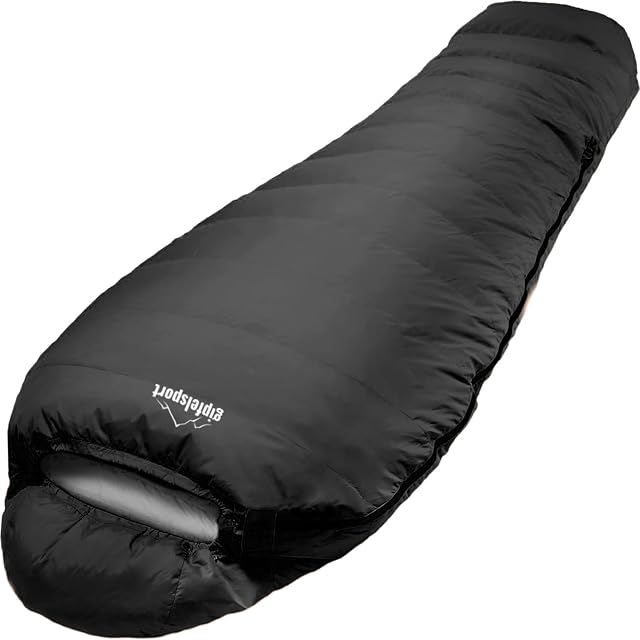
gipfelsport publishes minus 20 and minus 5 in its title with neither figure named as comfort or as limit. The rest of the listing is unusually complete for this shelf — 1550 g, 38 x 23 cm packed, 215 x 85 tapering to 55 cm, a 300 g per square metre fill and a thermal collar — which makes the unlabelled pair stand out more, not less.
This is the commonest failure across the family, and it has a simple consequence: two unlabelled numbers cannot be compared with a labelled pair from another maker. You can compare gipfelsport’s 1550 g against the ALPIDEX’s 1.55 kg. You cannot line minus 5 up against minus 2 and conclude anything.
Down or synthetic, and what each listing gives you
Only the Naturehike bag here is down, and it is the only listing that publishes a fill power — 650, with the down content given as 85 per cent. Fill power describes loft per unit of down; it is the figure that separates two down bags of the same mass.
The rest are synthetic, and every one of them publishes a GSM figure instead: 400 on the ALPIDEX, 350 on the EXPLORER, 300 on AlpinSpirit and on gipfelsport. GSM is a density of the insulating layer in grams per square metre. It is not the weight of insulation in the bag, and no listing on this shelf publishes that weight, so a heavier GSM in a smaller bag and a lighter GSM in a larger one cannot be ranked against each other on that number alone.
Weight and packed size, where they exist
Most of the synthetic bags here publish both a mass and a packed size. AlpinSpirit states about 1300 g and packs to about 35 x 25 cm. Sekey is 1.35 kg into 30 x 22 cm. gipfelsport is 1550 g into 38 x 23 cm. The EXPLORER is 1900 g into 24 x 30 cm — heavier than the rest and packing shorter than several of them, which is what a compression sack does to a comparison.
None of these masses is labelled. As with the tents, the listing gives one number and does not say whether the stuff sack and the compression straps are inside it.
The Naturehike down bag publishes 760 g and 885 g as net weights by size, and publishes no packed size at all.
Two things this page will not do
It will not tell you that a bag is enough for a given night. Temperature tolerance varies with the person, the mat under them, what they ate, how wet they are and how sheltered the pitch is, and none of that is on a product page. Follow the maker’s own guidance for the bag you buy.
And it will not convert one maker’s unstandardised comfort figure into another’s. The tuphen bag elsewhere on this site publishes its comfort range in Fahrenheit only — an optimal range of 62 to 75 degrees Fahrenheit — which converts arithmetically and still does not become comparable, because neither figure came from the same test.
What you can do is buy on the numbers that are defined: a length you have measured yourself against, a mass you can weigh on arrival, a packed size you can check against the space you have, and a fill type you understand. Those four are all published here, and none of them changes overnight.