Skip to content

ALPIDEX four-season mummy bag, 400 GSM fill vs gipfelsport four-season mummy bag, 1550 g, 300 GSM

Identical on the scales — so which of the two tells you what its numbers mean?

Both bags weigh the same on the listing: 1.55 kg on one, 1550 g on the other. From there they diverge on labelling rather than on kit. ALPIDEX splits a comfort figure from a limit figure and says its weight is a total; gipfelsport publishes a pair of temperatures with neither end named and a weight with nothing said about what it counts, and answers with a packed size the other one never gives.

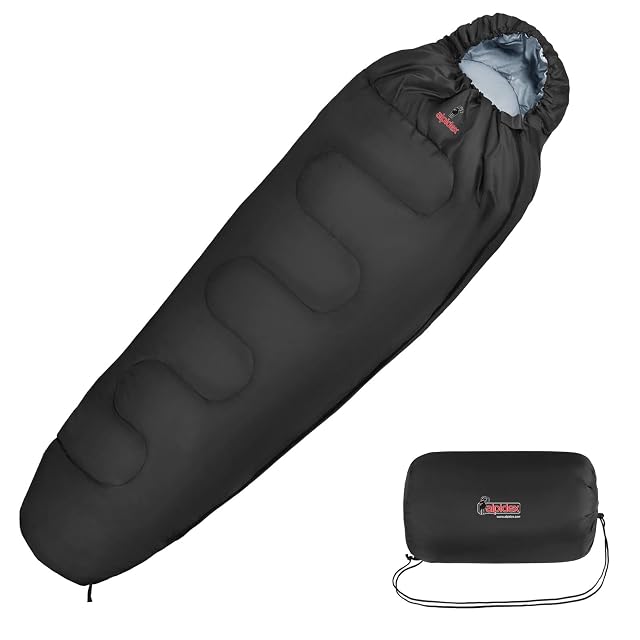
ALPIDEX black four-season mummy sleeping bag with a padded hood and a two-way zip

ALPIDEX four-season mummy bag, 400 GSM fill

Wins 4 of 9

Check price

≈ 23 €

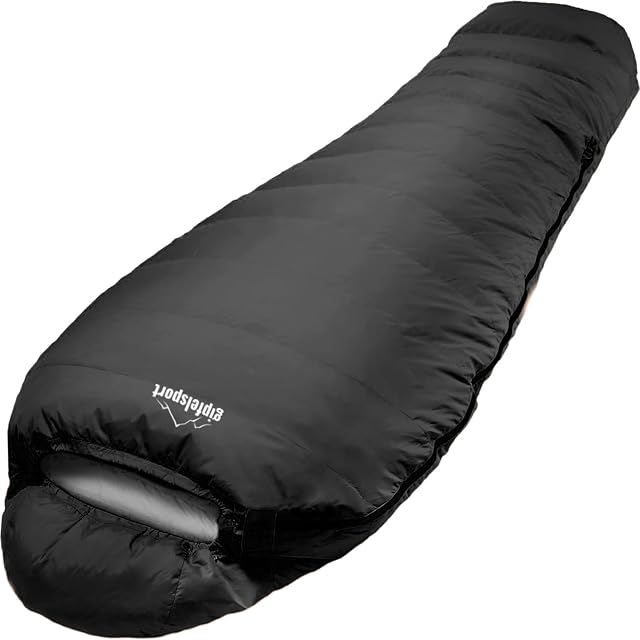
gipfelsport ultralight mummy sleeping bag with a thermal collar and a compression stuff sack

gipfelsport four-season mummy bag, 1550 g, 300 GSM

Wins 1 of 9

Check price

≈ 46 €

Line by line

Compared on four-season mummy bag, 400 GSM fill four-season mummy bag, 1550 g, 300 GSM
Comfort rating +4 °C, stated Not stated as a comfort figure — the title publishes -20 °C and -5 °C, neither of them labelled
Limit rating -2 °C, stated Not stated as a limit figure — the same unlabelled pair is all that is published
Standard quoted None named — neither EN 13537 nor ISO 23537 appears None named — neither EN 13537 nor ISO 23537 appears
Fill density 400 GSM, a fill density in grams per square metre 300 g/m², a fill density in grams per square metre
Fill Synthetic, stated as entirely polyester Synthetic, stated as polyester
Shell denier Not published — a hard-wearing water-repellent outer, with no yarn weight Not published — a breathable rustle-free lining, with no fabric or yarn weight
Stated weight 1.55 kg 1550 g
What the weight figure covers Stated as the total weight Not published — no label says what is counted
Packed size Not published — a compression sack is supplied and the pack size is described only as small 38 × 23 cm, with straps to compress the stuff sack further

Each tick belongs to its own line and nothing more. The row of ticks is not a score: the two verdicts underneath settle the page, because these two answer different questions on the trail.

Which one, for whom

Buy the ALPIDEX four-season mummy bag, 400 GSM fill

The ALPIDEX is the one that puts its cards down: +4 °C and -2 °C published separately, 400 GSM of fill, and a weight it calls a total. It also publishes a third figure, -17 °C, as an extreme value, which is not a temperature anyone plans a night around. Nothing here is standardised, but at least each number says what it is meant to be.

Buy the gipfelsport four-season mummy bag, 1550 g, 300 GSM

The gipfelsport is the same 1550 g with a smaller published pack: 38 × 23 cm, and a stuff sack with compression straps, which is the figure that decides whether it goes inside your bag or under it. Its -20 °C and -5 °C arrive as an unlabelled pair, so the listing gives you two temperatures and no way of telling which is which.

What people ask before buying

Why does an unlabelled pair of temperatures cause a problem?

Because comfort, limit and extreme are three different figures with three different meanings, and a pair given without labels could be any two of them. Reading the colder end as the usable one is exactly the mistake the labels exist to prevent.

Is 400 GSM warmer than 300 g/m²?

The two units are the same thing, grams per square metre of fill, so the figures are directly comparable and 400 is the denser fill. It still describes the insulation per unit area rather than the total insulation in the bag, which depends on the cut and on how much of it there is.

The full reviews

Prices in these summaries were read on the dates each review gives. The live figure sits beside every product.