Skip to content

Gas One GAS-4-2 isobutane, 100 g (3.5 oz)

A hundred grams of four-season blend in the smallest canister on this shelf, with a screw-on nozzle the maker describes as generic rather than standard.

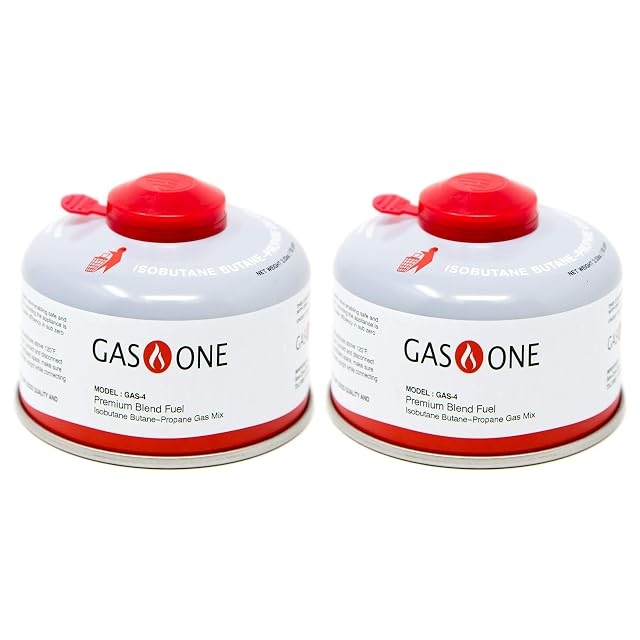
Gas One isobutane fuel canister, two cans with their plastic caps

Gas One GAS-4-2 isobutane, 100 g (3.5 oz)

A hundred grams of four-season blend in the smallest canister on this shelf, with a screw-on nozzle the maker describes as generic rather than standard.

Valve type
A screw-on style fitting, described in the listing as a generic screw-on type nozzle that will adapt almost all backpacking stoves. EN 417 is not named
Net gas weight
100 g (3.5 oz), published in the title; the description calls it 4 oz
Stated gas mix
A four-season blend of butane and propane, with no proportions published
Canister diameter
2.8 in — the smallest diameter on this shelf
Canister height
3.5 in
Empty weight
Not published. The shipping weight is about 99 g (3.5 oz), which appears to be the gas rather than the pack
Resealable valve
Not published. A snug plastic cap is stated for storage
Amazon reference
B07VMBK91C
EAN
0810002700743
  • The smallest diameter on this shelf at 2.8 inches, which is what decides nesting
  • Publishes both dimensions: 3.5 by 2.8 inches
  • No mix proportions published

Best for: A pot the canister has to nest inside, where every millimeter counts

≈ $17
Check price on Amazon

Specifications

Valve type
A screw-on style fitting, described in the listing as a generic screw-on type nozzle that will adapt almost all backpacking stoves. EN 417 is not named
Net gas weight
100 g (3.5 oz), published in the title; the description calls it 4 oz
Stated gas mix
A four-season blend of butane and propane, with no proportions published
Canister diameter
2.8 in — the smallest diameter on this shelf
Canister height
3.5 in
Empty weight
Not published. The shipping weight is about 99 g (3.5 oz), which appears to be the gas rather than the pack
Resealable valve
Not published. A snug plastic cap is stated for storage
Amazon reference
B07VMBK91C
EAN
0810002700743

On the maker’s own page

A camping fuel blend isobutane fuel canister, 100 g (3.5 oz), two-pack.

Gas One states two pieces of its isobutane fuel; a four-season blend of butane and propane for consistent cooking pressure; a screw-on style fitting that fits a large variety of standardized isobutane stoves, burners and other outdoor equipment; a size of 3.5 × 2.8 inches with a snug plastic cap to keep the can leak free; and a blend with propane providing higher vapor pressure for colder conditions. The description adds a 4 oz camping fuel for backpackers and a generic screw-on type nozzle that will adapt almost all backpacking stoves.

No proportions. No gross weight. No EN 417. No resealable statement.

Two point eight inches across

The narrowest canister on this shelf.

The others are 3, 3, 3 and 3.5 inches across. This shelf’s introduction says to take the diameter and the height because they decide whether a canister nests inside your pot and how stable the stove sits.

Two point eight is the difference between a can that drops into a 700 ml titanium mug and one that does not.

The trade is in the same sentence: a narrower base under a pot of boiling water is a less stable stove.

Generic, not standard

The maker’s own word.

“The generic screw-on type nozzle will adapt almost all backpacking stoves.”

That describes a fit. Two canisters on this shelf name EN417, which describes a standard.

This shelf’s introduction: read the stove’s manual and match the wording exactly, because the wrong valve simply will not go on. “Almost all” is an honest hedge and it is not a specification.

A hundred grams, and four ounces

Two units, thirteen grams apart.

The title says 100 g (3.5 oz). The description says 4 oz, which is about 113.

Four ounces is the round American way of describing what the trade sells as 100 grams, and the two lines were written in different units. The figure the rest of this shelf agrees on is 100.

A four-season blend, unquantified

Propane does the work, and the amount is not given.

The listing is right about the mechanism — propane provides the higher vapor pressure that keeps a canister working in the cold.

Three of the six canisters here publish proportions: 75/25, 75/25 and 72/26/2. This one publishes the reasoning without the ratio, and this shelf’s introduction makes the ratio the cold-weather variable.

Gas One’s own instructions on the canister carry the handling. Nothing here replaces them, and nothing on this page describes any product as safe.

Availability

The American Amazon store was listing it at about $17 at the time of writing.

Every figure here is what Keepa held on the day this page was last revised. Offers and prices shift without warning.

Prices quoted in this text were read on October 8, 2026. The live price is at the top of the page.
What people ask before buying

A hundred grams or four ounces?

The title says 100 g (3.5 oz) and the description says 4 oz, which is about 113 grams. Thirteen grams is a tenth of the canister and the kind of discrepancy that comes from a marketing line written in the other unit — four ounces being the round American way of describing a canister the trade sells as 100 grams. This shelf's introduction makes the net gas weight the figure that matters after the valve, because the gross weight includes a steel shell you also carry, so it is worth knowing which of the two numbers you are buying. A hundred grams is the figure the title and the rest of this shelf agree on.

What does a "generic" nozzle mean?

That the maker is describing a fit rather than claiming a standard. The description says the generic screw-on type nozzle "will adapt almost all backpacking stoves", which is a different kind of statement from the EN417 two other canisters here name. This shelf's introduction is firm: read the stove’s manual and match the wording exactly, because the wrong valve simply will not go on the stove. "Almost all" is an honest hedge and it is not a specification — and this shelf's buying tip says to check the manual before ordering for exactly this reason.

Why does 2.8 inches matter?

Nesting. This shelf's introduction says to take the diameter and height because they decide whether a canister fits inside your pot and how stable the stove sits. Two point eight inches is the narrowest canister on this shelf — the others are 3, 3, 3 and 3.5 inches across — which is the difference between a can that drops into a 700 ml titanium mug and one that does not. The trade is stability: a narrower base under a pot of boiling water is a less stable stove, which is why the figure cuts both ways.

All stove gas canisters