Read the stated micron rating, the flow, and the cartridge life · review
Waterdrop straw filter with gravity bag review
A straw filter sold with a gravity bag, publishing a 0.1 micron pore size, a 5300 liter cartridge life and — unusually for this shelf — a stated way of restoring flow without carrying a separate syringe.
A 0.1 µm ultrafiltration membrane, coconut-shell activated carbon, a cartridge figure of up to 5300 liters, a super-wash design stated to make a separate backflush syringe unnecessary, a gravity water bag, and ends that are stated to come apart for use with bags or bottles.
The figure the hub is built around
5300 liters. That is the highest cartridge figure in this family, and it comes with a pore size rather than in place of one, which is the combination that makes a listing comparable.
And still no flow. A gravity bag is a format defined by flow: you hang it and go and do something else, and how long that takes is the whole experience. No liters per minute appear anywhere.
The part most listings do not mention
Backflushing is what keeps flow up as an element loads, and on most of this shelf it means a syringe in a side pocket. The maker states a design that does without one. That is a handling claim rather than a measurement, and it is the kind of handling claim that decides whether a filter is still being used in a year.
How the maker’s claims are written here
The bullets describe chlorine, particles, sediment, sand and taste. Where a percentage or a substance is named, it stays the maker’s sentence: the maker states what it filters, and this page reports the claim rather than repeating it as fact. Nothing here says what the water leaving the straw may be used for; that is for the maker’s instructions and the local authority where you fill.
Before ordering
Decide whether you want the bag or the straw. The bag is the reason to buy this rather than a bare straw, and it is also the part that needs a branch, a pole or a rock to hang from at the camp you actually use.
Availability
The American Amazon store returned nothing, so the buy link opens a local search rather than a page that is not there.
Every figure here is what Keepa held on the day this page was last revised. Offers and prices shift without warning.
What it does well, and where it gives way
Strengths
Publishes the longest cartridge figure among the European filters here at 5300 liters, alongside a 0.1 micron pore size rather than instead of one
States a super-wash design that needs no separate backflush syringe, which is the accessory people lose first
Both ends are stated to come apart, so the same element serves the supplied gravity bag and a bottle
Compromises
No flow rate, which on a gravity setup is the difference between filling a pot and waiting for one
No weight for the straw or the bag
The bottle it can be combined with is never given a thread size
Where this model is listed
A listing is not an offer: the reference exists on these stores, availability changes daily.
France
Germany
Italy
Spain
United Kingdom
Specifications
Micron rating
0.1 micron — stated as a 0.1 µm ultrafiltration membrane
Filter element type
Coconut-shell activated carbon with a 0.1 micron ultrafiltration membrane — stated
Stated flow rate
Not published on the listing
Cartridge life
Up to 5300 liters — stated
Weight
Not published on the listing
Format
Straw supplied with a gravity water bag; the maker states both ends come apart and that it can be used with bags or bottles
Bottle thread compatibility
Not published on the listing — the maker states it can be combined with water bottles, and gives no thread size
Amazon reference
B08KZDDMVT
EAN
0840814188705
What people ask before buying
What is a backflush, and why does the design matter?
Backflushing pushes clean water the wrong way through the element to clear what has collected on it, and it is how flow is restored as a cartridge loads. Most makers supply a syringe for it; this one states a design that does not need one, which is one fewer small part to lose.
Does 5300 liters mean 5300 liters?
It is what the maker states, and cartridge figures on this shelf assume a fair water source and regular backflushing. The maker’s own instructions on cleaning and storage are what decide how close a real element gets.
Does Waterdrop publish a stated flow rate?
No. Not published on the listing. What the listing does publish instead is the format: Straw supplied with a gravity water bag; the maker states both ends come apart and that it can be used with bags or bottles.
Our score
7.8/ 10
The longest stated cartridge life among the European filters here, with a pore size to go with it and a stated way of keeping the flow up. What it never publishes is the flow itself.
The buyer this one serves, among camping gear
A camp where a bag can be hung and left to run, with the straw doubling as a direct drink at the source.
Amazon reports what buyers took in the month before this page was last checked: at least 500.
The figure is a floor, rounded by Amazon, and read through Keepa — it says what buyers picked, not what a maker claims.
Sources
Specifications: the manufacturer sheet for camping and hiking gear and the matching Amazon product page. Prices and availability: Keepa. Every figure on this page names its source.
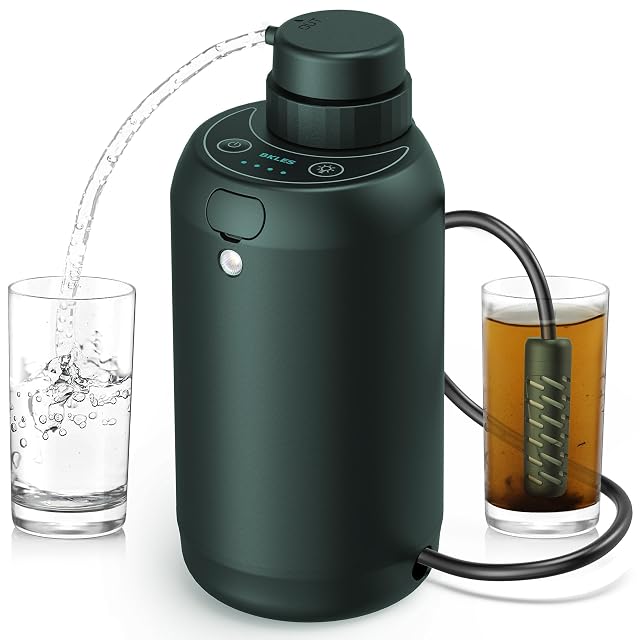
0.01 micron, doubled, stated · six-level system with UF membranes, PP cotton, KDF and carbon · 700 ml/min from an electric pump · 168 liters per charge, which is not a cartridge life · 350 g (12.3 oz) · 1.5 m (5 ft) hose · emergency light
The only electrically pumped filter in this group — six stages, a 1.5 meter (4.9 ft) hose and 700 milliliters a minute — publishing a liters-per-charge figure where this shelf asks for a cartridge life.
Best for: Group use at a vehicle camp, where pumping by hand for twenty liters is the thing you want to avoid
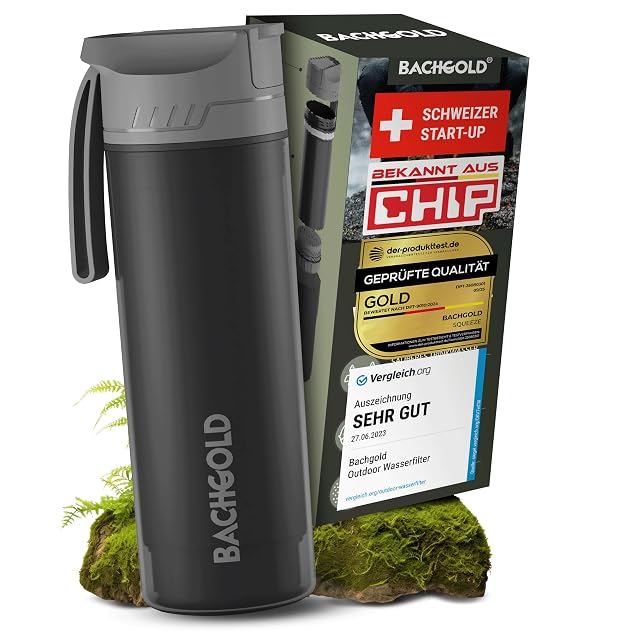
Press filter bottle · 500 ml · 0.2 micron stated · hollow fiber with carbon · 1500 liter cartridge
A 500 ml press bottle that publishes volume, pore size, element type and cartridge life — four of the seven columns this hub compares — and quotes the coarsest micron figure of the six filters here that give one.
Best for: A short walk or a run where one small bottle refilled at the stream is the whole water plan.
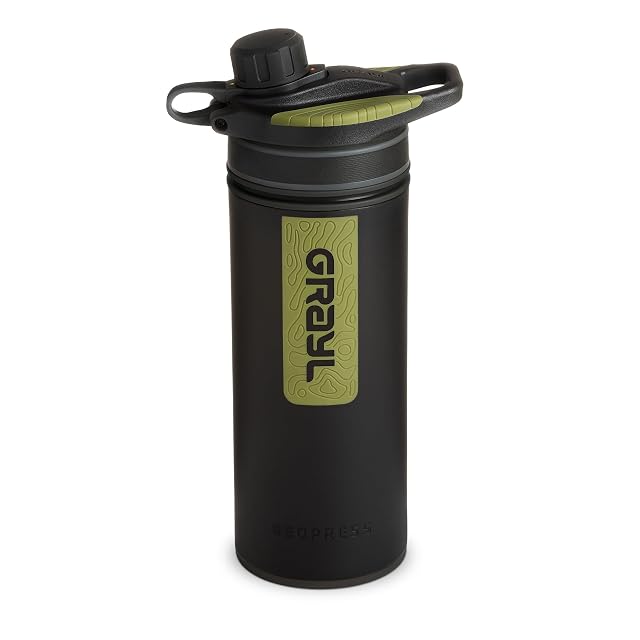
Press bottle · 710 ml · 250 liter replaceable cartridge · no pore size published
A 710 ml press bottle with a replaceable cartridge rated at 250 liters, and the most talkative claim list on this shelf — every one of which is written here as the maker’s claim, because no pore size is published to check any of it against.
Best for: Travel where one bottle is treated at a time and the cartridge is expected to be replaced as a routine cost.