Skip to content

A first camping stove, chosen on the fitting rather than the wattage

Every stove on this shelf publishes an output figure and almost none publishes a boil time, which makes the headline watts a poor way to choose. The fitting is a better one, because it is the part you cannot change later.

Before anything else on this page: never light a stove inside a tent, a vestibule, a van or any other enclosed space. Cook in the open air and follow the instructions that come with the stove. Nothing below changes that.

With that settled, the buying decision is simpler than the marketing suggests, because the number printed largest is the one that tells you least.

The wattage problem

Every gas stove here publishes an output figure. The SOTO states 3,260 W. Elfmonkey states 2.2 kW with a gas consumption of approximately 160 g per hour. Campingaz states 2,200 W. Green Camp states 2.1 kW with approximately 155 g per hour. Z.M.C states two burners of 2.0 kW each, also at 155 g per hour. The WiKa alcohol burner states approximately 1,200 W.

Now the part that matters: not one of these listings publishes a boil time, and not one publishes the volume of water any boil time would refer to. Output is a rate of energy leaving the burner. Time to boil is what you actually experience, and it depends on the pot, the lid, the wind, the starting temperature of the water and the altitude, none of which appear on a product page.

Where a listing gives grams per hour alongside the watts, that pair is more useful than either alone: it tells you roughly how long a 227 g cartridge lasts at full output, which is a planning figure you can act on.

The fitting, which is the decision that lasts

Three incompatible systems appear on this shelf, and choosing between them is choosing where you can buy fuel.

Screw-on canisters to the Lindal valve standard. The SOTO takes these, and its listing names the standard. It also states butane, isobutane and propane mixes and states that it is not suitable for 100 per cent propane. This is the international backpacking fitting: light, widely stocked in outdoor shops, and the one to choose if the stove goes in a pack.

MSF-1a bayonet cartridges, in the 227 g size. Green Camp names the bayonet valve and states that the supplied cartridges meet EN 417. EVOCAMP names MSF-1a 227 g in its title and its bullets. Elfmonkey names MSF-1a and ES-01 together. Z.M.C names MSF-1a 227 g and holds two of them at once, one per burner. This is the supermarket and hardware-shop fitting across much of Europe, and it is why these stoves ship with cartridges by the boxful.

A proprietary cartridge. Campingaz states compatibility with its own CP250 cartridge. Its listing does not describe that fitting as an EN 417 screw thread or as an MSF-1a bayonet, so read it as its own system: excellent if that brand is already what your local shop stocks, awkward if it is not.

No cartridge at all. The WiKa is an alcohol burner. There is no fitting, no valve and no igniter; it burns ethanol, alcohol, spirit and alcohol-based liquids, and it needs a pot stand or a stove body you already own.

Weight, and who is actually carrying it

The SOTO states 81 g for the stove, with the canister not included and the supplied stuff sack not weighed separately. It also states a packed size of 3.9 x 3.9 x 7.2 cm and a pot support 10.6 cm across the outside of a four-arm folding stainless steel spider. That combination — a labelled weight, a packed size and a pot support width — is the fullest set of carrying figures on this shelf.

The WiKa is lighter still, and its listing is candid about being two different numbers: 23 g in the title and about 25 g in the maker’s own bullet, both for the burner alone, neither labelled trail or packed.

EVOCAMP states 1.5 kg without saying whether that covers the stove alone, the stove in its case, or the stove with a cartridge fitted. Elfmonkey publishes dimensions instead — 340 x 119 x 285 mm for the stove itself, with the carry case included and not dimensioned. Campingaz, Green Camp and Z.M.C publish no weight at all.

That is the honest division of this family. One stove is designed to be carried and publishes carrying figures. The rest are designed to be lifted from a boot to a table, and their listings behave accordingly.

Pot support width, the figure that decides your pan

Only two listings here answer the question people ask after the stove arrives.

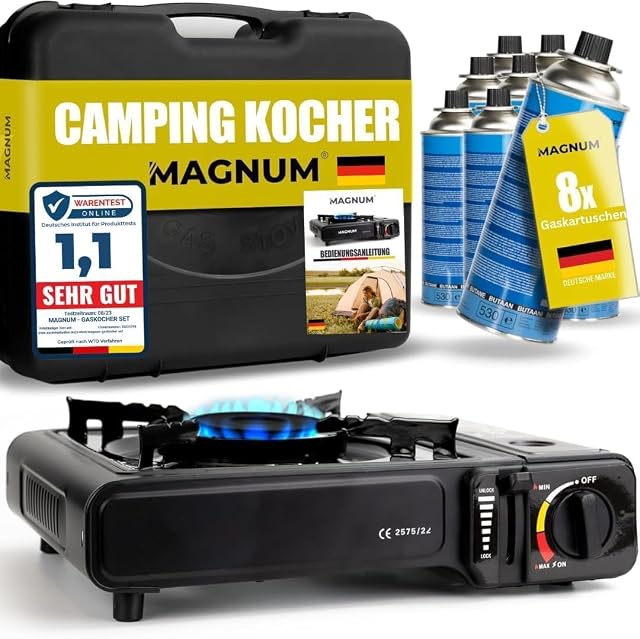
The SOTO states 10.6 cm across the pot support, which is a backpacking figure: it suits a narrow pot and it will not steady a wide frying pan. The Magnum stove elsewhere on this site states cookware up to 22 cm in diameter, which is the other end of the same measurement.

If you already own a pan, this is the number to look for, and it is missing from most of the shelf.

Ignition and regulation

Piezo ignition is close to universal here — Campingaz, Elfmonkey, EVOCAMP, Green Camp and Z.M.C all state it, and the SOTO states a stealth piezo built into the burner shaft and worked by a push button. The WiKa states no igniter at all, which is normal for an alcohol burner.

Pressure regulation is rarer and it is worth having. EVOCAMP states an integrated pressure regulator described as keeping the stove running stably. Z.M.C states a pressure regulator alongside stepless flame adjustment. A regulator is what keeps output steady as a cartridge empties and cools, and only those two listings name one.

Which stove for which trip

The SOTO if the stove goes in a pack. Eighty-one grams, a known packed size, and the fitting that is stocked wherever walkers shop.

Green Camp if you want the cartridge standard spelled out and a season of fuel in the same box.

EVOCAMP for the pressure regulator and the named cartridge, in a case.

Elfmonkey if you want the stove dimensioned before it takes up space in a boot.

Campingaz if that brand’s cartridges are already what your shop sells.

Z.M.C for a fixed camp kitchen where two pans run at once.

The WiKa if you already own a pot stand and want the lightest possible burner to sit in it.

And whichever you choose: outside, always, with the instructions read.
What we would carry, and why

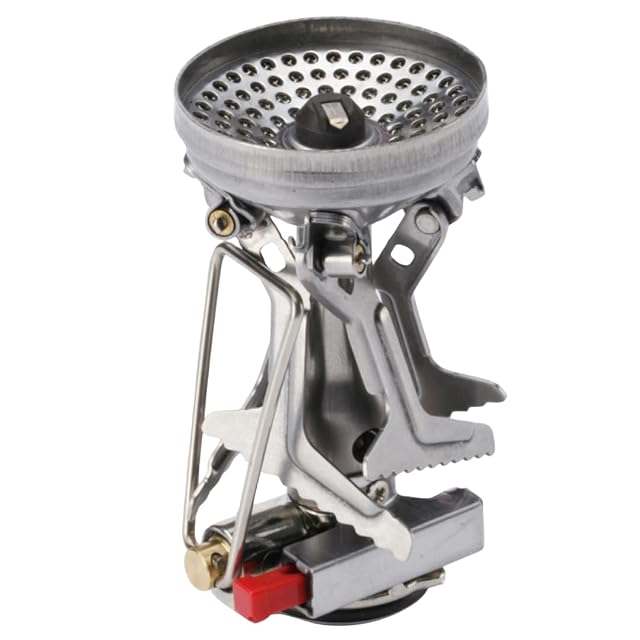
  1. SOTO Amicus OD-1NV

    Screw-on canister stove · 3,260 W stated · Lindal valve standard · 81 g · 3.9 × 3.9 × 7.2 cm packed · 10.6 cm pot support · stealth piezo

    The one backpacking stove in this hub, and the one listing that publishes a packed size. It screws onto a standard canister, states the highest output here and names the gas mixes it will and will not take.

    Best for: Walking with the stove in the pack rather than the boot, where 81 g and a known packed size decide the purchase.

    ≈ $50 / £39 / 53 €

  2. Green Camp single-burner stove, 2.1 kW, 8 cartridges

    Single-burner gas stove · 2.1 kW stated · approximately 155 g/h · MSF-1a bayonet valve, EN 417 stated · 8 × 227 g cartridges · piezo ignition

    A cased tabletop stove sold with eight cartridges, and the only listing in this hub that names both the MSF-1a bayonet valve and the EN 417 standard those cartridges are said to meet. The brand field and the title do not agree.

    Best for: A camper who wants the cartridge standard spelled out and a full season of cartridges in the same box.

    ≈ 33 €

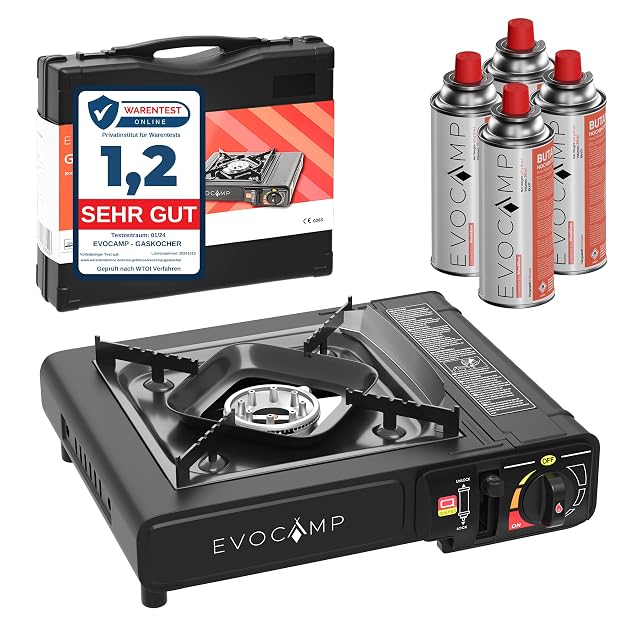
  3. EVOCAMP single-burner MSF-1a stove, 1.5 kg

    Single-burner gas stove · MSF-1a 227 g cartridges · integrated pressure regulator · 1.5 kg stated · piezo ignition · 4 cartridges and case

    The most fully specified tabletop stove in this hub: it names the MSF-1a cartridge, states a pressure regulator and publishes a weight — three lines most of its neighbours leave blank. It publishes no output.

    Best for: A camper who wants the cartridge standard named in writing before ordering, and a case to keep it in.

    ≈ 32 €

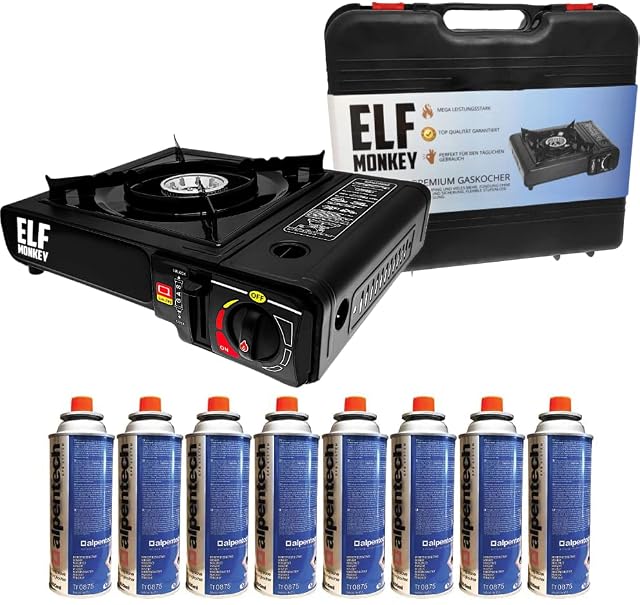
  4. Elfmonkey single-burner stove, 2.2 kW, 8 cartridges

    Single-burner gas stove · 2.2 kW stated · approximately 160 g/h · MSF-1a / ES-01 cartridges · 340 × 119 × 285 mm · piezo ignition · case

    A cased tabletop stove that publishes an output, a consumption, its own dimensions in millimetres and two cartridge designations. It leaves the weight and the pot support width blank.

    Best for: A camper who wants the cartridge designation written down and a dimensioned stove before it takes up space in the boot.

    ≈ 37 €

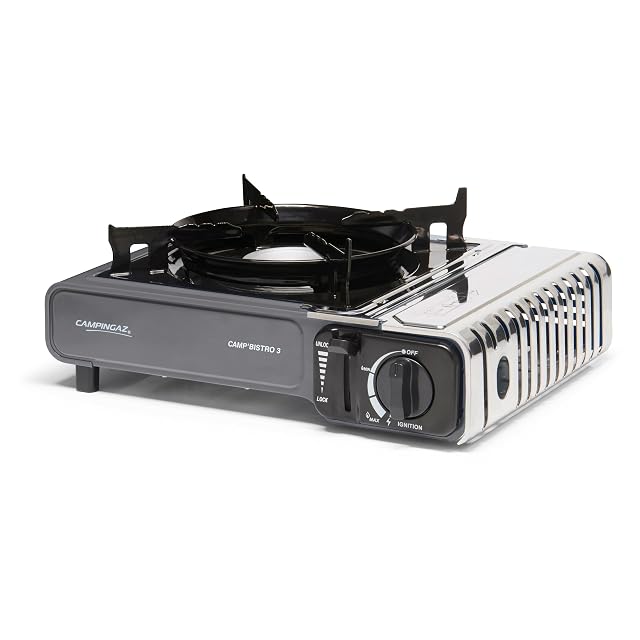
  5. Campingaz Camp’Bistro 3

    Single-burner gas stove · 2,200 W stated · Campingaz CP250 cartridge · piezo ignition · carry case included

    A single-burner tabletop stove tied to one named cartridge — the Campingaz CP250 — with an output figure, a piezo igniter and a carry case, and no weight, boil time or dimensions anywhere in the listing.

    Best for: A car camp or a van kitchen where Campingaz cartridges are already the standard on the shelf.

    ≈ 22 €

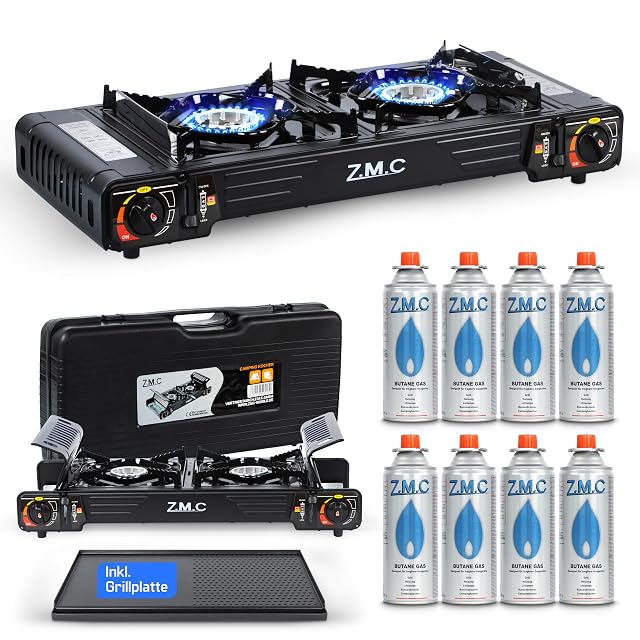
  6. Z.M.C twin-burner stove, 2 × 2.0 kW, griddle

    Twin-burner gas stove · 2 × 2.0 kW stated · 155 g/h · MSF-1a 227 g cartridges, two on board · pressure regulator · griddle plate · 8 cartridges

    The only twin-burner stove in this hub, with a griddle plate, room for two cartridges at once and a stated pressure regulator. It names the cartridge standard and never gives a weight or a size.

    Best for: A fixed camp kitchen where two pans run at once and the stove is carried from the car to the table.

    ≈ 80 €

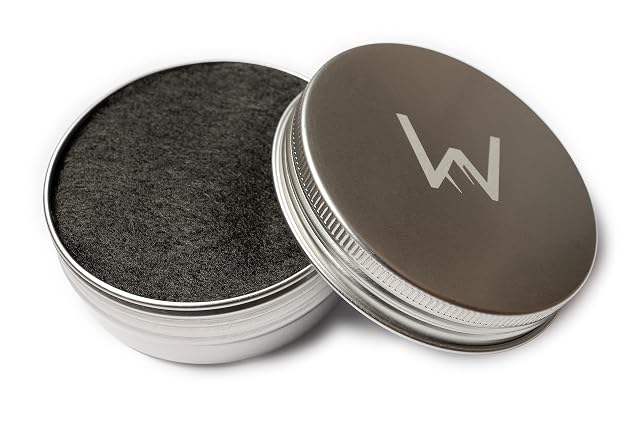
  7. WiKa UltraLight spirit burner

    Alcohol burner · approximately 1,200 W stated · 23 g in the title, about 25 g in the maker’s bullet · no canister fitting · no igniter

    An aluminium alcohol burner with a carbon felt insert, and the only stove in this hub that takes no gas canister at all. It states an output and a weight — and gives two different weights for the same burner.

    Best for: A walker who already has a pot stand or a compatible stove body and wants the lightest possible burner to sit in it.

    ≈ 13 €

What people ask before buying

Why is the fitting more important than the wattage?

Because you buy the stove once and the cartridge every trip. A screw-on Lindal valve, an MSF-1a bayonet and a Campingaz CP250 are three different supply chains, and a shop that stocks one may not stock the others.

Does a higher wattage mean a faster boil?

Not on the evidence these listings give. Not one stove here publishes a boil time or a boil volume, so output cannot be converted into minutes. Pot size, wind, starting water temperature and pot material all sit between the two figures.

Which stoves name the standard behind their cartridge?

Green Camp states that its supplied cartridges meet EN 417. Elfmonkey names MSF-1a and ES-01 together. EVOCAMP and Z.M.C both name MSF-1a 227 g. Magnum and Mediablue, elsewhere on this site, name a 227 g cartridge without naming a fitting standard at all.

Can I use a stove inside a tent or a vestibule?

No. Never light a stove of any kind inside a tent, a porch, a vehicle or any other enclosed space. Cook outside, in the open air, following the maker's own instructions.

Prices in these summaries were read on the dates each review gives. The live figure sits beside every product.

The tool we use ourselves

Chosen your kit? Now buy it at the right price.

This is a summer category: demand for tents, sleeping bags and stoves is at its lowest in November and at its highest in July and August, and a price crossed out in the middle of that swing tells you nothing on its own. UniverTrack records what each retailer has actually been charging, so a reduction is measured against the price that really held rather than against one that never did, and alerts you when it is genuinely the moment to buy.

Real price historyBuy-now alertsAI buying assistant
Try free for 14 days →
No commitment · Cancel in one click · 5 languages