Skip to content

Light at camp, where a lumen without its hours means nothing

A lumen figure on its own is an advertisement. A lumen figure with the hours it lasts is a measurement you can plan a night around, and only a minority of the lamps on this site publish the pair together.

There is one honest way to publish the output of a lamp: give the lumens, and give the hours that output lasts. Everything else on this shelf is a headline.

The scale of the problem is easy to see. The Hyted and TravelHawk headlamps elsewhere on this site both state 18,000 lumens and neither publishes a runtime, a beam distance, an ingress rating or a weight. Read those figures as marketing and move on; the lamps below publish more than that, and the ones that publish most sit at the top.

The lanterns that publish the pair

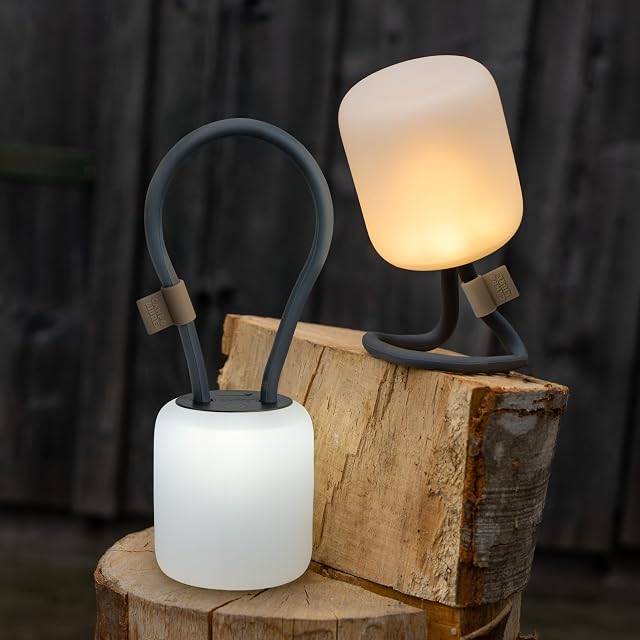
The Campo Libre lantern does the thing this family almost never does: it names three outputs and attaches its own runtime to each. Five lumens in the night-light mode for up to 200 hours, 100 lumens in normal use for up to 8 hours, 300 lumens in the reading mode for up to 3 hours. It also states IPX4, a USB-C port with a cable supplied, a silicone body and a flexible removable handle for hanging, standing or mounting. The battery capacity is not given, which is the one gap in an otherwise complete page.

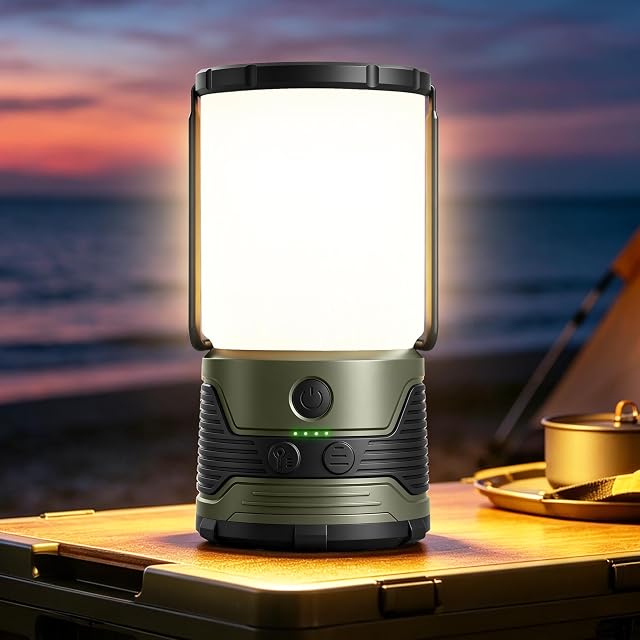
The Glocusent does the same at greater length: five stepless dimmed levels running from 5 to 340 lumens, plus a 1200 lumen mode that the maker states lasts 3 minutes. It states 14 hours at 340 lumens and 130 hours at 5, 400 hours in the night-light mode, four colour temperatures at 1800 K, 3000 K, 4500 K and 6000 K, a 5000 mAh pack, a USB-C port stated to charge fully in 3.5 hours and to reverse-charge other devices at 10 W, and a hidden hook under the handle.

A three-minute burst mode published as three minutes is a maker being straight with you. It is the same figure another brand would have printed in the title without the duration.

The lanterns that publish hours without a level

This is the commoner pattern and it is worth recognising.

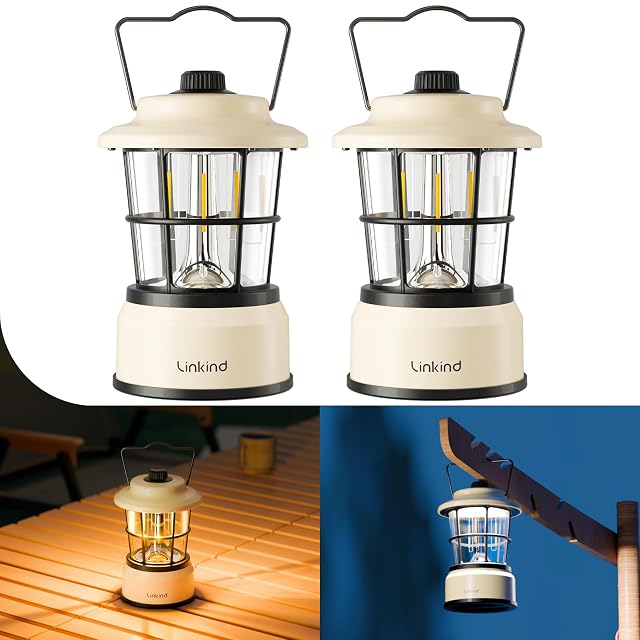
Linkind is the interesting middle case: it states up to 4.5 hours on the cool white LED and up to 200 hours in the warm-light mode, and each figure is tied to a named mode rather than floating free. It states 6500 K for the upper LED and 2700 K for the central filament, three AA cells not included, 1.2 V rechargeable cells stated to be compatible, and 270 g without cells. What it does not publish is a lumen figure at all — so it gives you hours and colour and no brightness, which is the mirror image of the usual failure.

The Blukar, NATURBUMMLER and NORDMUT lanterns elsewhere on this site all state a long runtime with no level attached — 10 to 50 hours on one, up to 200 hours on the other two — on lamps that dim steplessly and publish no output. A single hours figure on a steplessly dimmable lamp cannot be acted on, because the setting it refers to does not exist as a named thing.

The headlamps, and where each one stops

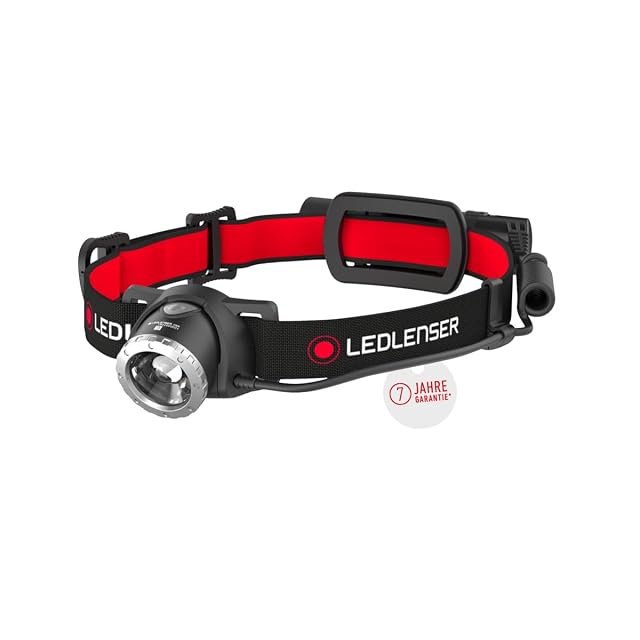
Ledlenser publishes three figures where most publish one: up to 600 lumens, 150 metres of beam distance and up to 120 hours. The catch is that the 120 hours is printed beside the other two rather than attached to a setting, so it is not the runtime at 600 lumens and the listing does not say which level it is. It also publishes two ingress ratings that are not the same — IP54 in the title, IPX4 in a bullet — and a focusing optic and an integrated red rear light. It is the fullest headlamp specification here and it still leaves the buyer with a question to put to the maker.

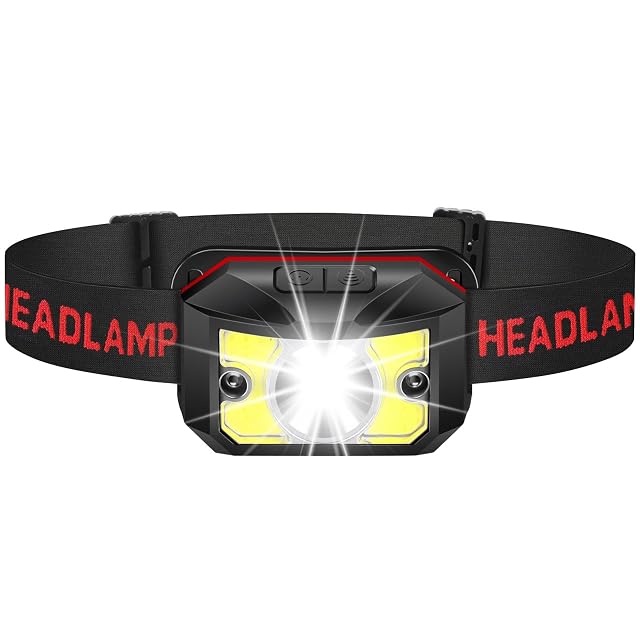
Winzwon takes the opposite approach and it is refreshing: no lumen claim at all, and instead up to 96 metres of beam distance stated for the bright mode, about 6 hours in the bright mode and about 11 hours in the low mode, a 3 to 4 hour charge, IPX4, about 68 g, and a red COB light with an SOS red flash. Hours tied to named modes, with no headline number to distract from them.

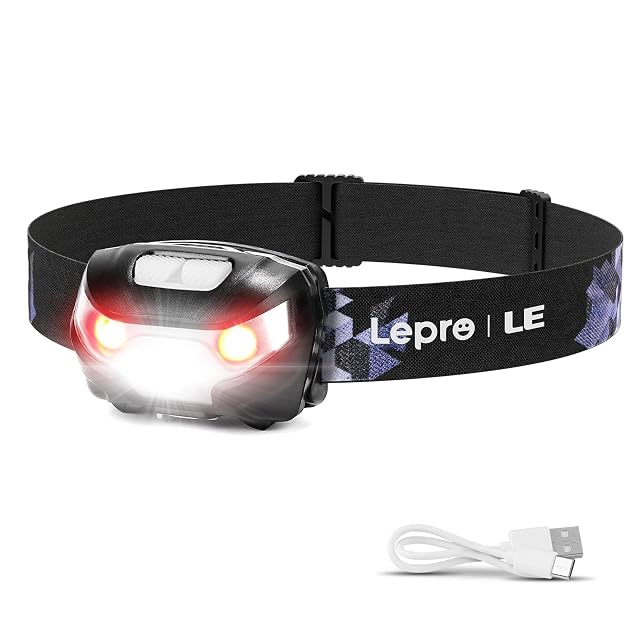
Lepro states up to 150 metres and 4.5 to 37 hours as a range with neither end attached to a mode, across five modes, on a 1200 mAh pack, at 81 g, IPX4, with red steady and red flashing on the front. The distance is real and the hours are a bracket.

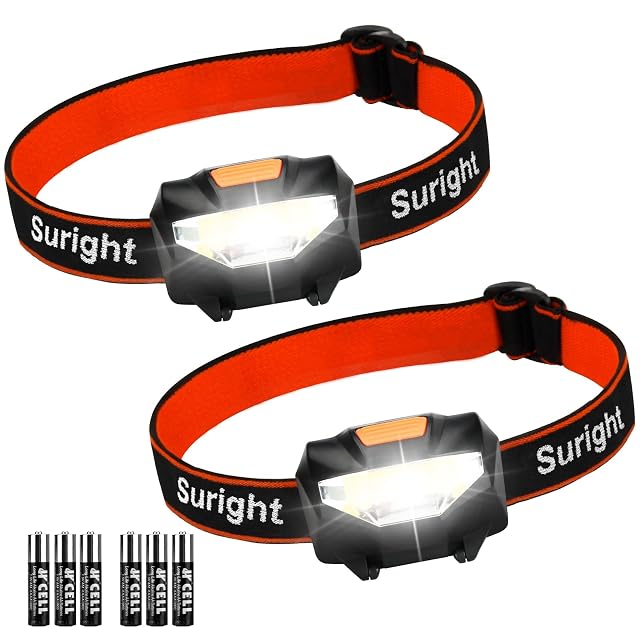
Suright is the small honest one: 140 lumens, 10 metres at most, three AAA cells per lamp supplied, IPX4, 0.08 kg per lamp. Ten metres is not a claim anyone would invent, and a lamp that publishes it is telling you exactly what it is — a camp-chores light and a spare for the car.

Cells, and what happens on the fourth night

Rechargeable packs dominate this shelf and most of them do not name a chemistry, a capacity, or whether the cell can be replaced. That last omission matters: a sealed pack sets the working life of the whole lamp.

Replaceable cells are the counterweight. Linkind runs on three AA, stated, with rechargeable 1.2 V cells stated to be compatible. Suright runs on three AAA per lamp, supplied. Those are the lamps that keep working on a long trip when there is no way to charge anything.

Hanging, and the detail people forget

A camp lantern is only as good as the place it can hang from. Campo Libre states a flexible removable handle for a tent, a van, a balcony or a rucksack. Glocusent states a non-slip handle on the top and a hidden hook underneath. Linkind states a convex anti-slip carry handle stated for hanging as well as carrying, with no hook named.

Look for a hook or a magnet before the lumens. A lantern standing on the tent floor lights the floor.

Choosing a pair

Most camps want two lamps: one on your head for walking, cooking and finding things, and one hanging overhead for everything else.

For the head, Winzwon or Lepro if hours and distance matter more than a headline, Ledlenser if a focusing beam is worth putting up with a contradictory ingress rating, Suright if cells bought anywhere matter more than reach. For the tent, Campo Libre for the cleanest set of output-and-runtime pairs, Glocusent if colour temperature and a power bank in the same object are worth the extra, Linkind if warm light and AA cells are the priority.
What we would carry, and why

  1. Campo Libre 300 lm / 3 h, 100 lm / 8 h, 5 lm / 200 h stated

    Rechargeable lantern · 300 lm for up to 3 h, 100 lm for up to 8 h, 5 lm for up to 200 h · silicone body · removable flexible handle · IPX4 · USB-C

    A silicone lamp sold equally as a camping, balcony and table light, and one of two here that publishes an hour figure against each of its three outputs.

    Best for: A tent, a van or a balcony where the lamp is read by at 300 lumens and left glowing at 5.

    ≈ £36 / 34 €

  2. Glocusent 5 to 340 lm stated, 14 h to 130 h across those levels, 5000 mAh

    Rechargeable lantern · 5 to 340 lm across five dimmed levels, plus a 1200 lm mode stated at 3 minutes · 14 h at 340 lm and 130 h at 5 lm · 1800 K to 6000 K · 5000 mAh · USB-C with reverse charging

    One of two lanterns here that publishes an output and the runtime that belongs to it — 14 hours at 340 lumens, 130 at 5 — and it names four colour temperatures as well.

    Best for: An evening light for a tent or a van, chosen by someone who wants to know what the middle setting costs in hours.

    ≈ $20 / £18 / 19 €

  3. Ledlenser H8R, 600 lm, 150 m, up to 120 h stated

    Rechargeable headlamp · 600 lm, 150 m and up to 120 h all stated · focusing optic · red rear light · IP54 in the title and IPX4 in the bullets

    The only lamp in this hub to publish lumens, beam distance and runtime together — and the listing gives two different ingress ratings, IP54 in the title and IPX4 in the bullets.

    Best for: A buyer who wants a focusing beam and three published figures, and will write to the maker about which ingress rating is the real one.

    ≈ £68 / 50 €

  4. Winzwon USB-C rechargeable, 68 g stated, 6 h and 11 h stated

    Rechargeable headlamp · 96 m beam distance stated · 6 h high and 11 h low, stated · IPX4 · about 68 g · no lumen figure

    The one lamp here that publishes a runtime beside the mode it applies to — about 6 hours on high and about 11 on low — and never gives a lumen figure at all.

    Best for: A first rechargeable head torch for evening walks and camp chores, bought on the hours rather than on a lumen claim.

    ≈ 7 €

  5. Lepro USB-C rechargeable, 1200 mAh, 150 m stated, 81 g stated

    Rechargeable headlamp · 150 m beam distance stated · 4.5 to 37 h stated, no mode attached · 1200 mAh · IPX4 · 81 g

    A rechargeable head torch that publishes a 150 metre beam, an 81 g weight and a runtime range of 4.5 to 37 hours — without saying which end belongs to which mode.

    Best for: A light rechargeable lamp for dog walks and camp, where 150 metres of reach matters more than an audited hour figure.

    ≈ $16 / £12 / 10 €

  6. Linkind CL1 retro lantern, pack of two, 4.5 h and 200 h stated, 270 g

    AA lantern, pack of two · 4.5 h on cool white and 200 h on warm, both stated · 6500 K and 2700 K · 3 × AA, not included · 270 g without cells · IPX4 in the title and IP44 in the bullets

    A retro two-pack running on replaceable AA cells, publishing an hour figure for each of its two light sources and two different ingress ratings for itself.

    Best for: A pitch where the light should look like a fireside rather than a kitchen, and where cells can be bought anywhere.

    ≈ £20 / 20 €

  7. Suright pack of two, 140 lumens stated, 3 × AAA

    AAA headlamp, pack of two · 140 lumens stated · 10 m beam distance stated · IPX4 · 0.08 kg per lamp · no runtime

    A two-pack of AAA head torches — the only lamps here running on cells you can swap in the dark — publishing 140 lumens and a 10 metre beam and not one hour of runtime.

    Best for: Camp chores and a spare in the car, where cells bought in a village shop matter more than reach.

    ≈ 8 €

What people ask before buying

Why is a lumen figure alone not enough?

Because brightness and endurance trade against each other, and the trade is the whole decision. A lamp that states 1200 lumens for three minutes and 5 lumens for 400 hours has told you something useful; a lamp that states 18,000 lumens and no runtime at all has not.

Which lamps here tie each output to its own hours?

The Campo Libre lantern states 300 lumens for up to 3 hours, 100 for up to 8 and 5 for up to 200. The Glocusent states 14 hours at 340 lumens and 130 hours at 5. Those are the two complete sets of pairs on this page.

What is going on with the two different IP ratings?

Two lamps here publish two ratings that are not the same. The Ledlenser states IP54 in its title and IPX4 in a bullet; the Linkind states IPX4 in its title and IP44 in a bullet. Both figures come from the maker, and this page reports them as written rather than choosing between them.

Are rechargeable or replaceable cells better at camp?

It depends on the trip length. A sealed rechargeable pack is lighter and needs a power source; AA and D cells can be bought in a village shop. The Linkind runs on three AA cells and the Suright on three AAA, both stated; the Lepro D-cell lantern elsewhere on this site takes three D cells per lantern.

Prices in these summaries were read on the dates each review gives. The live figure sits beside every product.

The tool we use ourselves

Chosen your kit? Now buy it at the right price.

This is a summer category: demand for tents, sleeping bags and stoves is at its lowest in November and at its highest in July and August, and a price crossed out in the middle of that swing tells you nothing on its own. UniverTrack records what each retailer has actually been charging, so a reduction is measured against the price that really held rather than against one that never did, and alerts you when it is genuinely the moment to buy.

Real price historyBuy-now alertsAI buying assistant
Try free for 14 days →
No commitment · Cancel in one click · 5 languages