On the maker’s own page
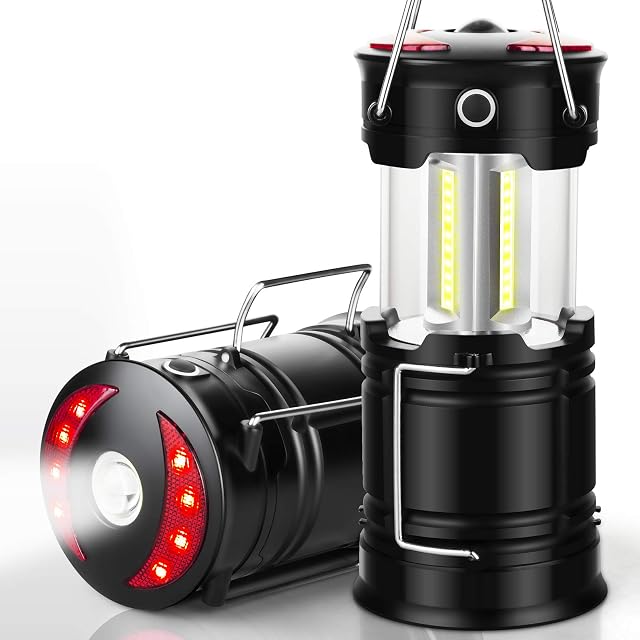
A 2-in-1 mini lantern and flashlight, two-pack, zoomable.
EverBrite states that the zoomable feature lets the lamp work as a camping
lantern and as a portable flashlight at a weight of 0.19 lb; three lighting modes
— high, low and strobe — from a 3 W LED lamp bead reaching 60 LM/99 FT, with 360
degree lighting when the light post is screwed out; a mode order of
high-off-low-off-strobe-off that can also be cycled high-low-strobe without
switching off; and a removable hook that attaches to both sides, hooked for
hanging and unhooked to stand on the ground or a table.
No runtime. No power source. No chemistry. No charge port. No IP rating. No
color temperature.
No runtime, at any level
The figure this shelf’s buying tip exists for.
Ignore the boost, read the middle setting: that is the level an evening uses, and
the one that decides whether the lantern lasts a week away.
Not one lantern in this group publishes a middle-setting runtime. Five publish
something — 200 hours on low, 80 on low, 120, 24, and 12 at maximum. This
publishes nothing, and names no cells, so nothing can be estimated either.
A torch that becomes a lantern
Screwed down, and screwed out.
Down, it throws a claimed 99 feet from a 3 W bead. Out, the post extends and the
light goes 360 degrees.
This shelf’s introduction says a lantern on the ground lights the ground. This is
the only lamp in this group whose hook fits either end — hooked to hang, unhooked to
stand.
Sixty lumens
The lowest output here, and the honest kind.
This group runs to a claimed 1800. This shelf’s introduction warns that a maximum
figure normally belongs to a boost mode lasting a small fraction of the charge,
and two lanterns here publish exactly that: four minutes and three minutes.
Sixty lumens continuous is a reading light. Without a runtime beside it, it still
cannot be compared with anything.
EverBrite’s instructions carry the cells and the use. Nothing here replaces them,
and nothing on this page describes any product as safe.
Availability
The American Amazon store was listing it at about $10 at the time of writing.
Every figure here is what Keepa held on the day this page was last revised. Offers and prices shift without warning.
Prices quoted in this text were read on October 8, 2026. The live price is at the top of the page.
What people ask before buying
How long does it run?
The listing does not say, at any of its three levels. That is the gap this shelf's buying tip is written for: ignore the boost figure and read the runtime published for the middle setting, because that is the level an evening actually uses. Not one of the seven lanterns in this group publishes a middle-setting runtime, but five publish something — 200 hours on low, 80 hours on low, 120 hours, 24 hours, 12 hours at maximum. This one publishes nothing, and it does not name the cells either, so the figure cannot even be estimated.
What does the zoom actually do?
It turns one lamp into two. Screwed down, the lamp is a torch throwing a claimed 99 feet from a 3 W bead; unscrewed, the light post extends and the lamp becomes a 360-degree lantern. This shelf's introduction is firm that a lantern on the ground lights the ground, which is why the hook matters here as much as the zoom — and this is the only listing in this group whose hook fits either end, so the lamp hangs from one side and stands on the other.
Is sixty lumens usable?
For a tent and a table, yes; for a pitch, no. This group runs from 60 lumens here to a claimed 1800, and this shelf's introduction warns that the maximum figure normally applies to a boost mode lasting a small fraction of the charge — two lanterns in this group publish boost durations of four and three minutes. Sixty lumens as a continuous output is a reading light. What is missing is the comparison the shelf is built on: without a runtime, sixty lumens cannot be set against anything.