On the maker’s own page
Two AAA headlamps, 100 lumens, IPX4, batteries included.
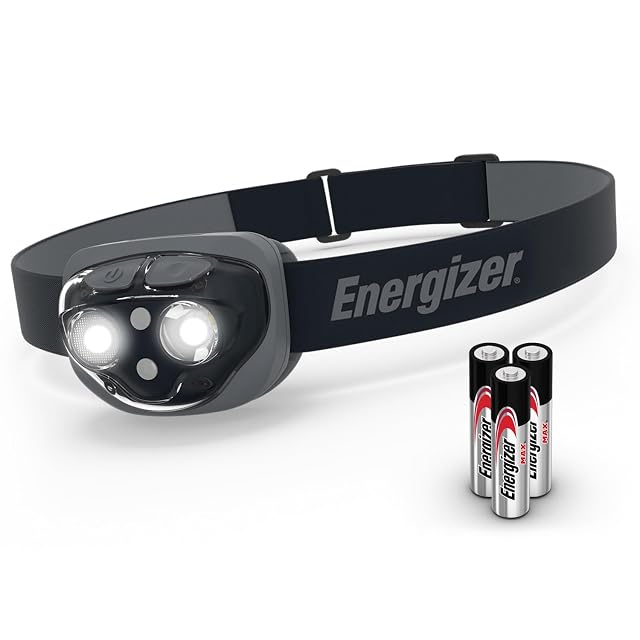
Energizer states two headlamps delivering hands-free LED light with four MAX AAA
batteries included; lightweight compact wear and a red light mode for night
vision; superior LED technology described as 12 times brighter than standard,
delivering 100 lumens and illuminating objects up to 40 meters (131 ft) away; IPX4 water
resistance and impact resistance up to one meter; and two light modes.
Then, in the maker’s description: 100 lumens on high, illuminating objects up to
4 meters (13 ft) away.
No runtime. No weight. No lock mode. No standard quoted.
Forty meters, and four
The same page, twice.
Two bullets give 40 m (131 ft). The description gives 4 m (13 ft).
A hundred lumens could plausibly support either reading — tens of meters on a
narrow beam, a few meters of useful flood — which is precisely why the
contradiction cannot be settled from outside.
This shelf’s introduction asks for beam distance alongside lumens and runtime as a
set. Published twice with two values, it is worth less than a blank.
Two modes, the fewest here
White, and red.
The other lamps in this group run from five modes to ten. This one has two, and
one of them is the red night-vision setting.
For a glovebox that is arguably the right number. For comparison against the rest
of this shelf, it is the smallest offer on it.
What survives the thin sheet
AAA, a meter of drop, and IPX4.
Four batteries in the box for two lamps, cells you can buy anywhere, splash
resistance from any direction, and impact resistance to one meter.
This shelf’s introduction names AAA compatibility as the thing that lets a lamp be
revived anywhere. In a car, that is most of the specification that matters.
Availability
The American Amazon store was listing it at about $17 at the time of writing.
Every figure here is what Keepa held on the day this page was last revised. Offers and prices shift without warning.
Prices quoted in this text were read on October 8, 2026. The live price is at the top of the page.
What people ask before buying
Forty meters or four?
The page says both. Two separate bullets state that the lamp illuminates objects up to 40 meters (131 ft) away; the maker’s description states up to 4 meters (13 ft). That is a factor of ten, and nothing on the page reconciles it. For what it is worth, 100 lumens is consistent with something in the tens of meters on a narrow beam and with a few meters of useful flood, so neither figure is absurd on its own — which is exactly why the contradiction cannot be resolved from the outside. This shelf's introduction explains why beam distance is meant to be published alongside lumens and runtime as a set; published twice with two values, it is worth less than not published at all.
Is a hundred lumens enough?
For a glovebox, a fuse box, a tent and a dog walk, yes. It is the lowest American figure on this shelf, where the rest run from 300 to a claimed 4000 and the European side reaches 18,000, and this shelf's introduction is right that those headline numbers are the least useful figure in the category. A hundred lumens is a working light rather than a trail light. What would settle it is a runtime — a hundred lumens held for eight hours is a better lamp than 500 lumens that fade in forty minutes — and no runtime is published.
What do I actually get for seventeen dollars?
Two lamps, four AAA batteries, IPX4 splash resistance, a one-meter impact rating, two light modes and a red night-vision mode. That is a sensible emergency pair, and the AAA compatibility is the part that matters most in that role: this shelf's introduction notes that an AAA lamp can be revived anywhere, which is the whole argument for keeping one in a car. What you do not get is any of the comparison figures — no runtime, no weight, and a beam distance the page cannot agree with itself about.