On the maker’s own page
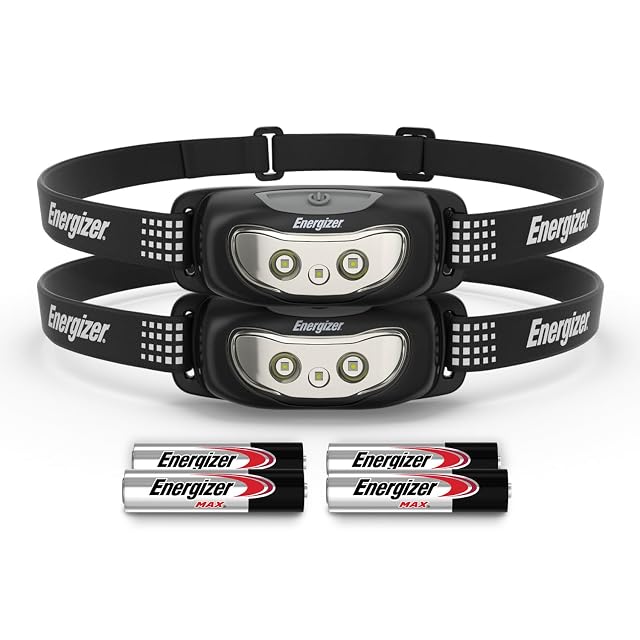
Five AAA headlamps, three light colors, batteries included.
EverBrite states five lighting modes in three colors — high white, medium white,
red, red flashing and green; an adjustable elastic strap and a head that tilts up
to 65 degrees; a memory function where a press of more than two seconds switches
the lamp off and recalls the last mode, specifically so that a red or green user
is not interrupted by white light; up to 300 lumens on high with up to 4 hours of
runtime, or 150 lumens on medium with up to 10 hours, from AAA batteries; and five
colored lamps at 2.12 oz each with 15 AAA batteries supplied.
No IP rating. No water claim. No beam distance. No standard quoted.
The one middle-setting runtime on this shelf
A hundred and fifty lumens, ten hours.
This shelf’s buying tip asks for the setting you will walk on rather than the
maximum. Seventeen lamps sit on this shelf and sixteen do not publish that
figure.
Here both settings carry their own hours: 300 lm for up to 4 h, 150 lm for up to
10 h.
What is still absent is the convention. No standard is quoted, so ten hours is
the maker’s own definition of the end — and no statement of regulation says
whether the 150 lumens is held across it or allowed to fade.
No ingress rating, and no claim either
The only lamp in this group to make none.
Six of the eight American lamps here state IPX4 or IPX5. This page states
nothing, and the uses it names are outages, storms, car kits, basements and
household work.
That is a consistent brief rather than an omission — but it is the figure to
weigh if these are going into a tent.
Memory, which is not a lock
Red stays red.
Two seconds off, and the next press returns to the mode you left. The listing
says why: so that a red or green user is not hit by white light.
This shelf’s introduction also asks for a lock mode that stops a lamp switching
itself on in a pack. That is a different thing, and it is not here.
Availability
The American Amazon store was listing it at about $22 at the time of writing.
Every figure here is what Keepa held on the day this page was last revised. Offers and prices shift without warning.
Prices quoted in this text were read on October 8, 2026. The live price is at the top of the page.
What people ask before buying
Why does the middle-setting runtime matter so much?
Because it is the only figure that describes the light you will actually use, and this is the one lamp on seventeen that publishes it. This shelf's buying tip says it plainly: compare lamps on the setting you will walk on, not the maximum. Here that column exists — 150 lumens for up to ten hours — alongside the high setting at 300 lumens for up to four. Every other listing on this shelf publishes either a peak figure with no hours, a span of hours with no mode, or a high-and-low pair on a two-level lamp that has no middle. What is still missing is the convention: no standard is quoted, so the ten hours is the maker’s own definition of empty.
Is there really no waterproof rating?
None. No IP code appears, and unlike every other lamp in this group the listing makes no rain or splash claim at all — the uses it names are power outages, storms, emergency preparedness, car kits, basements and household work. Read that as the lamp’s real brief. Six of the eight American lamps on this shelf state IPX4 or IPX5, which is splash resistance rather than immersion, and if these five are going into a tent or onto a hill the absence of any claim is the figure to weigh against the price.
What is the memory function for?
It protects your night vision between uses. Hold the switch for more than two seconds and the lamp goes off directly, remembering the mode it was on — so if you were using red or green, the next press returns to red or green rather than putting white light in your eyes. This shelf's introduction names a red mode as the fitting that leaves night vision alone, and this is the only listing in this group that thinks a step further about it. It is not a lock mode, though: nothing here prevents the lamp switching itself on in a bag.