A brand you can watch make the same trade twice
Lighting is judged on two numbers together — how much light, and for how long — because either one alone describes nothing. Lepro publishes exactly one of them on each of its listings here, and it is not the same one. That makes the pair an unusually clean illustration of why this site prints both columns and marks the empty one.
The lantern: an output, and silence about hours
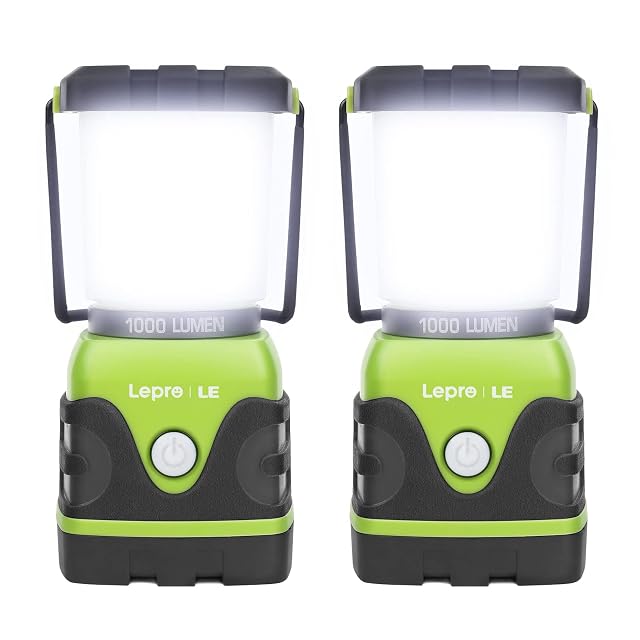
The D-cell lantern states up to 1000 lumens as a maximum, in the title and again in the bullets. That alone puts it ahead of much of its shelf, where output is left to adjectives. It also publishes IPX4, states three D cells per lantern (not supplied), and describes a hook at the base and metal handles at the top so it can hang from either end with the shade removed. What it does not publish is a runtime at any of its four dimmable modes, or a colour temperature for its cool white and warm white settings, or a weight — which matters, because you are supplying three D cells yourself.
The head torch: hours, and silence about output
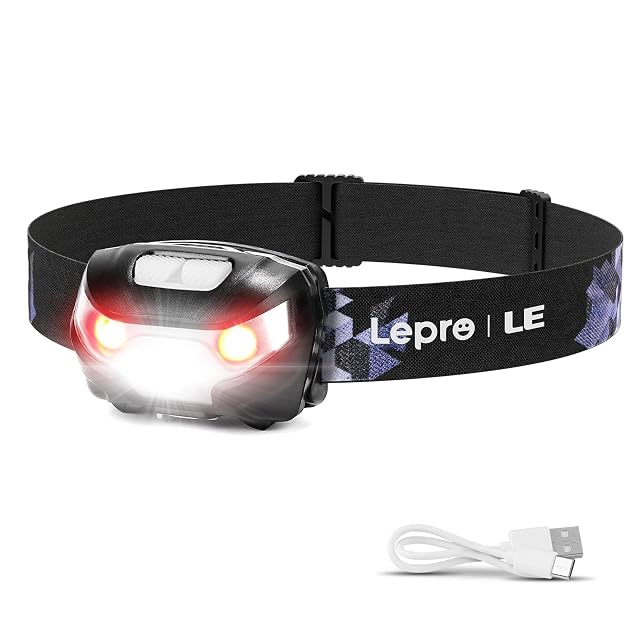
The rechargeable head torch publishes a beam distance of up to 150 metres, a stated 81 g, an IPX4 rating, a 1200 mAh pack over USB-C with a stated three-hour charge, and a red mode both steady and flashing on the front. Its runtime is given as 4.5 to 37 hours — a range with neither end attached to any of its five modes, which means neither figure can be used to plan an evening. No lumen figure appears anywhere on it.
What to take from that
D cells and a hook make the lantern a base-camp or power-cut object rather than a carried one, and the 1000 lumens tells you it is bright enough for a pitch. The head torch’s 150 metres and 81 g tell you it reaches far enough and weighs little enough for a dog walk. In both cases the missing figure is the one that would decide between this lamp and the next one along, and on both pages it is Not published on the listing.