A folding solar panel is the simplest object on this site and the one whose headline number is the least usable.
Peak wattage depends on how bright the sun is, what angle the panel sits at and how hot the cells have become. Every one of those varies. And here is the fact that shapes this page: not one panel listed on this site publishes the test conditions behind its stated peak output. The number is real in the sense that a maker printed it; it is not a measurement you can reproduce at a pitch.
So read the panels on what is checkable, and there is plenty.
The ports, which are the actual specification
This is where these panels genuinely differ, and where the good listings separate themselves.
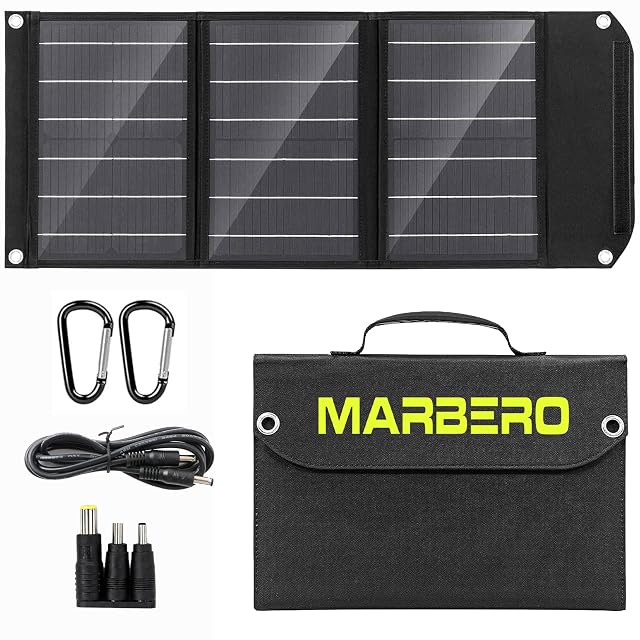
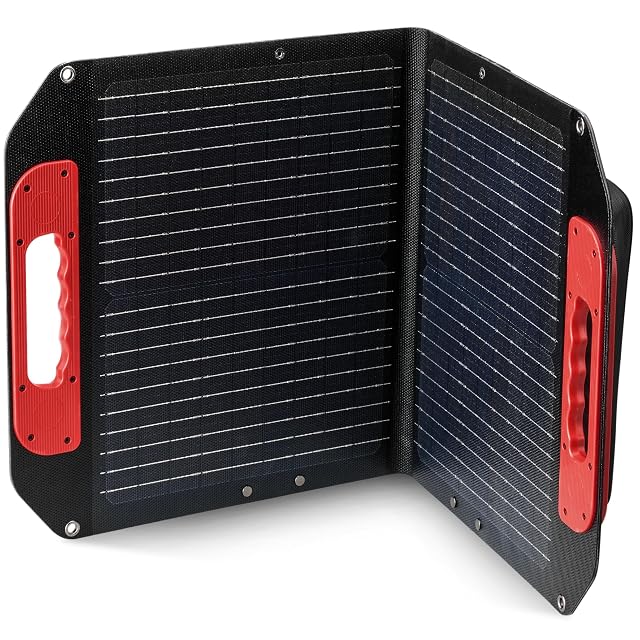
MARBERO publishes everything. Three outputs — a USB-C, a QC3.0 USB-A and a DC socket — and every voltage and current step behind them: USB-C at 5 V/3 A, 9 V/2.22 A and 12 V/1.67 A; the QC3.0 USB-A at 5 V/3.4 A, 9 V/2.5 A and 12 V/2 A; the DC at 16.5 V/1.81 A maximum. Nothing else on this shelf publishes at that level of detail, and it is the reason to look at this panel if a power station is in the picture.
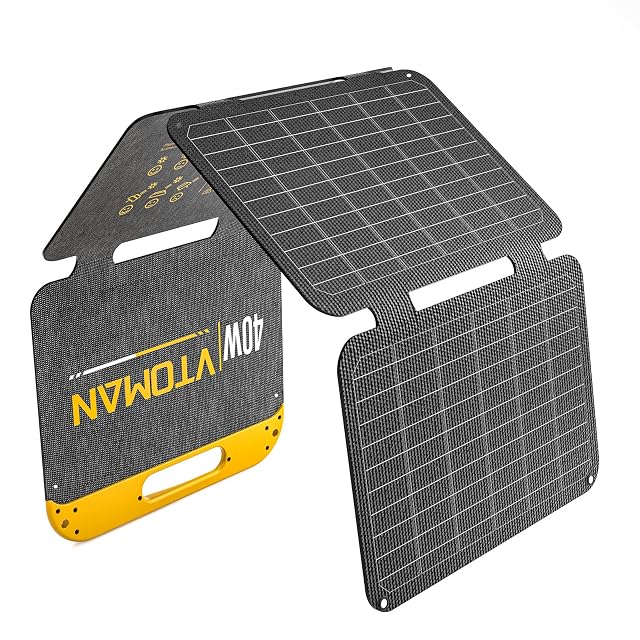
VTOMAN publishes the next best thing: PD 30 W on the USB-C, with 5 V/3 A, 9 V/3 A and 12 V/2.5 A named behind it. Power Delivery profiles matter because a laptop or a modern phone negotiates a voltage step rather than drawing whatever is offered, and knowing the 12 V step exists is worth more than another five watts of headline.
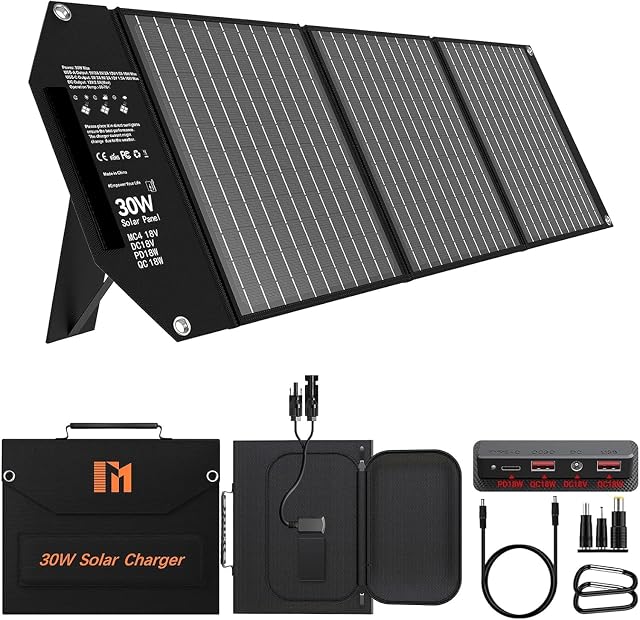
Mesuvida publishes five outputs — MC4, DC, two USB-A and one USB-C — with the USB sockets described as supporting QC 3.0 and PD 18 W stated on the USB-C, though without voltage or current steps behind it. MC4 and DC are the power-station route, and this is the panel to look at if that is the plan.
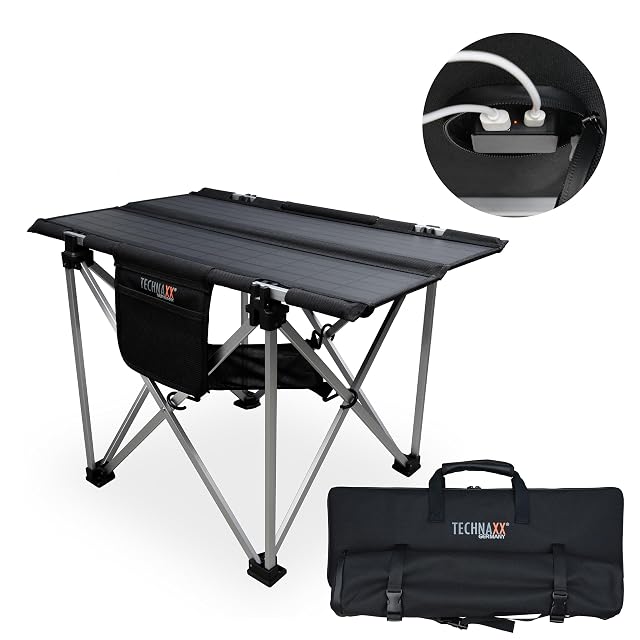
QUXV publishes two ports with their figures: USB-A at up to 5 V/2.4 A, USB-C at up to 5 V/3 A, and 5 V/4 A across the two together. technaxx publishes USB-A at 5 V/2.4 A and USB-C at 5 V/2.4 A up to 16 W.
Then the two that do not. Anker states USB-A and USB-C with no voltage and no current figure for either. Einhell states XT60, USB-A and USB-C with no figures for any of the three — which is a real omission on a panel whose XT60 lead is the reason to buy it, though for an owner of that maker’s own power station the lead in the box settles the question anyway. Xolunex states two QC-compatible USB outputs and supplies a three-output cable, without publishing steps.
Folded size and mass, and who publishes them
If the panel goes in a pack, these two figures decide it, and they are published on fewer than half of this shelf.
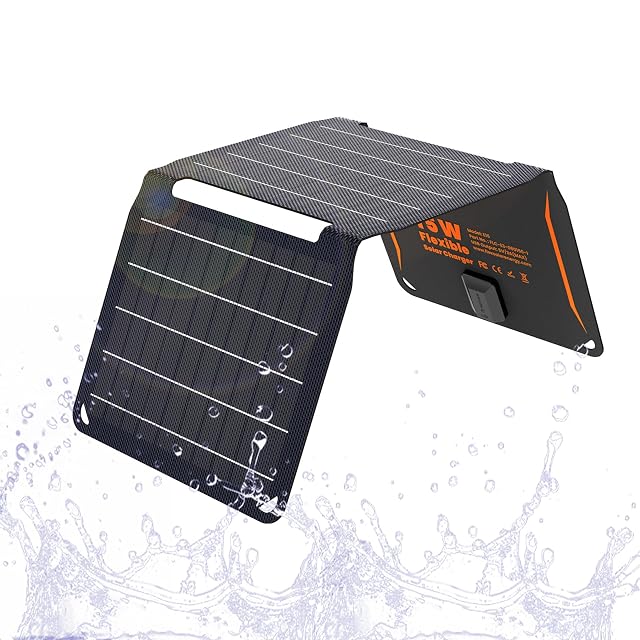
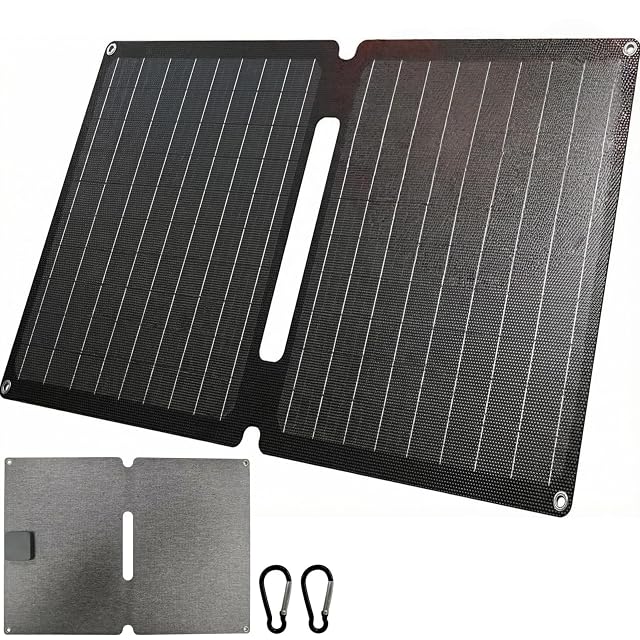
FlexSolar is the compact one: 15 W, folding to 19.8 x 22.4 x 1.8 cm, at 0.45 kg, with IP67 and a stated conversion of up to 24 per cent. No other panel on this site states a lower mass. For a day pack where a phone is the only thing being charged, that is the whole argument.
VTOMAN states 28 x 30 x 2.4 cm folded at 0.82 kg for a 40 W peak, which is the best size-to-headline ratio on this page. MARBERO states 22.5 x 30.4 x 4.5 cm folded at 1.1 kg. Mesuvida states 30 x 23 cm folded at 1.1 kg and gives no folded thickness. QUXV states 0.91 kg and no dimensions. technaxx states about 1.9 kg and no dimensions — it is a solar camping table rather than a bare panel, on an aluminium frame in 1680D polyester with a PVC backing, and a surface to put things on is worth its mass at a pitch with a car beside it.
Not one panel here publishes an unfolded dimension, which is the figure that tells you whether it will lie on the tent porch or hang off the guy line.
The ingress rating, and the part it does not cover
Ratings are published across most of this shelf: IP67 on the FlexSolar, IPX4 on the Mesuvida and the Einhell, IP44 on the QUXV, IP54 on the Xolunex, IP65 on the Anker.
VTOMAN does the useful thing and states the limit of its own rating: IP67 for the panel, with the listing adding that the junction box is not waterproof and asking that it be kept out of the wet. That is a maker telling you where its number stops, and it is more valuable than a higher figure with nothing said about the sockets.
Note also that the QUXV states IP44 and then asks that the panel be kept clear of water while charging — the rating and the instruction pulling in different directions on the same page.
MARBERO publishes no ingress rating at all, which for an outdoor product is the gap in an otherwise unusually complete listing.
Cell type and efficiency, read carefully
Monocrystalline cells are stated by Mesuvida, technaxx, Xolunex and VTOMAN, the last as A+ monocrystalline silicon under an ETFE surface quoted at 95 per cent light transmission.
Stated efficiencies run from up to 19 per cent on the technaxx, through 23 per cent on the Einhell, 23.5 per cent on the Mesuvida, up to 24 per cent on the FlexSolar and up to 25 per cent on the VTOMAN, to 25.4 per cent on the QUXV. MARBERO is the only one that publishes a range rather than a single figure: 21.5 to 23.5 per cent.
None of those percentages is tied to a named test, and none of them can be multiplied by anything on the page to give you watts at your pitch. Use them to compare cells within a size class and no further.
Picking the panel for the job
If a power station is what you are charging, take MARBERO for its DC socket and its published steps, or Mesuvida for the MC4 route. If a laptop or a modern phone is what you are charging, take VTOMAN for its Power Delivery profiles and its honest note about the junction box. If the panel has to disappear into a day pack, take FlexSolar. If you already own the maker’s own battery station, the Einhell and its XT60 lead answer the question before it is asked. If a weekend of phone charging is the whole job, QUXV does it at 0.91 kg. And if the pitch has a car beside it, the technaxx gives you a surface as well as a supply.
None of them stores anything. Whatever the panel feeds — a phone, a power bank, a power station — is where the night’s light actually comes from.