Two ways of carrying water, and they are not competing: a reservoir is for drinking without stopping, and a flask is for drinking something at a temperature the weather did not choose. Most people who walk regularly end up with both.
The listings behave very differently. Reservoir listings publish a capacity and then thin out fast. Flask listings publish two big numbers — hours hot, hours cold — and publish nothing that would let you check them.
Reservoirs: the opening is the specification
A reservoir fails in one of two ways. It leaks, or it grows something inside because it never dried. The second is far commoner, and the opening is what decides it.
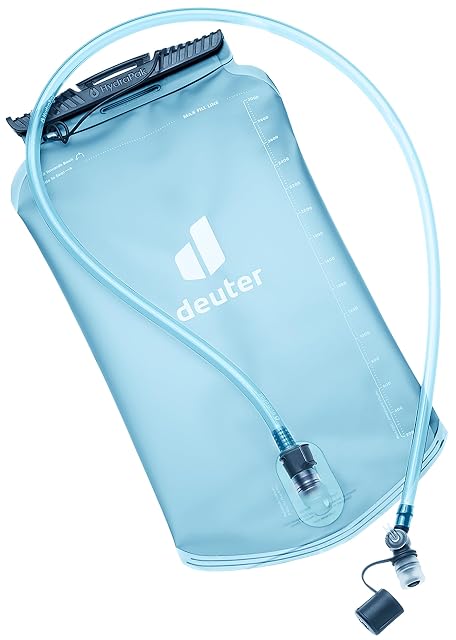
The deuter uses a slide-clip closure, stated to be both easy to fill and leak-proof, and it is stated to be reversible — turned inside out for cleaning. That is the arrangement that solves drying rather than working around it, and it is why it opens this list.
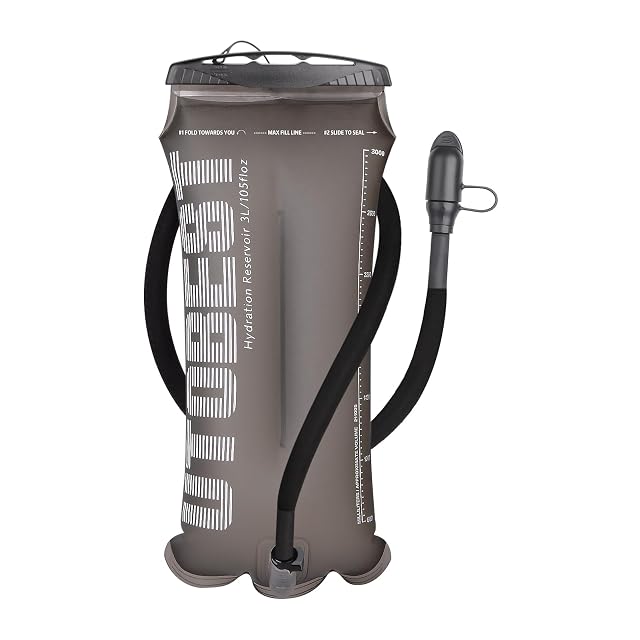
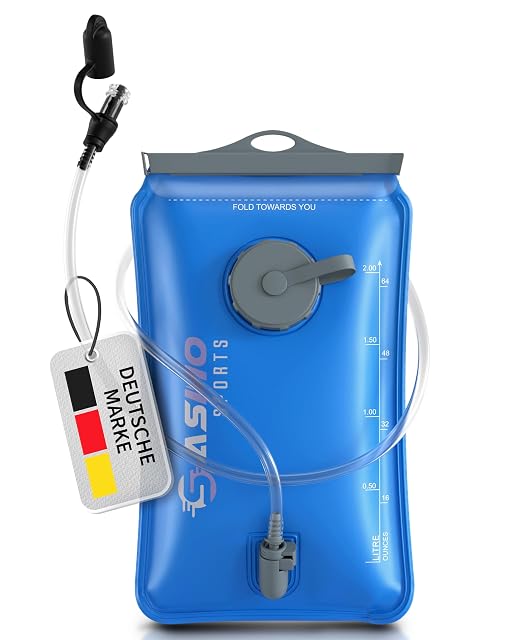
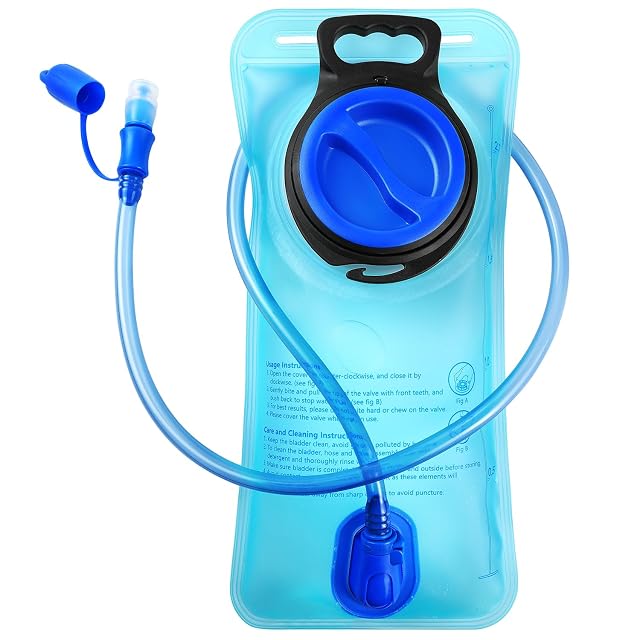
The UTOBEST states a wide opening, large enough to admit a hand, which does the same job by a different route. The SASMO Sports publishes two openings: a round fill opening stated for faster filling, and a slide opening stated for cleaning. The Geroony uses a screw cap the maker describes as a large fill port.
Where a listing says only that a reservoir is easy to clean without describing how, take the claim as a description of intent. The Terra Peak and the ALPIN LOACKER reservoirs, elsewhere on this site, supply a brush and describe the opening not at all.
Reservoirs: the film, the seams and the fittings
Film material is published more often than you would expect, and it is worth reading.
The SASMO Sports states reinforced TPU at 0.4 mm rather than 0.3 mm, and states it as BPA-free and LFGB-certified. The UTOBEST states food-grade TPU, tasteless and BPA-free, and the maker sets it against PEVA. The Geroony states EVA, BPA-free, described as flexible and pressure-resistant.
Seam construction is rarer and it is where reservoirs actually split. Geroony states double-sided EVA heat sealing without adhesive, with an internal silicone seal and reinforced joints between hose, spout and reservoir. UTOBEST states an improved double sealing technique with a claim of no leaking under 220 kg of pressure. Those two are the seam descriptions on this page.
Fittings are the daily convenience. SASMO Sports states a leak-proof click system to separate the hose from the reservoir. UTOBEST states a plug-in base connector with a quick release, a pinch lock at the mouthpiece and an auto-off valve at the base that closes when the hose is removed. deuter states a soft bite valve with high flow that closes automatically.
Only the deuter publishes an empty weight — 130 g. On an object bought to be carried, that is the number you would expect first, and it is the number this family almost universally leaves out.
Nor does any reservoir here publish a hose internal diameter or a fill port width in millimetres. Those matter when a hose splits or a cap is lost, because they are what a replacement part is ordered against. If you plan to keep a reservoir for years, measure both when it arrives and write them down.
One further caution from this shelf: the Unigear reservoir elsewhere on this site publishes two lists of available capacities that do not agree with each other — one in the title, one in a bullet. Check the size you are ordering against the size that arrives.
Flasks: hours without conditions
Insulated flasks publish hot and cold retention with unusual consistency, and publish the conditions under which those hours were reached with none at all.
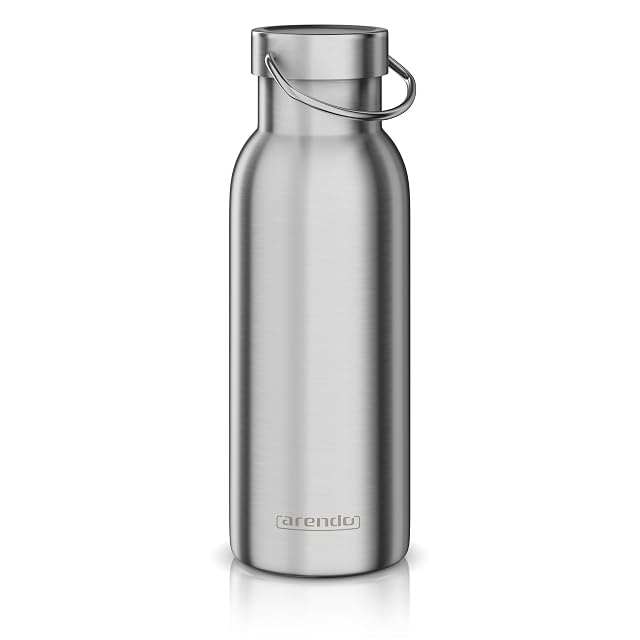
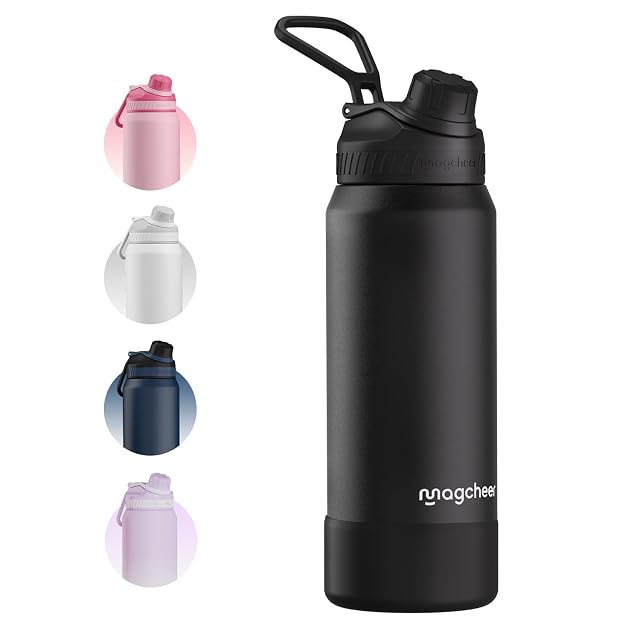
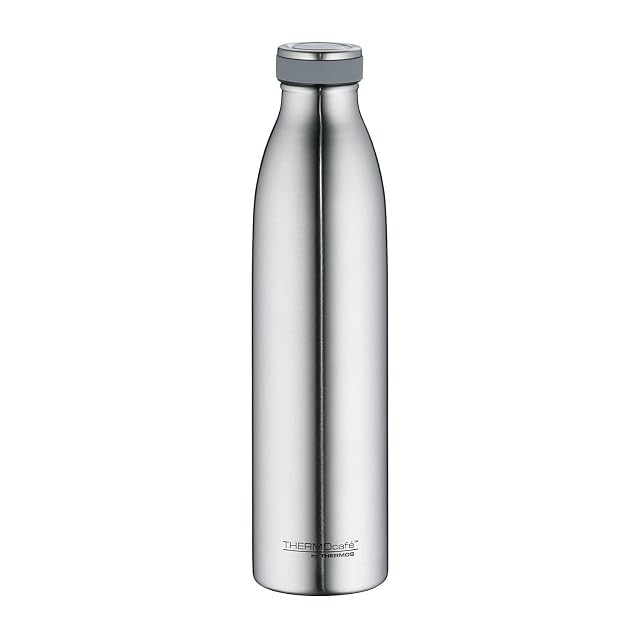
The Arendo states 12 hours hot and 24 hours cold, at 500 ml, in a double stainless shell with vacuum insulation, an SUS 201 outer and an SUS 304 inner. magcheer states the same 12 and 24 at 1 litre, with double-wall vacuum insulation and 18/8 stainless steel. THERMOcafé by THERMOS states 24 hours cold at 0.75 litres and publishes no hot figure at all.
Now the omission that runs through the whole family: not one flask listed on this site states the conditions behind its hours. There is no starting temperature, no ambient temperature and no fill level anywhere on this shelf. A flask filled to the brim with boiling water in a warm room and a half-filled flask on a cold hillside are two different experiments, and the same twelve-hour claim covers both.
Read the hours as a rough class rather than as a measurement, and put more weight on the parts you can verify.
Flasks: the parts you can check
Steel grade is published often and it is checkable. Arendo names both shells separately — SUS 201 outside, SUS 304 inside — which is more candid than a single figure, because the two are not the same alloy. magcheer states 18/8 throughout, described as food grade.
Wall construction is where the vocabulary matters. Arendo and magcheer both state vacuum insulation. THERMOcafé states double-walled and does not use the word vacuum, and neither does the Mont-Clair flask elsewhere on this site. Double-walled and vacuum-insulated are not synonyms, and a listing that avoids the second word is worth reading twice.
Lids decide the leak. Arendo states a removable screw lid with a full-jacket gasket, stated fully leak-proof, with a carry handle on top. magcheer states a screw lid with a vacuum seal, with all parts stated dishwasher safe. THERMOcafé states a rubberised screw stopper described as easy to turn without slipping, and stated leak-proof including with carbonated drinks — the one closure on this page whose claim extends that far.
What neither family publishes
No flask here publishes a mouth diameter, a base diameter or an empty weight. The mouth diameter decides whether ice goes in and whether a brush comes out; the base diameter decides whether it stands in a car cup holder. Both are trivially measurable and neither appears.
Which vessel for which day
Take a reservoir if you drink while walking and refill from a source you carry to. Buy it on the opening, on whether it turns inside out or admits a hand, and on whether the hose comes off at the base.
Take a flask if the drink is the point of the stop. Buy it on the steel grade, on whether the listing says vacuum, and on the closure — and treat the hours as a band rather than a measurement.
Carry both on a long day, and the reservoir keeps you drinking while the flask keeps the break worth stopping for.