On the maker’s own page
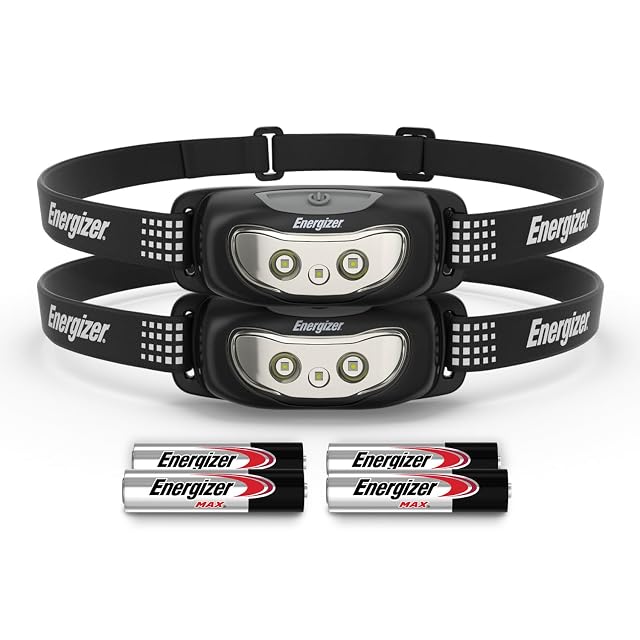
Two AAA headlamps, seven modes, batteries not included.
GearLight states practical brightness for close- and medium-range tasks, giving
clear even light for nearby visibility; AAA battery power with no USB charging,
offered for emergency kits, vehicles and cold-weather reliability on the grounds
that you swap batteries and keep going; seven lighting modes including a white
beam, a strobe and a red light for night vision and safety, with a 45-degree
adjustable tilt; a weight of approximately 3 oz with batteries and an adjustable
washable headband; and a weather-resistant two-pack built to handle rain and
light impact.
No lumens. No beam distance. No runtime. No IP code.
And it is a choice, not an omission.
Seventeen lamps sit on this shelf. Claims on it reach 18,000 lumens. This one
publishes none and describes a use instead.
This shelf’s introduction agrees with the principle: the number on the box is peak
lumens, and it is the least useful figure in the category.
The price of the principle is that three of this shelf’s columns are blank at
once — lumens, distance and runtime.
No USB, stated as a feature
Cold, and resupply.
A built-in pack cannot be swapped when it is flat, and cells lose capacity in the
cold. AAA cells change with gloves on, and spares weigh almost nothing.
This shelf’s introduction makes the same point: an AAA-compatible lamp can be
revived anywhere.
The cells are not in the box, where four lamps in this group supply them.
Three ounces, with the batteries in
A weight you can trust.
Most listings on this shelf quote a weight without saying whether the cells are
counted. This one says it: approximately 3 oz with batteries, about 85 g (3 oz).
The washable headband is the other detail aimed at a lamp that gets used rather
than specified.
Availability
The American Amazon store was listing it at about $15 at the time of writing.
Every figure here is what Keepa held on the day this page was last revised. Offers and prices shift without warning.
Prices quoted in this text were read on October 8, 2026. The live price is at the top of the page.
What people ask before buying
How bright is it, really?
The listing refuses to say, and that is unusual enough to be worth taking seriously. Its first bullet offers practical brightness for close- and medium-range tasks and clear, even light for nearby visibility, in place of a number. Of seventeen lamps on this shelf, this is the only one with no lumen figure anywhere — and this shelf's introduction does call peak lumens the least useful figure in the category, with claims on this shelf running as high as 18,000. The cost of the honesty is that there is nothing to compare: no lumens, no beam distance and no runtime leaves three of this shelf’s ten columns blank on one listing.
Why would I want a lamp with no USB charging?
Two reasons the listing names, both real. Cold: lithium cells lose capacity in the cold and a flat built-in pack cannot be swapped, whereas AAA cells can be changed with gloves on and spares weigh almost nothing. And supply: a lamp that takes shop batteries works in a power cut, in a vehicle, and on day nine of a trip where nothing can be charged. This shelf's introduction makes the same point — an AAA-compatible lamp can be revived anywhere. The trade is weight and running cost, and that the cells are not in the box.
Is it waterproof?
Unstated. The listing says it is built to handle rain and light impact and calls the two-pack weather-resistant, and publishes no IP code. Six of the eight American lamps on this shelf publish one, at IPX4 or IPX5 — splashing water from any direction, with no separate dust test. A phrase is not a code, and this shelf's introduction lists the IP rating among the practical fittings so that phrases like this one can be checked. Treat it as splash-tolerant and do not submerge it.