What both listings have in common
Neither of these pages reads like a specification sheet. They read like a set of instructions, and the useful figures are the procedural ones. The dry bag states that the top is rolled at least three times before the buckle closes — no other listing on that shelf publishes a roll count, and the roll count is what makes the seal. The reservoir states that it can be turned inside out for cleaning, which is the difference between a bladder that survives a season and one that grows something.
The limit is written down
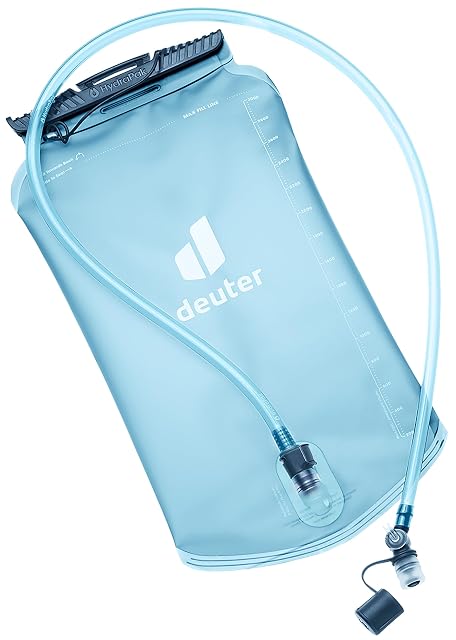
The dry bag publishes a 10,000 mm (393.7 in) water column and then states explicitly what it is not for: submersion. That is a maker declining to let the word waterproof cover a canoe capsize, and it is the more honest of the two possible ways to write that page. On the reservoir, the equivalent line is a stated heat ceiling of 40 °C (104 °F) — a low bar for a black pack left on a rock in the sun, and one you would rather know about in advance than discover.
The reservoir is the better-documented of the two
It publishes an empty weight of 130 g (4.6 oz), a full set of outside dimensions at 330 by 170 by 50 mm (1.97 in), a 3.0 liter capacity, a slide-clip closure stated to be both easy to fill and leak-proof, and a soft bite valve stated to close by itself so there is no lock to remember. On a shelf where most listings publish a capacity and stop, that is close to a complete answer.
What is left out of both
The materials. The reservoir names no film and no seam construction, which is odd on a page otherwise this thorough, and gives no hose length or internal diameter. The dry bag names no fabric at all, so a 10,000 mm (393.7 in) figure sits on a cloth you cannot identify, with no denier, no coating, no seam treatment and no weight beside it; its volume appears only inside the model name, never restated with a unit in the bullets. Both are strong on how to use the thing and quiet on what it is made of.