On the maker’s own page
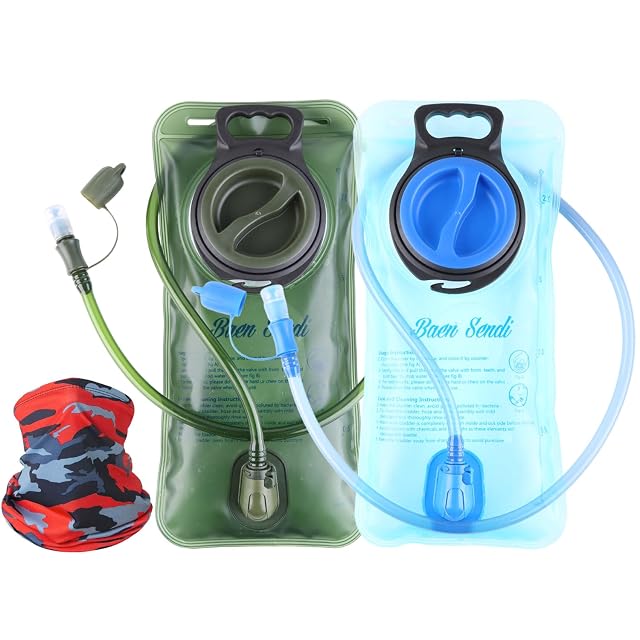
A 2 liter reservoir, white, 3.5 inch screw cap.
HEIKLN states premium taste-free BPA-free material, SGS certified and 100 per cent
food grade, with a passed pneumatic pressure test and a double sealing side
technique; a soft mouthpiece with an accessible on/off valve, a stated drinking
sequence of pull up, bite, push back, a dust cover, and a detachable quick-release
tube with automatic shut-off so the reservoir stays filled; a wide opening with a
3.5 in screw-on cap admitting a hand or a bottle brush and taking ice cubes
directly; a stated tolerance from −20 to 50 degrees Celsius, external dimensions
of 14.2 × 6.8 in, and a tube of 0.4 in diameter and 40 in length.
No film named. No thickness. No cleaning method. No weight.
A bore, and a port width.
Nought point four inches of hose, and a three and a half inch cap.
Seventeen reservoirs sit on this shelf. Two publish a bore and two publish a port
width, and all four of those figures are in this group.
This shelf’s introduction calls the bore the first of three specifications hidden in
the hose. At nine dollars, this is one of the two pages that gives it.
Minus twenty, printed correctly
Unlike its sibling.
This page states −20 to 50 degrees Celsius. The sibling listing in this group,
otherwise word-for-word identical in four places, prints 20 to 50.
Read it as a storage and durability range rather than a working one: a reservoir
at −20 °C (-4 °F) holds ice, and the hose freezes first.
A template, edited unevenly
Three brands, the same sentences.
The wide opening admitting a hand or a bottle brush. The ice cubes from a scoop
or a refrigerator dispenser. The quick-release tube that auto-shuts so the
bladder stays filled.
Inside that shared prose the numbers differ: 3.5 in here against 4 in on the
sibling, −20 °C (-4 °F) here against 20 °C (68 °F) there, and one sibling drops the bore
altogether.
Check the figures one at a time.
Availability
The American Amazon store was listing it at about $9 at the time of writing.
Every figure here is what Keepa held on the day this page was last revised. Offers and prices shift without warning.
Prices quoted in this text were read on October 8, 2026. The live price is at the top of the page.
What people ask before buying
What does nine dollars leave out?
Less than you would expect, which is the surprise here. This page publishes two of the figures that almost nothing else on this shelf gives — a 0.4 inch hose bore and a 3.5 inch fill port — plus a hose length, external dimensions, a temperature range, an SGS certification and a food-grade claim, with an auto-shutoff quick release and an on/off valve at the mouthpiece. What it leaves out is the film material, any thickness, any cleaning method and any weight, and the opening is a screw cap rather than something that reverses. For a spare reservoir kept in a drawer, that is a good trade.
Is minus twenty degrees meaningful?
It is at least printed correctly, which the sibling listing in this group is not: this page states a tolerance from −20 to 50 degrees Celsius, where the sibling drops the minus sign and reads 20 to 50. As a claim it describes the film and the tube surviving the cold rather than the water staying liquid — a reservoir at −20 °C (-4 °F) contains ice, and the hose is the first thing to freeze, which is why the European side of this shelf sells a listing with a separate winter hose. Read it as a storage and durability range, not as a working one.
Why does this page read like two others here?
Because three listings in this group, from three brands, share the same sentences word for word — the wide opening that admits a hand or a bottle brush, ice cubes added from a scoop or a refrigerator dispenser, and the quick-release tube that auto-shuts so the bladder stays filled. The figures inside the shared wording have been edited unevenly: this page gives a 3.5 inch cap and the sibling gives 4; this page gives −20 °C (-4 °F) and one sibling gives 20. Treat the prose as a template and check the numbers one at a time, because they are not describing the same reservoir.