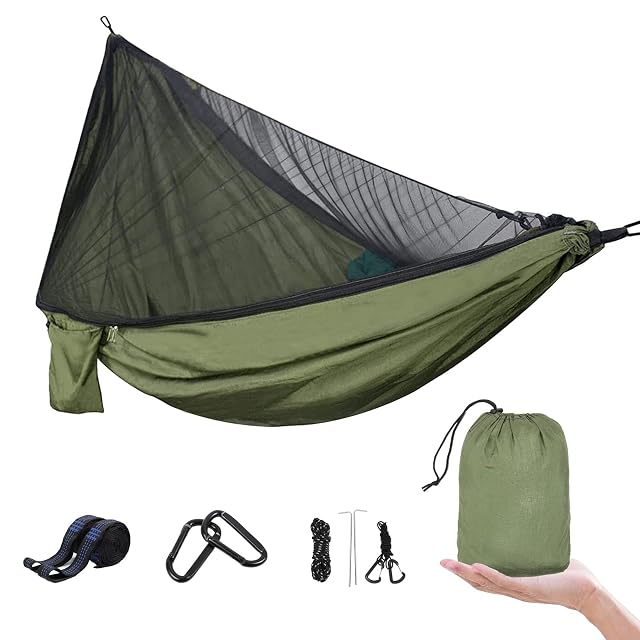
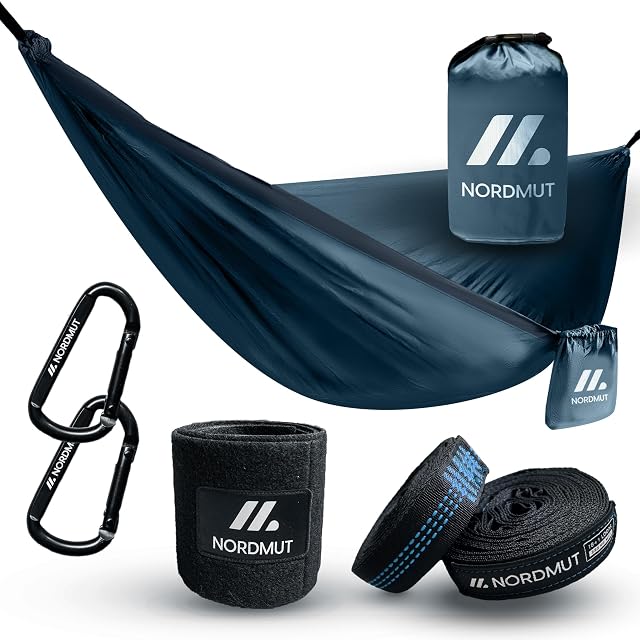
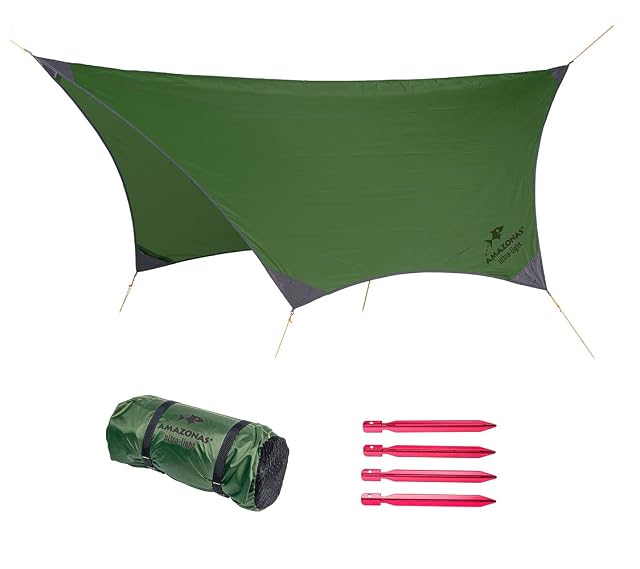
A hammock is the cheapest way to sleep off the ground and the easiest to buy badly, because the object in the photograph is only about a third of what you need.
The fabric is the part that is well described. Cut length, cut width, a thread count, a stated load: hammock listings publish all four more consistently than tent listings publish a floor size. What is thinner is everything that turns the fabric into a night’s sleep.
Length decides the lie. In a gathered-end hammock you sleep diagonally, and the diagonal you can reach comes from the length of the fabric, not from the width.
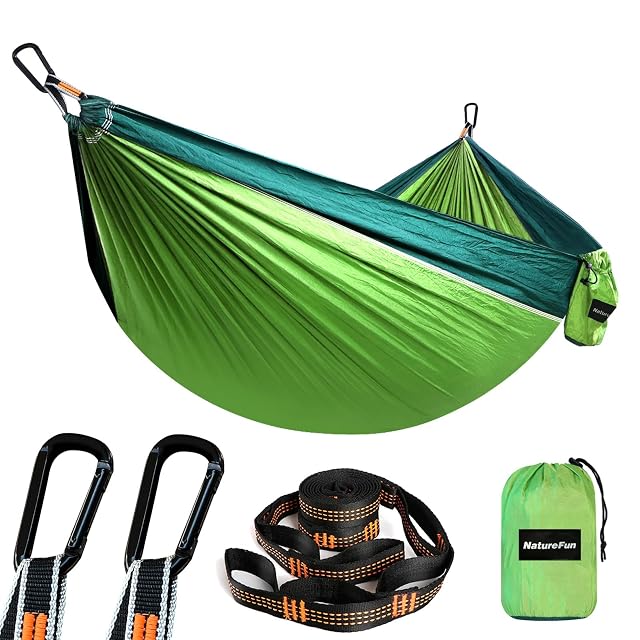
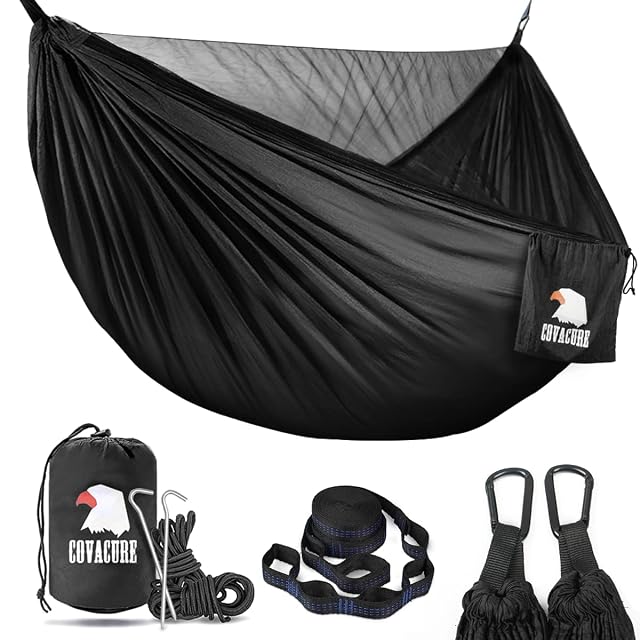
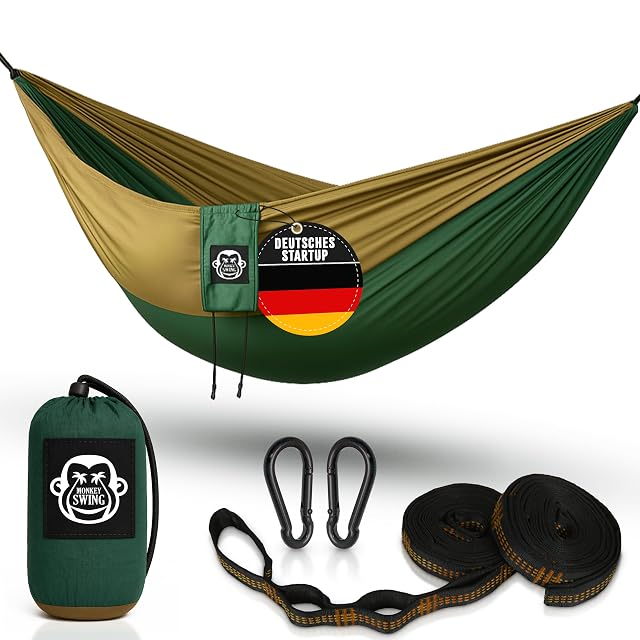
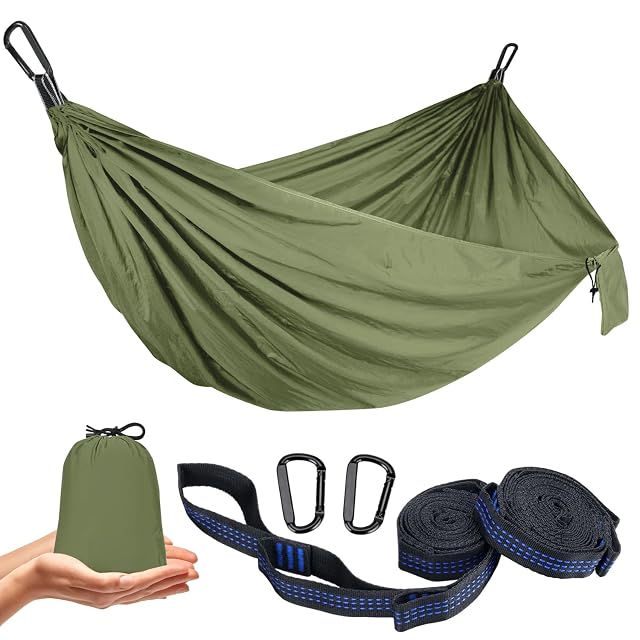
The COVACURE and the UPhitnis both state 290 cm. The NatureFun and the Monkey Swing both state 275 cm, the SkrekuiMa 270 cm and the XUNIVERS 260 cm. All of them state 140 cm of width. The NORDMUT states neither, which is the one real gap in an otherwise well-specified listing, and it is why that hammock suits somebody who will find the fit on the first night rather than plan around it.
If you are over about 180 cm, read the length before anything else on the page.
Stated load, and what the number is about
Every hammock here publishes a load figure and they range widely: 350 kg on the COVACURE, 300 kg on the NatureFun, the Monkey Swing and the SkrekuiMa, 225 kg on the NORDMUT, 200 kg on the XUNIVERS. The UPhitnis publishes 300 kg in its description and 600 lb in its title, and the two do not agree.
Two of these attribute the figure rather than simply asserting it: the NatureFun states 300 kg attributed to TÜV testing, and the ANYOO cotton hammock elsewhere on this site attributes its own 300 kg to a TÜV report.
Whatever the number, it describes the hammock and its webbing. It is not a statement about the tree, the branch, the post or the wall bracket, and no product listing can make one. That part of the decision happens at the pitch and belongs to whoever is hanging it.
The suspension in the bag, which is the real difference
This is where the listings separate, and it is the section worth reading twice.
The Monkey Swing publishes the most detailed suspension on this page: two tree straps, each 2.5 cm wide with eleven openings, and solid steel carabiners. Strap width matters to the bark; the number of openings matters to how finely you can set the hang.
The COVACURE supplies two aluminium carabiners, two tree straps with five-plus-one loops, and — unusually — two aluminium pegs and two guy cords for the net. The SkrekuiMa supplies two straps of 2 m each with five loops and two D-shaped carabiners. The NatureFun supplies two 2 m straps and two iron carabiners, and states that anchors six metres apart can be spanned, which is the most directly useful sentence any of these listings prints.
The UPhitnis supplies two looped tree straps of 2 m each and does not say whether carabiners are included. The NORDMUT states tree-friendly nylon straps and aluminium carabiners with no length, width or loop count.
Weight, and whether the straps are inside it
Suspension is heavy, so a hammock weight that excludes it is not a carrying weight.
The NatureFun states 580 g and states that the figure includes the two carabiners and the two straps. The SkrekuiMa states 580 g on the same basis. The XUNIVERS states about 0.9 kg including its two iron carabiners and its loops.
The others publish a bare number. The Monkey Swing states about 700 g without saying what is counted, the NORDMUT 790 g on the same terms, the UPhitnis 800 g. A 580 g complete kit and an 800 g fabric-only figure are not two points on the same scale.
Packed size, where it exists
The NORDMUT states 10 x 15 cm, the NatureFun 18 x 13 cm, the UPhitnis approximately 23 x 30 cm and the COVACURE 24 x 19 x 10 cm folded. The Monkey Swing, the SkrekuiMa and the XUNIVERS publish none, which on a piece of kit chosen for how little space it takes is an odd omission to find repeatedly.
The net, and whether it comes off
An integrated net turns a three-season hammock into a summer one and adds fabric you cannot remove.
The COVACURE states an integrated net. The UPhitnis states an integrated mosquito net closed by a side zip and states that it cannot be dismantled. The XUNIVERS states the same arrangement and the same limitation. The SkrekuiMa describes no net at all, which for a hammock used in cool weather or under a bug-free canopy is a saving rather than a lack.
Decide this one deliberately. A net that does not come off is fabric carried in every season.
The roof
None of these hammocks has one. A gathered-end hammock sheds nothing, and a night of rain without a tarp is a night in a bathtub.
The AMAZONAS tarp is cut for the job: 3.40 x 2.80 m, packing to 25 x 10 cm, supplied with a colour-matched fabric bag and nothing else — no guylines, no pegs, no poles. Its own listing publishes two answers to two questions, and both are worth knowing before ordering: the title says ripstop nylon while the description says 100 per cent polyester ripstop at 210T with a PUR coating, and the title says 0.8 kg while the description gives 650 g as the own weight. Neither pair is reconciled on the page.
That is a listing to buy on its cut size and its packed size, which are stated once each, and to treat its fabric and its mass as open questions.
What the whole family leaves out
Not one hammock listed here publishes a ridgeline length. The ridgeline is what fixes the sag, and the sag is what decides whether you lie flat or fold in half. It is also the easiest thing to add afterwards: a length of cord between the two ends, set once, and the hammock hangs the same way every night regardless of how far apart the trees are.
Read the cut length, read what the weight includes, read what is in the bag, and plan for a tarp. Those four decisions cover almost everything a hammock listing does not.