Two lamps, one design habit
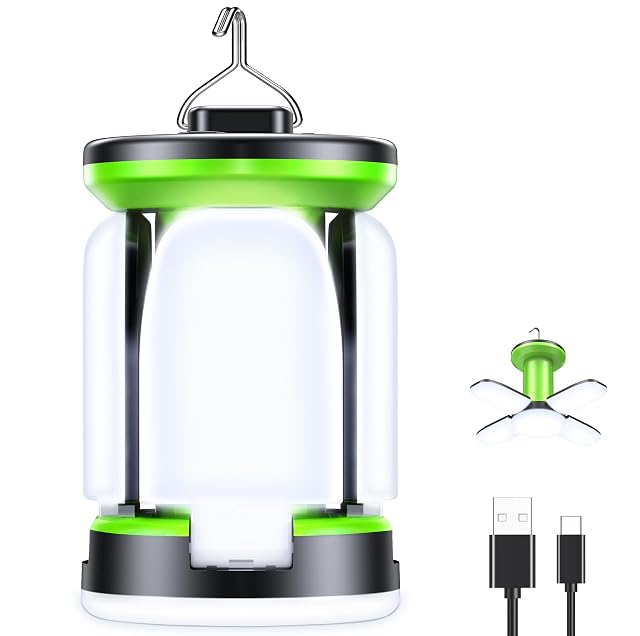
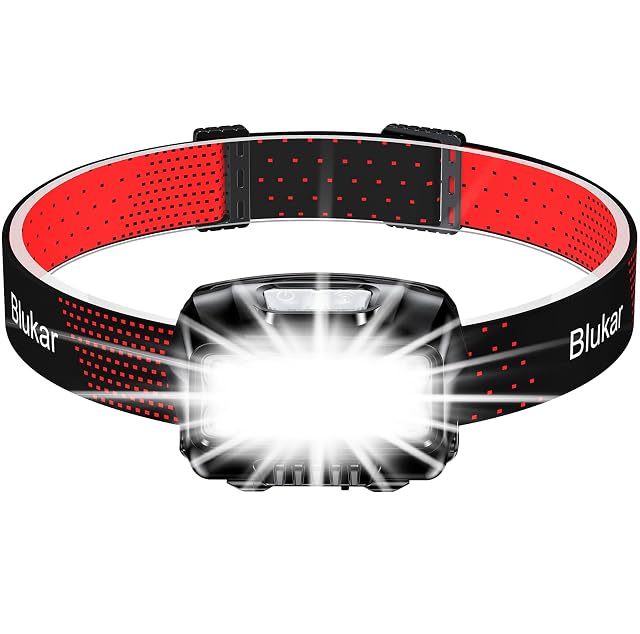
The lantern and the head torch share an approach: pick a mechanism that changes how the lamp is used, then build the listing around it. On the lantern that mechanism is a set of folding side panels, which turn a table lamp into something that can hang over a pitch and throw light down rather than sideways. On the head torch it is stepless dimming — a continuous dial rather than three fixed steps — with three gesture modes alongside five conventional ones for when your hands are full.
The part that is described well
Both listings describe their controls in detail. The lantern names seven modes one by one, including a soft setting for each light and an SOS, and states hooks on the top for hanging it as a pendant. The head torch names eight modes and states a 1200 mAh pack charged over USB-C with the cable supplied; the lantern states 3600 mAh on the same connector. These are the practical facts about living with a lamp, and they are on the page.
The unit that never arrives
Then the measurement side collapses. The lantern’s title reads 2000L, with no unit attached to the number and no lumen figure published anywhere in the listing — so it is a string of characters rather than an output. Its runtime is given as a 10 to 50 hour range with neither end tied to any of the seven modes. The head torch publishes no lumens, no beam distance, no runtime and no weight: four of the lines its shelf is compared on, all blank.
Water, and the absence of a code
Neither lamp publishes an ingress rating. The head torch treats damp as a non-issue in prose without an IP code behind it, and the lantern — designed to hang outdoors, on a pitch, in the evening — publishes no water claim at all. Alongside these there are lamps on both shelves carrying a stated IPX4, so the comparison is available and Blukar is not in it. Buy either of these for the way it works in the hand. Do not buy either on a number, because there is not one to buy on.