Heavy, generously cut kit with the closures described and the membranes unmeasured
What this kit is built like
Neither of these is a lightweight item and neither pretends to be. The sleeping bag cover is a stated 1,300 g or so. The dry bag is a stated 1,180 g or so. On shelves where the competition is counted in tens of grams, that is a different category of object — built for hard use and a long life rather than for a pack budget, which is a legitimate brief as long as you know that is what you are buying.
The cover is described where it counts
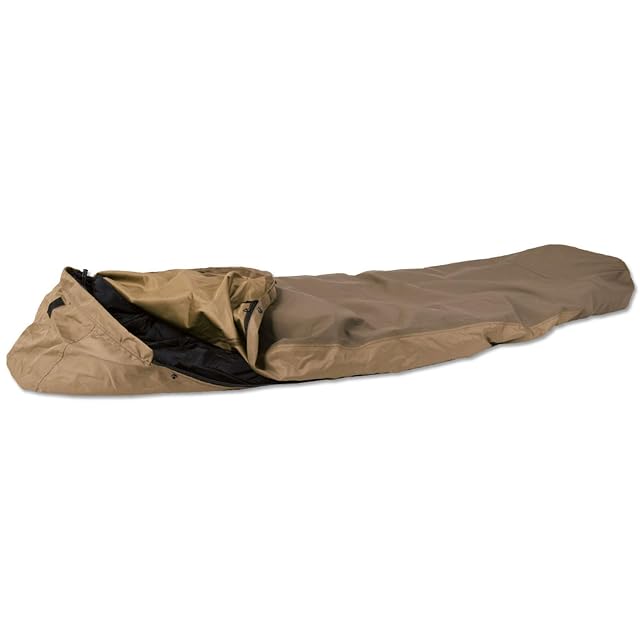
The bivy cover is a three-layer laminate with a stated 5,000 mm water column, a 225 by 85 cm cut, a 40 by 8 cm packed size and an integrated hood adjusted by elastic and hook-and-loop. Its closure gets a full description: a two-way side zip with an overlying storm flap on press studs. That loose cut is the right idea, because a cover that squeezes the bag inside it compresses the insulation it is supposed to be protecting.
The word that does the work of a number
The membrane is called breathable and no figure is published for it, and no test is named either. On a sealed laminate wrapped round a sleeping bag, breathability is precisely what decides how damp the inside is by morning, and it is the claim this site flags rather than repeats. No denier and no seam treatment are published either, so the two properties that determine how long the cover survives are both absent from the page.
A note on the dry bag
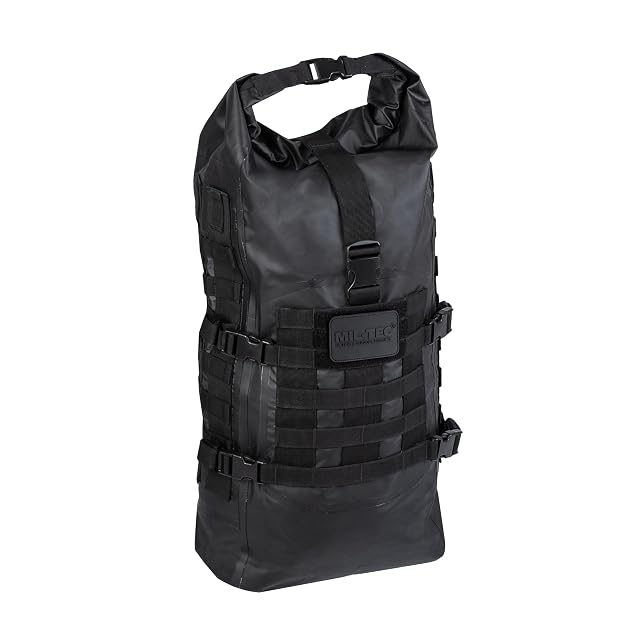
It should be said plainly: the Mil-Tec dry bag is a rucksack. It has padded shoulder straps, a chest strap, a ventilated back panel and MOLLE webbing, and this site does not cover what is worn on the back. It is here as a comparison point, not as a recommendation. What it does publish is useful anyway — 250D PVC and polyester, roughly 35 litres, dimensions of about 57 by 29 by 20 cm and a weight to go with them, and a claim of brief submersion rather than heavy rain. What it does not publish is a seam treatment or a water rating to stand behind that claim.
Sleeping-bag cover · 3-layer laminate · 5,000 mm water column · breathable membrane, no figure · 225 × 85 cm · 1,300 g and 40 × 8 cm packed, stated
A generously cut laminate cover that publishes its water column, its packed size and its weight — and calls its membrane breathable without ever putting a number on it.
Best for: A cover bought for cut and closure rather than for weight, over a bulky synthetic sleeping bag.
This is a waterproof rucksack rather than a stuff sack — padded shoulder straps, a chest strap, a ventilated back and MOLLE webbing — and rucksacks are outside what this site covers.
Stated volume
Around 35 litres — stated in the title and repeated as roughly 35 litres in the bullets
Fabric
PVC and polyester — stated as hard-wearing and abrasion resistant
Denier
250D — stated
Coating
Not published on the listing — the material is described as coated without the coating being named, with PVC and polyester given as the material itself
Seam construction
Not published on the listing
Closure type
Roll-top — stated in the title and in the bullets, with no number of turns given
Stated water rating
Not published on the listing — the maker states it protects kit in wet conditions or brief submersion and calls the bag floating, with no standard and no figure
Weight
Approximately 1,180 g — stated, alongside dimensions of about 57 × 29 × 20 cm
Purge valve
Not published on the listing — side compression straps are described for securing the contents, which is not the same thing
Amazon reference
B083WRWZ81 (same reference on 6 Amazon marketplaces)
EAN
4046872398025
Publishes a weight and a set of dimensions together, which no other listing on this shelf does
Publishes a denier, one of only two bags here to do so
It is a rucksack, not a stuff sack, and this site does not cover what is worn on the back
Best for: Reading as a comparison point, since the carrying system puts it outside this site’s scope.