Trail weight and pitched footprint matter more than the season label · review
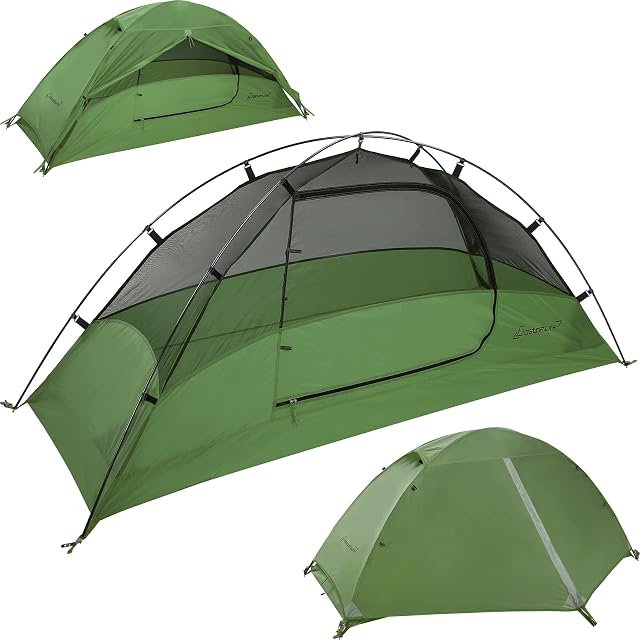
Grand Canyon CARDOVA 1, single-pole dome for one to two people review
A named trekking tent from an established brand whose whole listing runs on adjectives: it describes a single-pole dome with a mesh inner and publishes not one figure.
The bottom line A recognisable trekking tent whose listing tells you the shape and nothing else. If the brand is why you are here it will not disappoint on construction; if you are comparing weights and water columns, this page gives you nothing to compare with.
What this listing puts on record
A single-pole dome for one to two people, a full mesh inner tent, a high pole arch described as giving headroom, and a quick pitch. Five bullets, no numbers.
The figure everyone sorts by
Weight. A trekking tent is chosen on it, and makers publish it two ways — packed weight counts everything in the bag, trail weight counts only what stands the tent up. This listing publishes neither, and calls the tent light instead.
The two figures that decide a wet night
Hydrostatic head, flysheet and groundsheet. Both absent. A tent from a brand with a catalogue behind it almost certainly has both figures somewhere; they are not on this page.
What you can still take from it
The construction is described precisely enough to be useful: one pole, a mesh inner, a tall arch. That tells you the pitch is short, that condensation has somewhere to go, and that the inner can probably be used on its own in warm weather — though the listing does not say so.
Before ordering
Ask the seller for the trail weight, the packed weight and both water columns, or find them on the maker’s own catalogue page, before comparing this against anything else on the shelf.
Availability
Selling between 42 € and 59 € across the German, French, Italian and Spanish Amazon stores when this page was checked.
It also sells on the British Amazon store in the local currency, which the range above does not cover — that range counts euro stores and nothing else.
Catalogued on the American Amazon store with nobody selling it: the reference is there, the offer is not.
Every figure in this section is what Keepa returned on the day this page was last updated. Prices and offers change without notice.
Prices quoted in this text were read on 6 September 2026. The live price is at the top of the page.
What it does well, and where it gives way
Strengths
Names its construction plainly: a single-pole dome, which is the shortest pitch sequence a dome can have
States a full mesh inner tent, so ventilation and insect protection are built in rather than optional
Carries a manufacturer part number, which makes spares and footprints traceable to a catalogue entry
Compromises
Publishes no weight of any kind, so it cannot be compared with any other tent on the one figure trekkers sort by
Publishes no hydrostatic head for the flysheet and none for the groundsheet
Gives no floor dimensions and no peak height, so the claimed headroom of the high arch cannot be checked against anything
Specifications
Trail weight
Not published on the listing
Packed weight
Not published on the listing — the listing calls the tent light and gives no figure
Floor area
Not published on the listing
Peak height
Not published on the listing — a high pole arch is claimed for headroom, without a measurement
Hydrostatic head — flysheet
Not published on the listing
Hydrostatic head — groundsheet
Not published on the listing
Fabric denier
Not published on the listing
Pole material
Not published on the listing — a single-pole construction is named, the material is not
Pitch type
Dome on a single-pole construction — stated, and described as quick to put up
Season rating
Not published on the listing
Amazon reference
B0848FJRZ6 (same reference on 6 Amazon marketplaces)
EAN
5703384087630
What people ask before buying
What does a single-pole construction change?
It shortens the pitch and reduces the parts to lose, and it usually means the tent is not freestanding — the shape comes from tension in the guylines and pegs rather than from crossing poles. This listing does not say either way.
Why does a named brand publish fewer figures than an unbranded one?
Established makers often keep specifications on their own site and use the marketplace listing for description only. That is a reasonable choice for them, and it means the marketplace page cannot be compared like for like with one that publishes everything.
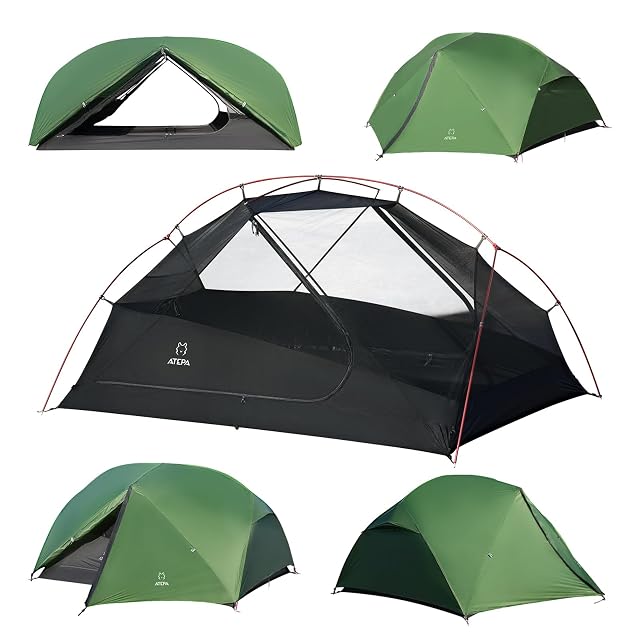
Two person · freestanding · 7001 aluminium pole · 20D silicone nylon · 4000 mm + fabric figure · 1.9 kg unlabelled
A freestanding 20D nylon tent that names its pole alloy and gives a 4000 mm figure to the fabric rather than to a panel, so the floor is left without one.
Best for: Two people who camp where pegs may not bite and want a named pole alloy under a 20D fly.
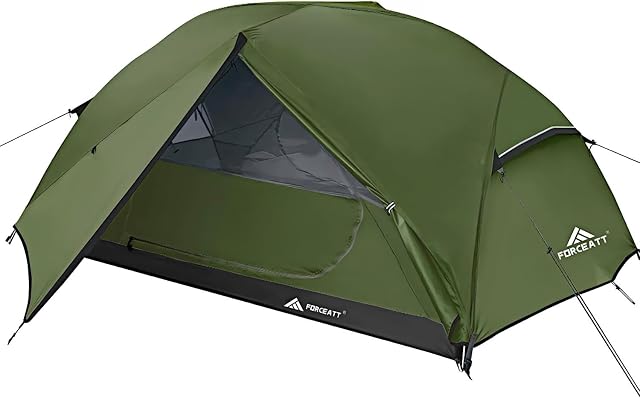
Two person · two doors and two vestibules · 68D polyester · 2.5 kg unlabelled · no water column published
A two-door two-person tent that publishes its fabric denier — rare on this shelf — and no water column at all, and whose floor dimension is cut off mid-sentence.
Best for: Two people who want a door each and a thicker 68D fabric, on pitches where rain is a shower rather than a night of it.