What this listing puts on record
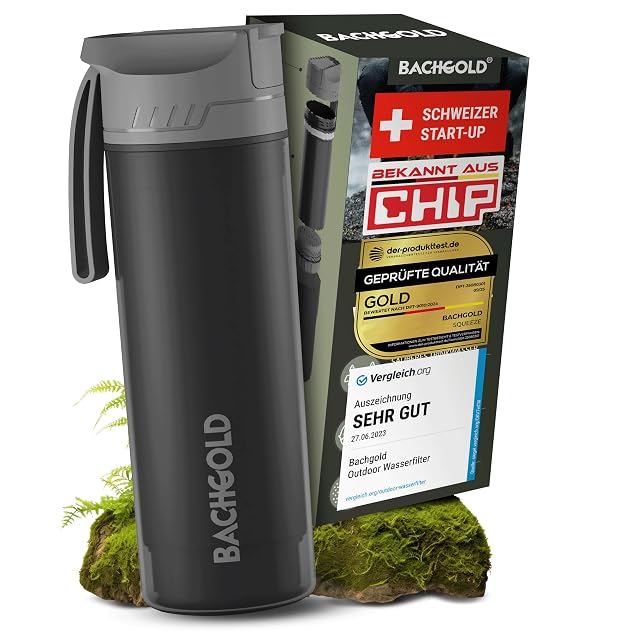
A 710 ml (24 oz) treatment volume, a press-through action described as fill, press, drink, a replaceable cartridge stated to last 250 liters, and a statement that no setup time, pumping, batteries, chemicals or waiting are involved.
A long claim list and an empty column
This is the most talkative listing on the shelf. It names categories of pathogen, categories of chemical and categories of metal. It does not name a pore size.
That matters for one reason only: the pore size is the figure this hub compares on, and its absence means the claims cannot be lined up against the six listings here that do publish one. The claims are reported below, attributed, and nothing more is done with them.
Cartridge life, and what it costs
250 liters. Set against the 1500, 2000, 4000 and 5300 liter figures published elsewhere in this family, that is a short run. Cartridge life is what turns a purchase price into a running cost, and dividing the one by the other is the arithmetic that lets a press bottle be compared with a straw.
How the maker’s claims are written here
The listing names viruses, bacteria and protozoa with examples, and names particles, chemicals and heavy metals with examples. Every one of those stays in the maker’s mouth: the maker states that the cartridge removes those categories, and this page reports the statement rather than repeating it as a finding. Nothing here says what the treated water may be used for, in either direction — that question belongs to the maker’s own instructions and to the authority local to wherever you are filling.
Before ordering
Work out how many cartridges a year of your walking would use at 250 liters each, and price that alongside the bottle. On this shelf, cartridge life is where the money actually goes.
Availability
The American Amazon store returned nothing, so the buy link opens a local search rather than a page that is not there.
Every figure here is what Keepa held on the day this page was last revised. Offers and prices shift without warning.