Kit for the tailgate, not the rucksack
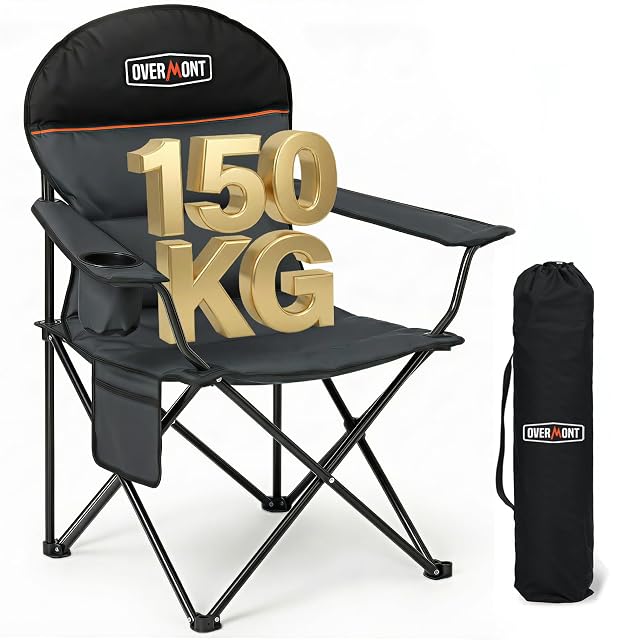
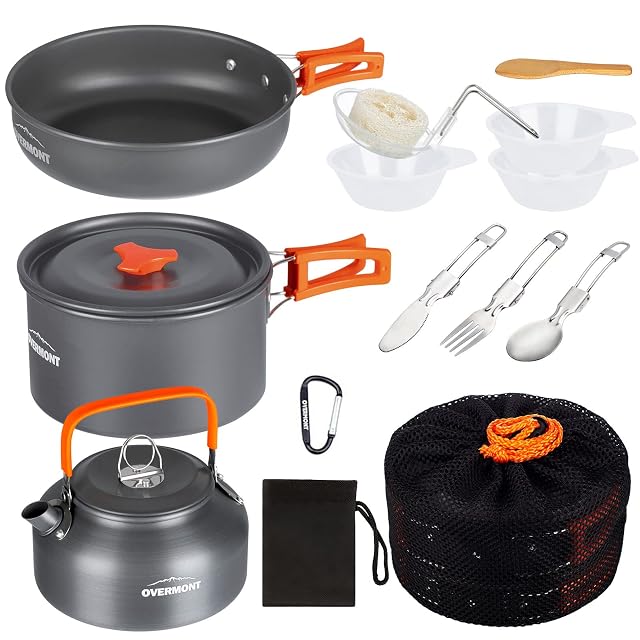
Neither of these is a carried item. The chair is a stated 3.4 kg with a padded extra-wide seat and a headrest; the cook set runs to fourteen pieces built around a pot, a pan and a kettle. Both are aimed squarely at a pitch you unload a car at, and read on those terms they make sense. Read as trekking kit, they do not, and the published figures make that clear enough.
What each listing describes well
The cook set explains its own nesting order — kettle, pot and pan one inside the other, into a mesh bag — rather than leaving it to a photograph, and that instruction is worth more than most bullet points. It names anodised aluminium, states a non-stick coating, and states folding heat-resistant non-slip handles on the pot, with a pointed spout on the kettle to stop hot water splashing as it pours. The chair names steel for the frame, publishes a 150 kg load figure and a 3.4 kg weight, and describes a headrest, padding and a side pocket.
The measurement each one owes you
Both listings sell on a dimension they never publish. The cook set’s whole argument is that it nests, and no nested packed size appears anywhere on the page — nor any capacity for the pot, the pan or the kettle, nor a weight, nor a wall thickness. The chair’s whole argument is that the seat is extra wide, and no seat width figure is given, along with no seat height, no packed size, no back height and no fabric denier.
Two practical consequences
Without a nested size, the cook set cannot be checked against a crate or a boot space before it arrives, and there is no lid among the fourteen pieces — which affects boil time and rules out simmering with the lid on. Without a packed size, the chair’s 3.4 kg has nothing to justify it: it is the heavier end of its shelf with no folded bundle published to explain what you are getting for the extra mass. On both, the load and comfort claims stand on materials that are named and sections that are not.