On the maker’s own page
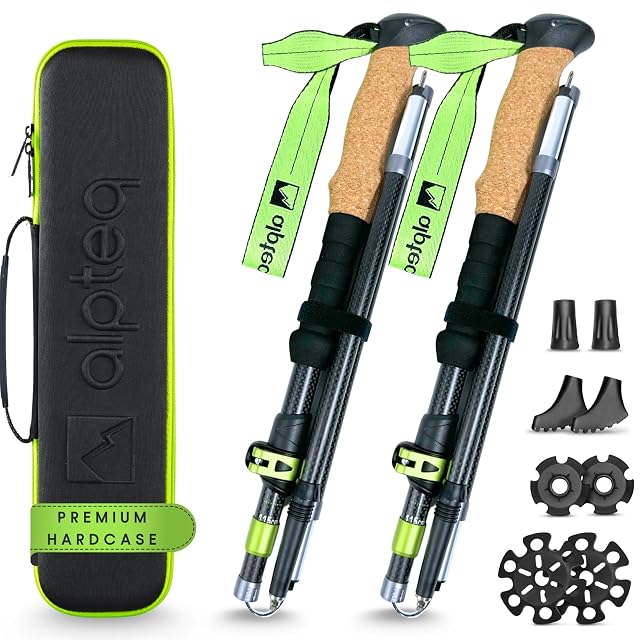
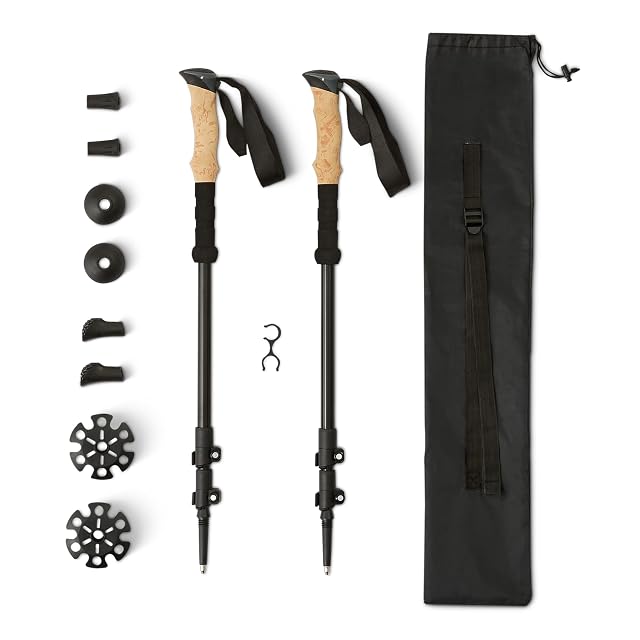
A 100 per cent carbon fiber pair, flip locks, cork and EVA grips.
Hiker Hunger Outfitters states 3K 100 per cent carbon fiber with each pole
weighing only 7.6 oz; moisture-wicking ergonomic cork grips with a non-slip EVA
foam grip extension below the cork for steep climbs, and neoprene padded hand
straps; flip lock lever technology, described as more secure than a twist lock or
a foldable pole that slides out, and using metal locks rather than plastic; a
retractable range of 24 to 55 inches, stated to suit short and tall women, men
and children; and a one-year warranty, with the brand based in the USA since
2015.
No packed length. No section count. No tip. No basket.
Fifty-five inches, and nothing else on the shelf reaches it
The longest maximum published here.
Fifty-five inches is 139.7 cm (55 in). Every European listing on this shelf stops at 130
or 135 cm (53.1 in). Five other American pairs stop at 53 or 54 inches.
Set against a 24-inch minimum, that is a range of 31 inches from one pair — wide
enough for a child at the bottom and a tall walker on a long descent at the top.
The lock is named, and so is what it is made of
Metal, not plastic.
This shelf’s introduction says poles are argued about in terms of carbon against
aluminum and bought or regretted on the locking mechanism. Seven of the nine
American listings on this shelf name an external lever. This is the only one that
says what the lever is made of.
It also states what it is not: not a twist lock, which disappears inside the
shaft, and not a folding pole that slides out under load.
Seven point six ounces, and no diameter
The lightest American figure here.
About 215 g (7.6 oz) a pole, stated per pole rather than for the pair — roughly 60 g (2.1 oz) under
the aluminum pairs in this group. On the European side of the shelf the carbon
Keytytar pair publishes 169 g (6 oz).
What is not published is the shaft diameter, which is the figure that would say
how much carbon is carrying the load.
Nothing consumable is listed
No tip, no basket.
Baskets are consumable and tips wear out. Four of the five bullets on this
listing are about the shaft, the grip and the lock; the fifth is about the brand.
Neither a carbide point nor a rubber buffer nor a snow or mud basket appears
anywhere.
Every other pair in this group lists at least one tip. KINGGEAR lists eight
separate attachments.
Availability
The American Amazon store was listing it at about $60 at the time of writing.
Every figure here is what Keepa held on the day this page was last revised. Offers and prices shift without warning.
Prices quoted in this text were read on October 8, 2026. The live price is at the top of the page.
What people ask before buying
Will these fit in hold luggage?
The listing does not answer that, and it is the first question this shelf's buying tip tells you to ask. What is published is an adjustment range of 24 to 55 inches, so 24 inches is the shortest the poles will go as poles. Whether they break down further is not said, and no packed or disassembled figure appears. Compare TrailBuddy in this group, which publishes both numbers — 24.5 inches collapsed, 21 inches disassembled — and Vihicamp, which folds to 15.3 inches. Seven of the nine American listings here publish only the bottom of their adjustment range and leave you to assume it is also the transport length.
Is 55 inches useful, or just a bigger number?
It is useful if you are tall or walking long descents, where a longer pole plants further ahead and down. Fifty-five inches is 139.7 cm (55 in), and it is the longest figure on this shelf: every European listing here stops at 130 or 135 cm (53.1 in), and five other American pairs stop at 53 or 54 inches. The number to set against it is the 24-inch minimum, which is low enough for a child, so one pair covers a family. What the listing will not tell you is how many sections deliver that range.
Does carbon matter at this price?
It buys the 7.6 ounces, which is the lightest per-pole figure in the American group and about 60 g (2.1 oz) a pole under the aluminum pairs here. This shelf's introduction is also clear about the trade: an aluminum shaft bends before it fails and can often be straightened, while carbon is stiffer and fails suddenly, and it dislikes being levered sideways between rocks. This listing publishes no shaft diameter, which is the figure that would say how much carbon is in it, so the weight is the only hard number on the material.