On the maker’s own page
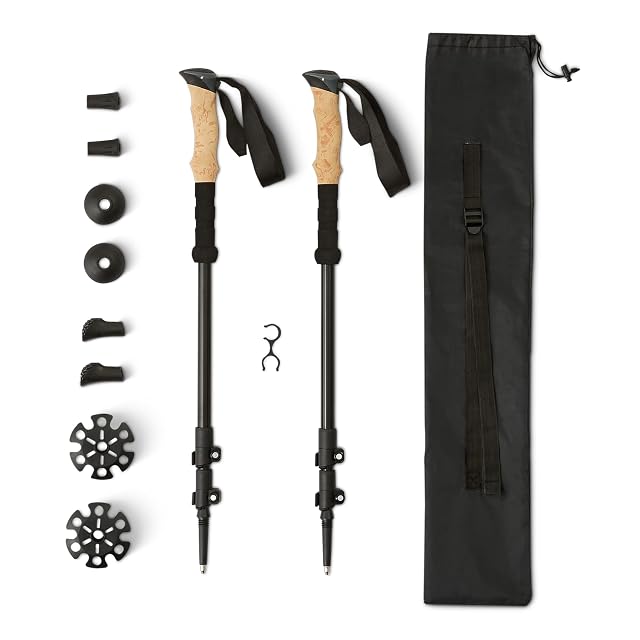
A carbon fiber pair with quick locks and cork grips, grey.
Cascade Mountain Tech states carbon fiber construction chosen for light weight,
with each pole at 8.1 oz, described as less than a pound and as the best option
when the priority is speed and ultralight packing; a Quick Lock that is easy to
use and reliable for holding the chosen height, ranging from 26 to 54 inches;
cork grips said to lower vibration as you step and to wick sweat, with an
extended down grip for a quick transition onto inclines, and adjustable wrist
straps; tungsten carbide tips; and a bonus tip kit of snow baskets, sand and mud
baskets, rubber boot tips, rubber tips, a trekking pole clip and a carry bag.
No weave. No diameter. No packed length. No section count.
Eight point one ounces, and what it costs
1.9 oz a pole against the maker’s own aluminum.
Twenty-two dollars more buys about 54 g (1.9 oz) off each hand, on the same lock, the same
grip and the same accessories.
This shelf’s introduction is clear on the other side of that trade: carbon is
lighter and stiffer and fails suddenly, where aluminum bends and can often be
straightened and walked out on.
Carbon, unspecified
No weave, no diameter.
The other carbon pair on this shelf states 3K. This one states carbon fiber, and
the weight.
The weight is the honest part of the claim, because it is per pole and it is
stated twice.
The clip no one else supplies
Two poles become one item.
Snow baskets, sand and mud baskets, rubber boot tips, rubber tips, a carry bag
and a clip that holds the pair together.
Nothing else in this group lists a clip, and loose poles on the outside of a pack
are the reason it exists.
Availability
The American Amazon store was listing it at about $52 at the time of writing.
Every figure here is what Keepa held on the day this page was last revised. Offers and prices shift without warning.
Prices quoted in this text were read on October 8, 2026. The live price is at the top of the page.
What people ask before buying
Is the carbon worth twenty-two dollars more than the aluminum version?
It buys 1.9 ounces a pole — 8.1 against 10 — on otherwise the same pole: the same Quick Lock, the same cork grip with an extended down grip, the same carbide tips and baskets. That is about 54 g (1.9 oz) a hand, which is noticeable over a long day of pole plants and invisible in a pack. Against it, this shelf's introduction sets the failure mode: an aluminum shaft bends before it fails and can often be straightened on the route, while carbon fails suddenly and dislikes being levered sideways between rocks. The carbon version also drops the weave specification that the other carbon pair on this shelf publishes.
What is the pole clip for?
It holds the pair together as one bundle, so the poles travel strapped to a pack or stowed without scissoring apart. It appears on no other listing in this group, and it is a small thing that matters more than it sounds: two loose poles on the outside of a rucksack catch on branches, and a clip plus the carry bag makes them a single item. The listing calls it a bonus tip kit item, alongside the snow baskets, the sand and mud baskets and the rubber boot tips.
How short will they pack?
The listing does not say. Twenty-six inches is the bottom of the adjustment range, which is the longest minimum in this group, and a carry bag is supplied with no dimension attached. This shelf's buying tip asks you to check the packed length against the bag you travel with first, and on this listing that check cannot be made. Only two of the nine American listings on this shelf publish a true transport figure: TrailBuddy at 24.5 inches collapsed and 21 inches disassembled, and Vihicamp at 15.3 inches folded.