On the maker’s own page
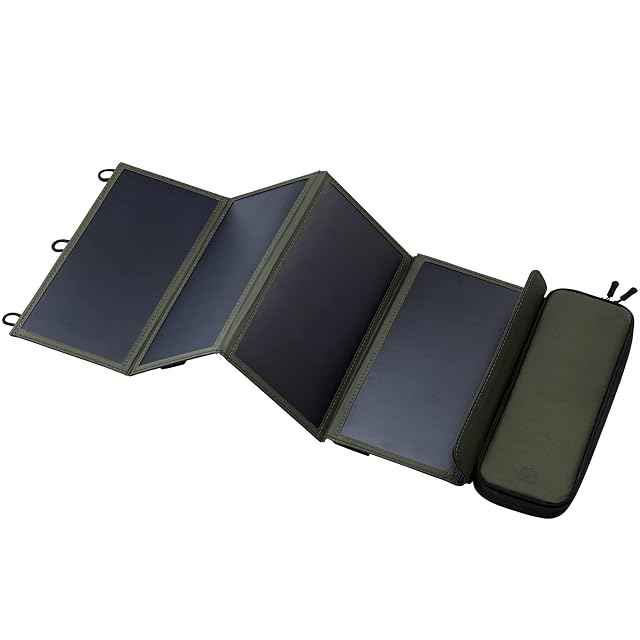
A 28 W high-efficiency solar panel charger with dual USB-C and USB-A.
BigBlue states 20 per cent more power from every ray thanks to a shadow-free
surface with no metal lines on the front panel, with engineered heat resistance
and advanced N-type cells for low-light efficiency; dual USB-C and one USB-A at
5 V/3 A each, collectively 5 V/4.8 A, with no ability to store electricity;
25.4 per cent conversion and IP44 waterproofing with a polymer surface resisting
rain, fog and wear, the USB junction box stated not waterproof; folding to
11 × 6 × 1.4 inches at 1.5 lbs; charging for smartphones, power banks, GPS and
small electronics with intelligent safety charging; a package of panel, a 50 cm (19.7 in)
USB-C to USB-C cable, carabiners and a manual, with advice against use inside a
window or windscreen and an LED glowing solid blue when charging properly; and
two notes — that the panel has no internal battery and needs direct sunlight, and
that its output is not sufficient for laptops or large power stations, and that
devices should be kept in the shade while charging.
No test conditions. No unfolded size. No kickstand.
Twenty-five point four per cent
The highest figure in this group.
Published as a conversion rate, which is the right way to state it. Two other
panels here publish 24 per cent the same way. The fourth publishes a 24 per cent
increase over traditional cells, which is not the same claim.
What efficiency buys is area: 28 watts from a panel folding to 11 by 6 inches at
671 grams is a good ratio, and this shelf’s introduction says cell type and
efficiency tell you how much panel you carry for each watt.
N-type cells and a face with no metal lines are the two reasons the listing
gives.
And it says what it cannot do
Twice, in its own notes.
“Its power output is not sufficient for charging laptops or large power
stations.”
Five volts at 4.8 amps is 24 watts across three sockets, and a laptop wants a
Power Delivery profile at 15 or 20 volts. This shelf’s introduction draws exactly
this line — a USB-C socket advertising a Power Delivery profile against one that
is a 5-volt port with a modern plug.
These are the second kind, and the listing does not pretend otherwise.
IP44
The lowest rating in this group.
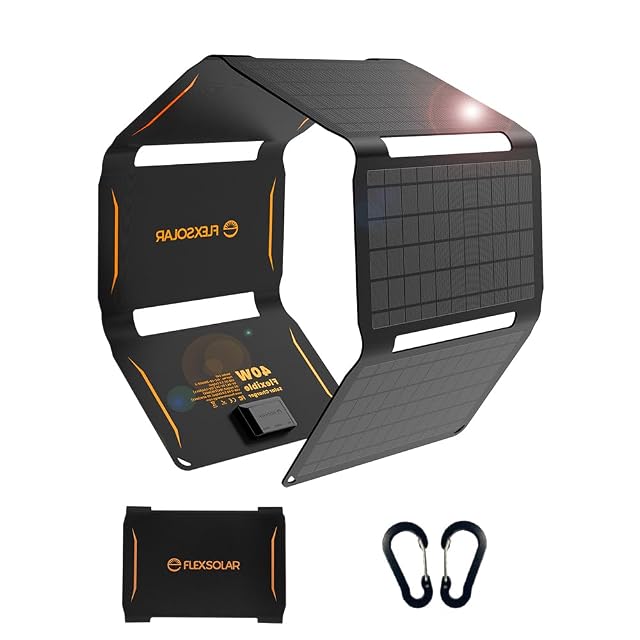
Splashing water, and solid objects over a millimeter. The two FlexSolar panels
here publish IP67.
And the USB junction box is not waterproof on top of that — which the
introduction above predicts for every panel on this shelf.
A shower is survivable. A downpour is not, and the panel has to be out in the sun
all day.
Keep the phone in the shade
The note nobody else makes.
Direct sunlight and high temperatures trigger a phone’s own thermal protection,
which slows or stops charging. So the panel goes in the sun and the device does
not.
It is the kind of sentence that only comes from having been asked the question,
and it is more useful than the efficiency figure above it.
BigBlue’s instructions carry the ports and the ingress rating. Nothing here
replaces them, and nothing on this page describes any product as safe.
Availability
The American Amazon store was listing it at about $75 at the time of writing.
Every figure here is what Keepa held on the day this page was last revised. Offers and prices shift without warning.
Prices quoted in this text were read on October 8, 2026. The live price is at the top of the page.