A 200 × 200 cm (78.7 × 78.7 in) mat with a pearl-cotton foam core and double-sided aluminum foil, a storage bag, and claims of insulation, waterproofing and durability. Nothing is measured except the two ground dimensions.
The figure that decides a mat
R-value. It measures resistance to heat flow, and since ASTM F3340 gave the industry a common test, R-values from different makers can be compared directly. This listing has none, and names no standard.
That matters more on a foam mat than it looks, because R-values add. A foam mat under an inflatable one gives you the sum — but only if you know what you are adding.
The other missing number
Thickness. On foam it is the whole comfort question: it decides whether a hip reaches the ground through the compressed part. It is not published.
What the shape is actually for
200 × 200 cm (78.7 × 78.7 in) is not a sleeping mat footprint. It is a tent-floor liner, a group ground sheet, a picnic square. Read it that way and the absence of a packed size and a weight matters less.
Before ordering
If this is going under an inflatable mat for warmth, ask the seller for the thickness. If it is going in a tent as a floor liner, measure your tent first — 200 × 200 cm (78.7 × 78.7 in) will need trimming or folding in most two-person tents.
Availability
The American Amazon store returned nothing, so the buy link opens a local search rather than a page that is not there.
Every figure here is what Keepa held on the day this page was last revised. Offers and prices shift without warning.
What it does well, and where it gives way
Strengths
A 200 × 200 cm (78.7 × 78.7 in) square, published plainly, which is enough ground for several people or for a whole tent floor
Nothing to inflate and nothing to puncture, which is the one advantage foam keeps over every air mat here
States a pearl-cotton foam core between double-sided aluminum foil, and that it wipes clean or machine washes
Compromises
No R-value at all, so the insulation claim has no figure behind it and cannot be added to another mat’s
No thickness published, which on a foam mat is the whole of the comfort question
No weight and no packed size, and a 200 × 200 cm (78.7 × 78.7 in) foam sheet does not roll small
Where this model is listed
A listing is not an offer: the reference exists on these stores, availability changes daily.
France
Germany
Italy
Spain
United Kingdom
Specifications
R-value
Not published on the listing — insulation and warmth are claimed in words, with no figure
Standard quoted
None named — no ASTM F3340 reference appears in the listing
Thickness
Not published on the listing
Packed size
Not published on the listing — a storage bag is supplied and its dimensions are not given
Weight
Not published on the listing
Width
200 cm (78.7 in) — stated as part of a 200 × 200 cm (78.7 × 78.7 in) size
Length
200 cm (78.7 in) — stated as part of a 200 × 200 cm (78.7 × 78.7 in) size
Fabric denier
Not published on the listing — the mat is a foam core faced with aluminum foil rather than a coated fabric, so no denier applies
Inflation method
None — a closed foam mat with foil faces; there is nothing to inflate and nothing to puncture
Amazon reference
B0GTT1R2QJ
EAN
0745248674933
What people ask before buying
Does foil facing add warmth?
It reflects radiant heat back, which helps a little; most of the insulation in a mat like this comes from the closed-cell foam holding still air. Without an R-value figure there is no way to say how much either contributes.
Why buy a foam mat at all?
Because it cannot fail. An air mat that punctures at midnight leaves you on the ground; foam is the same in the morning as it was at dusk. R-values also add up, so a thin foam mat under an inflatable one gives you the sum of the two.
Does Mirenko publish a R-value?
No. Not published on the listing — insulation and warmth are claimed in words, with no figure. What the listing does publish instead is the width: 200 cm (78.7 in) — stated as part of a 200 × 200 cm (78.7 × 78.7 in) size.
Our score
7.2/ 10
A large, cheap, unpuncturable square with no numbers behind its insulation. As a tent-floor liner or a group mat it does a job nothing else here does; as a sleeping mat compared on specification, it publishes almost nothing.
The buyer this one serves, among camping gear
A tent floor liner or a group ground sheet at a driven-to pitch, rather than a mat carried on a back.
What buyers actually choose
Amazon reports what buyers took in the month before this page was last checked: at least 200.
The figure is a floor, rounded by Amazon, and read through Keepa — it says what buyers picked, not what a maker claims.
Sources
Specifications: the manufacturer sheet for camping and hiking gear and the matching Amazon product page. Prices and availability: Keepa. Every figure on this page names its source.
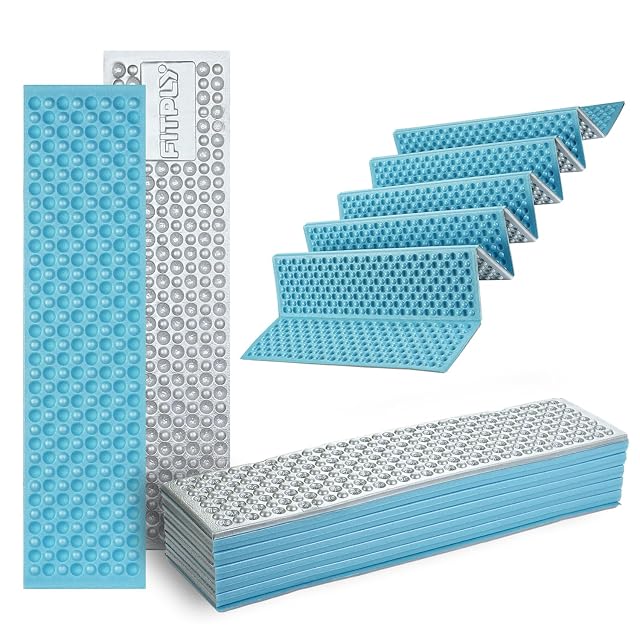
R 2.1, standard unnamed · XPE foam with aluminum film · 70.8 × 23.6 × 0.36 in · 0.7 lb
A folding XPE foam mat with a heat-reflective aluminum film and a published insulation rating of 2.1 — "tested to standard", with the standard never named.
Best for: A foam layer that packs flat rather than rolled, with a figure behind its warmth
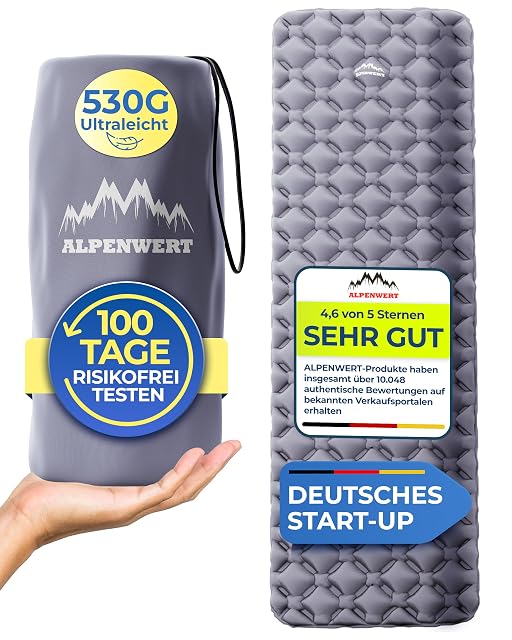
531 g (18.7 oz) · 190 × 60 cm (74.8 × 23.6 in) inflated and 225 × 70 cm (88.6 × 27.6 in) flat · 40D material · inflated by breath · repair kit included · no R-value
A 531 g (18.7 oz) mat that publishes both its flat and its inflated dimensions — an honest distinction most listings skip — and no thickness and no R-value.
Best for: Lightweight trips where 531 g (18.7 oz) and a 190 cm (74.8 in) sleeping length are the specification, and warmth comes from the bag.
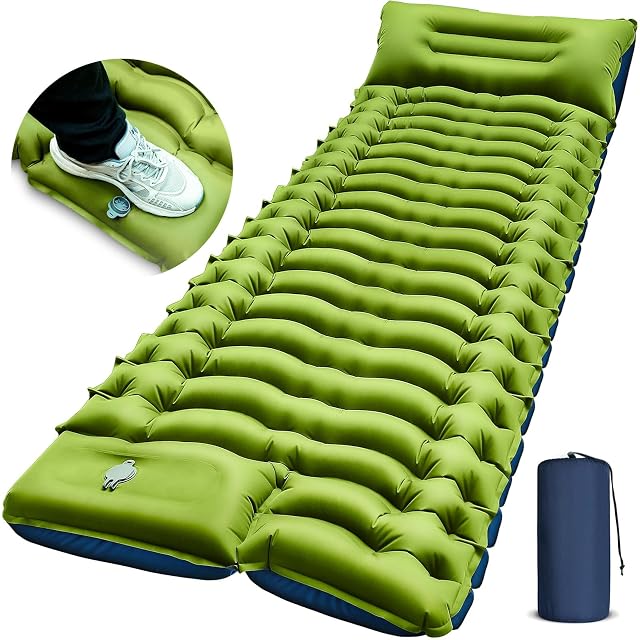
Built-in foot pump · 40D nylon/TPU · 78 × 27 in · 3 in in one line, 8 in in the next
The widest mat in this group at twenty-seven inches, with a built-in foot pump, a built-in pillow and side buttons to join two together — and a thickness published as three inches and as eight.
Best for: Two mats buttoned into a double bed, with no separate pump or pillow to pack