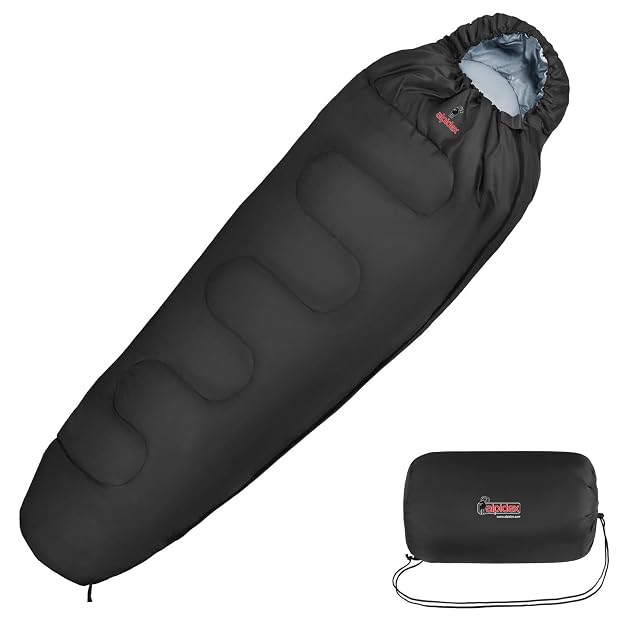
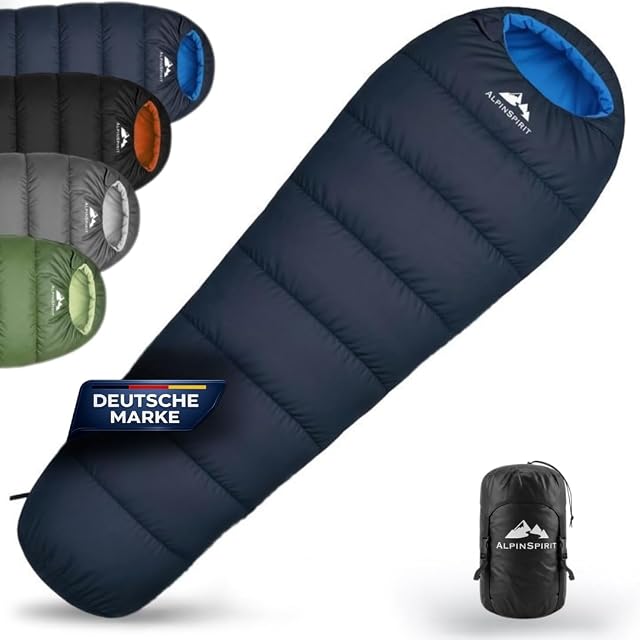
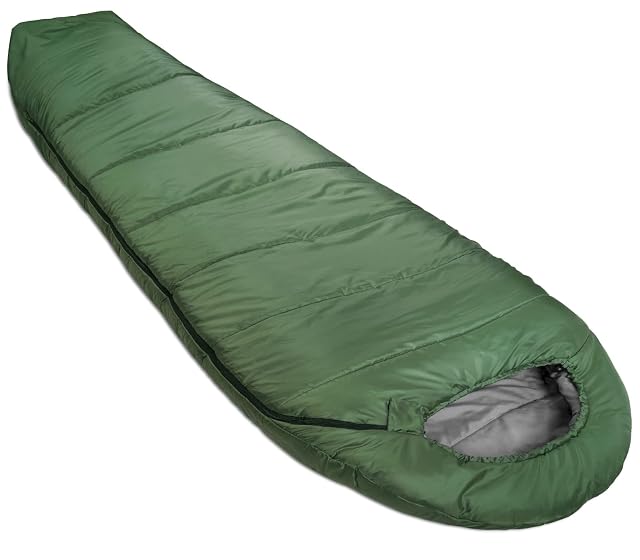
A half-rectangular shape, a nominal temperature range of 40 °F to 77 °F with an optimal comfort range of 62 °F to 75 °F, double-sided zips along the sides, a separate zip at the bottom to regulate foot temperature, full opening into a quilt or cushion, a waterproof outer protective shell, a skin-friendly lining, and washing at 30 to 40 °C (86 to 104 °F).
The figures, and the unit they arrive in
40 °F to 77 °F is roughly 4 °C (39 °F) to 25 °C (77 °F), and 62 °F to 75 °F is roughly 17 °C (63 °F) to 24 °C (75 °F). Those conversions are ours; the maker publishes Fahrenheit only.
Read the second range rather than the first. The nominal range describes the seasons the maker has in mind; the optimal comfort range is where the bag is said to work, and it is a summer figure. No standard is named for either, so neither is a laboratory value under EN 13537 or ISO 23537.
What the listing keeps quiet about
The fill. Nothing at all: no material, no density, no weight. That is unusual even on this shelf, where a GSM figure is normally the one insulation number given.
The fabric. A waterproof shell is claimed and never named.
Weight and packed size. Both absent, on a bag whose title sells hiking and backpacking.
What this maker does well
The zip arrangement. Two side zips and a foot zip means you can vent the feet, open one side, or lay the whole thing flat. That is a real design decision, and it is described clearly.
Before ordering
Take the optimal range at face value and treat this as a summer bag. If you need to know what it weighs, ask before buying.
Availability
The American Amazon catalog lists it with no seller standing behind the entry.
Every figure here is what Keepa held on the day this page was last revised. Offers and prices shift without warning.
What it does well, and where it gives way
Strengths
Publishes its temperature figures as two distinct ranges — a nominal one and an optimal comfort one — rather than a single vague claim
Names the zip arrangement precisely: double-sided zips along the sides and a separate zip at the foot to vent the feet
Opens completely, so it works as a quilt or a cushion as well as a bag, and states a wash temperature of 30 to 40 °C (86 to 104 °F)
Compromises
The fill is never described — not down, not synthetic, not a density — so nothing on the page explains the warmth
No weight and no packed size, on a bag sold for hiking and backpacking
Temperatures are published only in Fahrenheit on a German-market listing, which is where a buyer is most likely to misread them
Where this model is listed
A listing is not an offer: the reference exists on these stores, availability changes daily.
France
Germany
Italy
Spain
United Kingdom
United States
Specifications
Comfort rating
Given as an optimal comfort range of 62 °F to 75 °F, which is about 17 °C (63 °F) to 24 °C (75 °F) converted here — an unstandardized figure
Limit rating
Not stated as a limit — the maker publishes a nominal range of 40 °F to 77 °F, about 4 °C (39 °F) to 25 °C (77 °F) converted here, without calling either end a limit
Standard quoted
None named — neither EN 13537 nor ISO 23537 appears in the listing
Fill power
Not published on the listing
Fill weight
Not published on the listing
Down or synthetic
Not published on the listing — the fill is never described, only the lining and the outer shell
Shell denier
Not published on the listing — the outer is called a waterproof protective shell with no fabric named
Baffle construction
Not published on the listing
Packed size
Not published on the listing — the bag is called compact and packable, with no dimensions
Weight
Not published on the listing
Amazon reference
B0BJYVJG2R
EAN
0702735812254
What people ask before buying
Why convert the Fahrenheit figures?
Because the listing sells into a market that reads Celsius, and 40 °F looks colder than it is. The conversions here are ours and are marked as such; the published figures remain 40 °F to 77 °F nominal and 62 °F to 75 °F optimal.
Does a foot zip do anything useful?
Yes — feet are where most people overheat first, and a separate zip at the bottom lets them vent without opening the whole bag and losing the warmth around your shoulders. It is a genuinely practical feature on a summer bag.
Does tuphen publish a limit rating?
No. Not stated as a limit — the maker publishes a nominal range of 40 °F to 77 °F, about 4 °C (39 °F) to 25 °C (77 °F) converted here, without calling either end a limit. What the listing does publish instead is the comfort rating: Given as an optimal comfort range of 62 °F to 75 °F, which is about 17 °C (63 °F) to 24 °C (75 °F) converted here — an unstandardized figure.
Our score
7.8/ 10
A summer bag with a well-thought-out zip arrangement and almost no specification. If the temperature suits the nights you camp in it will work; there is nothing published to weigh it, pack it or compare it.
The buyer this one serves, among camping gear
Warm-weather use where the foot vent and the full opening matter, and where nothing has to be carried far.
What buyers actually choose
Amazon reports what buyers took in the month before this page was last checked: at least 200.
The figure is a floor, rounded by Amazon, and read through Keepa — it says what buyers picked, not what a maker claims.
Sources
Specifications: the manufacturer sheet for camping and hiking gear and the matching Amazon product page. Prices and availability: Keepa. Every figure on this page names its source.
Mummy · 300 GSM cotton and hollow-fiber fill · comfort 15 °C (59 °F) to 20 °C (68 °F) · about 1300 g (45.9 oz) · 35 × 25 cm (13.8 × 9.8 in) packed
A three-season mummy bag that publishes weight, packed size and fill density, and puts its comfort range at 15 °C (59 °F) to 20 °C (68 °F) with no standard behind it.
Best for: Spring to autumn trips where about 1300 g (45.9 oz) into a 35 × 25 cm (13.8 × 9.8 in) roll is the constraint that matters.
20 °F, no standard · 82 × 33 in · polyester shell, brushed tricot liner · no-snag zip
Five bullets, five facts and no padding: a 20 °F mummy bag of 82 by 33 inches with a drawstring hood, a brushed tricot liner and an anti-snag zip with contrasting webbing.
Best for: A straightforward cold-weather mummy bag with nothing to decode