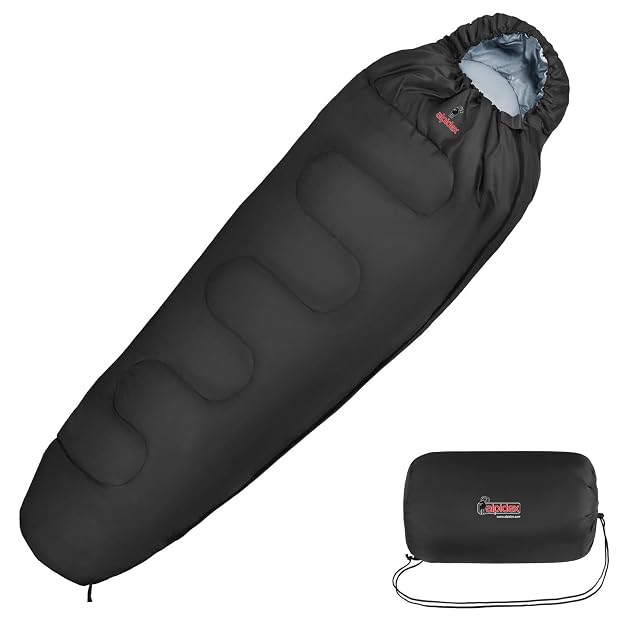
A mummy shape with a hood, polyester with a synthetic fill, a size of 210 × 73 cm (82.7 × 28.7 in), a stated comfort range of 5 °C (41 °F) to 25 °C (77 °F) narrowing to 10 °C (50 °F) to 20 °C (68 °F), a water-repellent coating, full opening into a blanket, and a storage cover in the box.
The temperature, and what stands behind it
Two ranges are published and no standard is named. That is the pattern on this whole shelf, and it is worth saying once clearly: a comfort figure only means something when a standard is named beside it.
Under EN 13537 and its successor ISO 23537, comfort and limit figures are measured on a heated mannequin under controlled conditions — an indication, never a promise, and never a substitute for the maker’s own guidance. A range written in prose has had none of that done to it.
What is absent
Weight. Packed size. Fill weight. Shell denier. Four of the ten lines a sleeping bag is compared on, and none of them appears. The listing sells the shape, the size and the seasons.
What you can use
The 210 × 73 cm (82.7 × 28.7 in) is real and it is the figure that decides fit. A mummy bag that is too short pulls the hood off your head; one that is too wide has air in it you have to heat.
Before ordering
Measure your own height and add room for a hood and a foot box. Then decide whether an unstated carried weight matters for the trips you take.
Availability
The American Amazon store returned nothing, so the buy link opens a local search rather than a page that is not there.
Every figure here is what Keepa held on the day this page was last revised. Offers and prices shift without warning.
What it does well, and where it gives way
Strengths
States the shape and the hood plainly, and explains what the mummy cut is for: less air to warm around the body
Publishes its full dimensions at 210 × 73 cm (82.7 × 28.7 in), which is the measurement that decides whether it fits you
Opens fully into a blanket, and a storage cover is included
Compromises
The comfort range spans twenty degrees and no standard is named, so it cannot be lined up against a bag that quotes one
No weight and no packed size, on a bag sold for hiking and camping where both decide whether it is carried
No fill weight and no shell denier, so nothing published explains where the warmth comes from
Where this model is listed
A listing is not an offer: the reference exists on these stores, availability changes daily.
France
Germany
Italy
Spain
United Kingdom
Specifications
Comfort rating
Given as a range of 5 °C (41 °F) to 25 °C (77 °F), narrowing to 10 °C (50 °F) to 20 °C (68 °F) in what the maker calls pleasant conditions — an unstandardized figure
Limit rating
Not published on the listing
Standard quoted
None named — neither EN 13537 nor ISO 23537 appears anywhere in the listing
Fill power
Not published on the listing — fill power describes down, and this bag is stated as synthetic
Fill weight
Not published on the listing
Down or synthetic
Synthetic — stated as polyester filled with a synthetic insulating material
Shell denier
Not published on the listing — polyester is named, with a water-repellent coating, and no yarn weight
Baffle construction
Not published on the listing
Packed size
Not published on the listing — a cover is supplied and its packed dimensions are not given
Weight
Not published on the listing
Amazon reference
B0DGTY6XTY
EAN
5904806168016
What people ask before buying
What does a twenty-degree comfort range tell you?
Less than it looks. A comfort figure under EN 13537 or ISO 23537 is a single temperature measured on a heated mannequin under fixed conditions. A range described in words is a description of the seasons the maker has in mind, not a measurement, and it is not comparable with a tested figure.
Why is fill weight missing on a synthetic bag?
Synthetic bags are usually described by the fill density in grams per square meter rather than by the grams in the bag. This listing publishes neither, which leaves the insulation entirely undescribed — unusual even on this shelf.
Does Retoo publish a limit rating?
No. Not published on the listing. What the listing does publish instead is the comfort rating: Given as a range of 5 °C (41 °F) to 25 °C (77 °F), narrowing to 10 °C (50 °F) to 20 °C (68 °F) in what the maker calls pleasant conditions — an unstandardized figure.
Our score
7.2/ 10
A roomy hooded mummy with a length published and almost nothing else. For summer nights within reach of a car it will do the job; anyone comparing bags on temperature or carried weight has nothing here to compare.
The buyer this one serves, among camping gear
Warm-weather camping close to the car, where the 210 cm (82.7 in) length and the blanket conversion matter more than a carried weight.
What buyers actually choose
Amazon reports what buyers took in the month before this page was last checked: at least 100.
The figure is a floor, rounded by Amazon, and read through Keepa — it says what buyers picked, not what a maker claims.
Sources
Specifications: the manufacturer sheet for camping and hiking gear and the matching Amazon product page. Prices and availability: Keepa. Every figure on this page names its source.
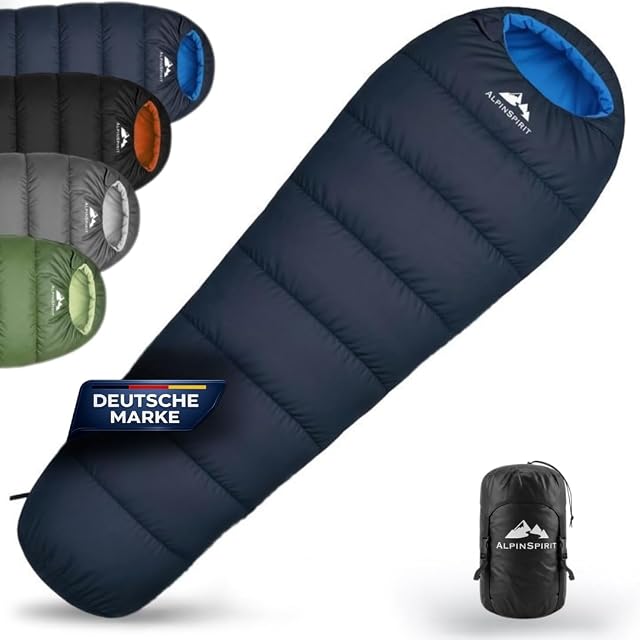
Mummy · 300 GSM cotton and hollow-fiber fill · comfort 15 °C (59 °F) to 20 °C (68 °F) · about 1300 g (45.9 oz) · 35 × 25 cm (13.8 × 9.8 in) packed
A three-season mummy bag that publishes weight, packed size and fill density, and puts its comfort range at 15 °C (59 °F) to 20 °C (68 °F) with no standard behind it.
Best for: Spring to autumn trips where about 1300 g (45.9 oz) into a 35 × 25 cm (13.8 × 9.8 in) roll is the constraint that matters.
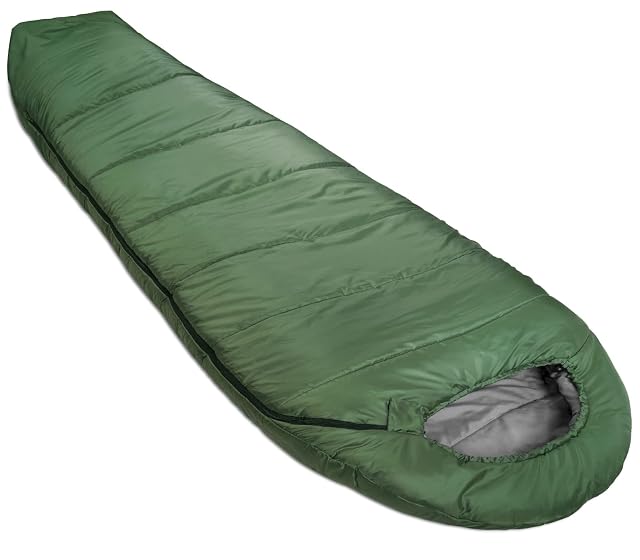
20 °F, no standard · 82 × 33 in · polyester shell, brushed tricot liner · no-snag zip
Five bullets, five facts and no padding: a 20 °F mummy bag of 82 by 33 inches with a drawstring hood, a brushed tricot liner and an anti-snag zip with contrasting webbing.
Best for: A straightforward cold-weather mummy bag with nothing to decode