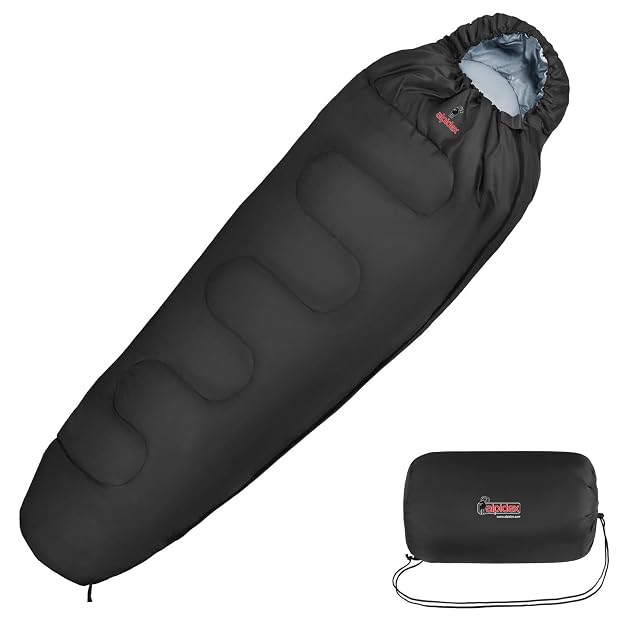
A hooded mummy bag suitable, the maker says, for temperatures from 8 °C (46 °F) to -5 °C (23 °F), a 300 GSM fill, an extra-insulated zip, a soft inner lining, polyester construction with a DWR water-repellent finish, an internal hook-and-loop pocket, coupling into a double, and a pillow in the box.
The range with no labels
8 °C to -5 °C. Thirteen degrees, and neither end is named. On a bag described under a standard, one of those would be the comfort figure — the temperature at which a standard sleeper rests without curling up — and the other something else entirely.
Here they are simply the two ends of a claim. No standard is named, so neither is a laboratory value, and there is nothing published that says which end to plan on.
What is genuinely well described
The zip baffle. A mummy bag’s zip is the longest cold bridge in it, and an insulated baffle behind the teeth is the fix. Naming it is worth something.
The DWR finish. Named as a treatment rather than described as water-repellent in general, which means it can be renewed when it stops beading.
What is absent
Weight and packed size, both. On a bag with a 300 GSM fill and a pillow in the box, that is not a small omission — this is not a light bag, and nothing says how heavy it is.
Before ordering
Decide which end of the range you are buying for, and ask the seller for the weight if it has to go in a pack.
Availability
The American Amazon catalog lists it with no seller standing behind the entry.
Every figure here is what Keepa held on the day this page was last revised. Offers and prices shift without warning.
What it does well, and where it gives way
Strengths
Names the water-repellent treatment specifically as a DWR finish rather than calling the fabric water-repellent and stopping
States an extra-insulated zip baffle, which is where a mummy bag most often loses heat
Includes a pillow and an internal hook-and-loop pocket, and couples with a second bag into a double
Compromises
The 8 °C (46 °F) to -5 °C (23 °F) range has neither end labeled comfort or limit, and no standard is named for either
No weight and no packed size are published anywhere in the listing
300 GSM is a fill density, not the grams of insulation, so the fill weight is unknown
Where this model is listed
A listing is not an offer: the reference exists on these stores, availability changes daily.
France
Germany
Italy
Spain
United Kingdom
United States
Specifications
Comfort rating
Not stated as a comfort figure — the maker publishes a range of 8 °C (46 °F) to -5 °C (23 °F) without saying which end is comfort, and names no standard
Limit rating
Not stated as a limit figure — the same unlabelled 8 °C (46 °F) to -5 °C (23 °F) range is all that is published
Standard quoted
None named — neither EN 13537 nor ISO 23537 appears in the listing
Fill power
Not published on the listing — fill power describes down, and this bag is stated as polyester
Fill weight
No weight published — the maker publishes 300 GSM, a fill density in grams per square meter
Down or synthetic
Synthetic — stated as polyester
Shell denier
Not published on the listing — a polyester outer with a DWR finish is named, with no yarn weight
Baffle construction
Not published on the listing — an extra-insulated zip baffle is named; the body construction is not
Packed size
Not published on the listing
Weight
Not published on the listing
Amazon reference
B0D6BZG924
EAN
4270004313666
What people ask before buying
Why does an unlabelled range matter?
Because the two ends mean opposite things. If 8 °C (46 °F) is the comfort figure, this is a three-season bag; if -5 °C (23 °F) is, it is a winter one. Nothing in the listing says, and the difference is the whole purchase.
What is a DWR finish?
A durable water-repellent treatment on the outer face that makes drops bead and roll rather than soak in. It wears off with use and washing and can usually be renewed with a wash-in or spray-on product. It is not waterproofing, and it does not make the bag safe in rain.
Does Montaray publish a comfort rating?
No. Not stated as a comfort figure — the maker publishes a range of 8 °C (46 °F) to -5 °C (23 °F) without saying which end is comfort, and names no standard. What the listing does publish instead is the down or synthetic: Synthetic — stated as polyester.
Our score
7.8/ 10
Careful about its hardware and vague about its numbers. The zip baffle and the DWR finish are real details worth having; the temperature range, unlabelled and unstandardized, is not something to plan around.
The buyer this one serves, among camping gear
Cooler-weather camping where the bag is driven to the pitch and a pillow in the box is worth having.
Sources
Specifications: the manufacturer sheet for camping and hiking gear and the matching Amazon product page. Prices and availability: Keepa. Every figure on this page names its source.
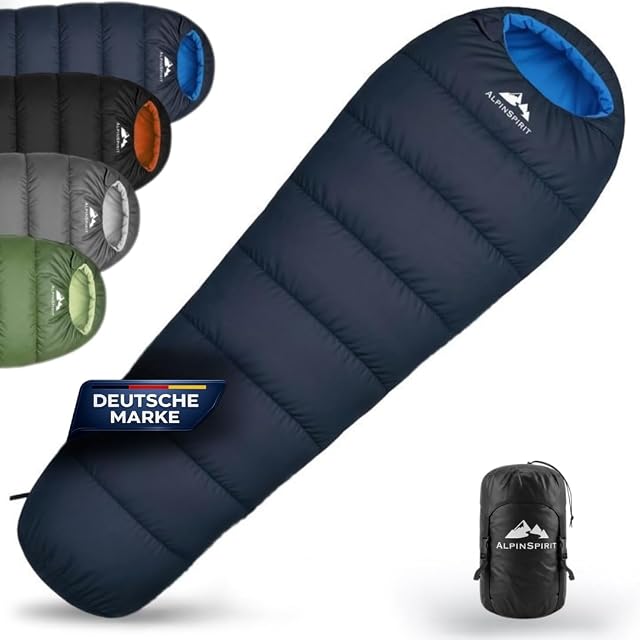
Mummy · 300 GSM cotton and hollow-fiber fill · comfort 15 °C (59 °F) to 20 °C (68 °F) · about 1300 g (45.9 oz) · 35 × 25 cm (13.8 × 9.8 in) packed
A three-season mummy bag that publishes weight, packed size and fill density, and puts its comfort range at 15 °C (59 °F) to 20 °C (68 °F) with no standard behind it.
Best for: Spring to autumn trips where about 1300 g (45.9 oz) into a 35 × 25 cm (13.8 × 9.8 in) roll is the constraint that matters.
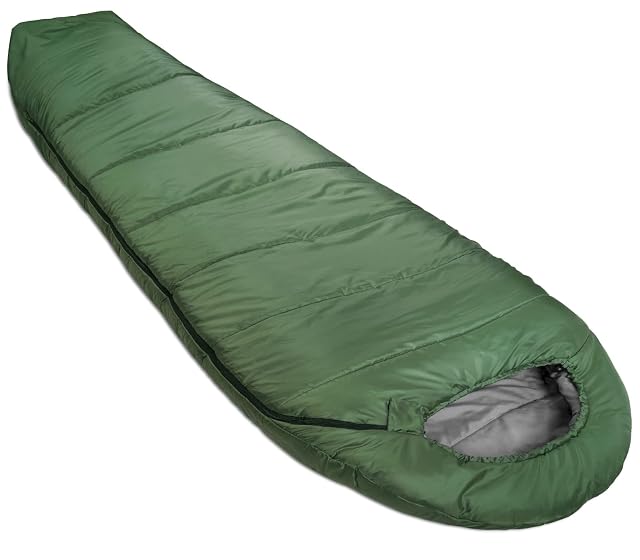
20 °F, no standard · 82 × 33 in · polyester shell, brushed tricot liner · no-snag zip
Five bullets, five facts and no padding: a 20 °F mummy bag of 82 by 33 inches with a drawstring hood, a brushed tricot liner and an anti-snag zip with contrasting webbing.
Best for: A straightforward cold-weather mummy bag with nothing to decode