Skip to content

MK LIGHTER MK isobutane canister, 100 g (3.5 oz)

A 100-gram EN 417 canister at a 75/25 blend, published in exactly the words another brand on this shelf uses — down to the twenty meals and the thirty cups of coffee.

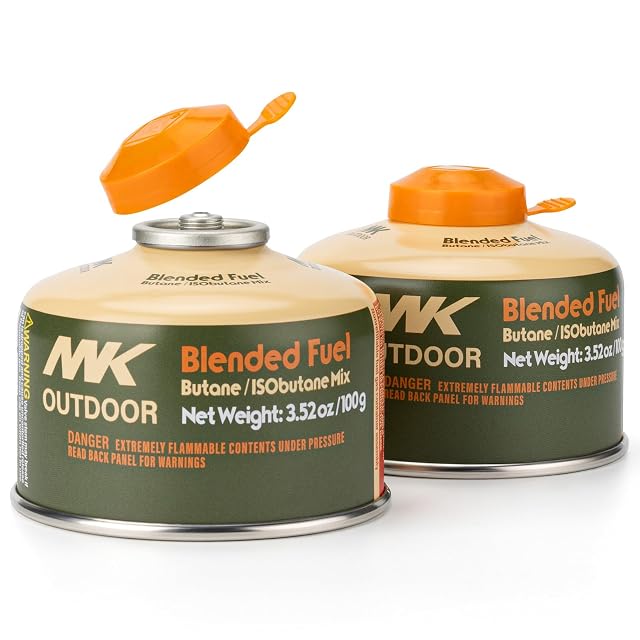
MK LIGHTER isobutane fuel canister with its screw valve cap

MK LIGHTER MK isobutane canister, 100 g (3.5 oz)

A 100-gram EN 417 canister at a 75/25 blend, published in exactly the words another brand on this shelf uses — down to the twenty meals and the thirty cups of coffee.

Valve type
A standard EN417 screw-in connector, named
Net gas weight
100 g (3.5 oz) / 3.52 oz
Stated gas mix
75% isobutane, 25% propane
Canister diameter
About 3 in, from a published 3.6 × 3 in
Canister height
About 3.6 in
Empty weight
Not published
Resealable valve
Not published as resealable. A tight-fitting plastic cap is stated for storage
Amazon reference
B0HHRBJBD8
EAN
0810162295233
  • Names the standard — EN417 — which only one other canister on this shelf does
  • Publishes the mix as 75 per cent isobutane and 25 per cent propane
  • Its five bullets are word for word another brand’s on this same shelf

Best for: An EN 417 stove, where the price decides between two identical texts

≈ $19
Check price on Amazon

Specifications

Valve type
A standard EN417 screw-in connector, named
Net gas weight
100 g (3.5 oz) / 3.52 oz
Stated gas mix
75% isobutane, 25% propane
Canister diameter
About 3 in, from a published 3.6 × 3 in
Canister height
About 3.6 in
Empty weight
Not published
Resealable valve
Not published as resealable. A tight-fitting plastic cap is stated for storage
Amazon reference
B0HHRBJBD8
EAN
0810162295233

On the maker’s own page

An isobutane fuel canister, portable camping gas 100 g (3.5 oz), suitable for all seasons, two cans.

MK LIGHTER states a premium blend of 75 per cent isobutane and 25 per cent propane for higher vapor pressure and cold-weather performance at all four seasons and all altitudes; 100 g (3.52 oz) a can for up to 20 freeze-dried meals or about 30 cups of coffee, with usage varying by stove system, weather, altitude and cooking style; a size of 3.6 × 3 inches at 100 grams with a tight-fitting cap keeping the valve leak-proof; a standard EN417 screw-in connector compatible with most backpacking stoves, burners and lanterns, with instructions printed on the canister; and two cans in the pack.

No gross weight. No resealable statement.

One text, two brands

Word for word, on this shelf.

Another brand here publishes the same five bullets: the same blend sentence, the same twenty meals and thirty coffees with the same caveat, the same 3.6 by 3 inches, the same EN417 phrasing.

Two EANs, two names, one specification. There is nothing on the page to separate them, so this page says so rather than writing two different reviews of one canister.

What differs is the price.

EN four one seven

The term a manual uses.

This shelf’s introduction: the threaded canister with its 7/16 inch UNEF screw valve is what most modern backpacking stoves use, and it is resealable.

The buying tip: check the valve wording in the stove manual before ordering, because a threaded canister and a bayonet stove is a stove you cannot light.

Naming the standard lets words be matched with words. It does not replace the manual, and it says nothing about the third system on this shelf — the pierceable canister, which has no valve at all.

A hundred grams, and the steel around it

Why size is a carrying question.

The only listing on this shelf that publishes a gross weight gives 198 grams for 100 grams of gas. The steel is about half the load.

A bigger canister carries proportionally less steel per gram of fuel. A hundred grams is right for a weekend where the can nests in a pot and nothing is wasted; for a week, two of them weigh more than one larger can holding the same gas.

MK LIGHTER’s own instructions on the canister carry the handling. Nothing here replaces them, and nothing on this page describes any product as safe.

Availability

The American Amazon store was listing it at about $19 at the time of writing.

Every figure here is what Keepa held on the day this page was last revised. Offers and prices shift without warning.

Prices quoted in this text were read on October 8, 2026. The live price is at the top of the page.
What people ask before buying

Is it the same canister as the other 75/25 listing here?

On specification, there is nothing to separate them. Both publish 100 g (3.5 oz) at 3.52 oz, 75 per cent isobutane and 25 per cent propane, 3.6 by 3 inches, an EN417 screw-in connector, a tight-fitting cap, instructions printed on the can, and up to 20 freeze-dried meals or about 30 cups of coffee with the same caveat — in the same sentences. Two brands and two EANs, one text. This page records that rather than writing two different-sounding reviews of one specification, and what actually differs is the price.

Does EN 417 guarantee it fits?

It gives you something to check. This shelf's introduction describes the EN 417 threaded canister with a 7/16 inch UNEF screw valve as the fitting most modern backpacking stoves use, and the buying tip says to check the valve wording in the stove manual before ordering, because a threaded canister and a bayonet stove is a stove you cannot light. A listing naming the standard lets you match words with words. It does not replace reading the manual, and it does not cover the third system on this shelf — the pierceable canister, which has no valve at all.

Why buy 100 grams rather than 230?

Because of what you are carrying, not what you are burning. The one listing on this shelf that publishes a gross weight gives 198 grams for 100 grams of gas, so the steel is about half the load — and a bigger canister carries proportionally less steel per gram of fuel. A hundred grams is the right size for a weekend where the canister has to nest inside a pot and nothing is left over. For a week, two 100-gram cans weigh noticeably more than one larger one for the same gas.

All stove gas canisters